Cost to Build a New ADU in Sunnyvale: 2026 Pricing Guide
Discover the exact cost to build a new ADU in Sunnyvale. Our 2026 guide breaks down permits, labor, materials, and local zoning fees for your project.
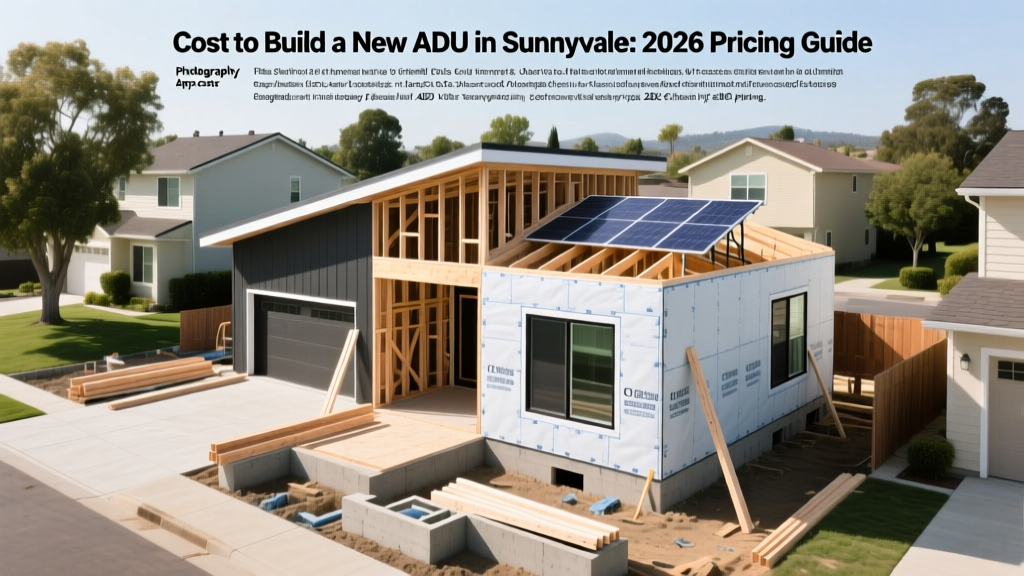
The Sunnyvale ADU Market: Why Local Costs Run Higher
Building an Accessory Dwelling Unit (ADU) in Silicon Valley requires navigating a unique intersection of stringent seismic codes, high prevailing wages, and specific municipal overlay zones. When calculating the cost to build a new ADU in Sunnyvale, homeowners must look beyond state-level averages. Santa Clara County's labor rates routinely exceed the California state average by 25% to 35%, and local utility connection requirements can introduce five-figure variables into your budget.
This guide provides a granular, 2026 cost breakdown for detached, attached, and garage conversion ADUs in Sunnyvale, incorporating current material pricing, local permit fees, and mandatory energy compliance upgrades.
2026 Sunnyvale ADU Quick Cost Snapshot
- Detached New Build (800 sq ft): $340,000 – $460,000 ($425 – $575 / sq ft)
- Attached Addition (600 sq ft): $220,000 – $310,000 ($365 – $515 / sq ft)
- Garage Conversion (400 sq ft): $110,000 – $165,000 ($275 – $410 / sq ft)
- Average Timeline: 9 to 14 months (Design to Certificate of Occupancy)
Cost Breakdown by ADU Type & Scale
The physical configuration of your ADU dictates the foundation requirements, utility routing, and structural engineering needed. Below is a comparative matrix of estimated costs based on current Bay Area contractor bids.
| ADU Configuration | Typical Size | Estimated Total Cost | Cost per Sq Ft |
|---|---|---|---|
| Studio / 1-Bed Detached | 500 - 600 sq ft | $240,000 - $310,000 | $480 - $515 |
| 2-Bed Detached | 800 - 1,000 sq ft | $340,000 - $480,000 | $425 - $480 |
| Attached Bump-Out | 400 - 600 sq ft | $190,000 - $280,000 | $450 - $475 |
| Garage Conversion (JADU/ADU) | 350 - 500 sq ft | $110,000 - $180,000 | $290 - $360 |
Hard Costs vs. Soft Costs: Where Your Money Goes
In Sunnyvale, soft costs (design, engineering, permitting) consume a larger percentage of the total budget than in less regulated municipalities. Expect soft costs to account for 18% to 24% of your total project spend.
Sunnyvale-Specific Soft Costs & Permit Fees
Navigating the Sunnyvale Community Development Department requires precise documentation. Budget for the following local soft costs:
- Architectural & Structural Design: $12,000 – $22,000. (Requires Title 24 energy modeling and structural calculations for seismic zone compliance).
- City Plan Check & Building Permits: $4,500 – $8,500. (Sunnyvale's plan check fees are calculated based on valuation; expect multiple review cycles if stormwater management plans are incomplete).
- School District Impact Fees: If your detached ADU exceeds 750 square feet, you will be subject to developer fees from local districts (e.g., Fremont Union High School District). Expect to pay roughly $4.50 to $6.00 per square foot for the area over 750 sq ft. A 900 sq ft ADU might incur ~$900 in school fees.
- Soils Report (Geotechnical): $3,500 – $6,000. Highly recommended in Sunnyvale to determine soil bearing capacity and liquefaction risk, which dictates your foundation depth and rebar schedule.
Hard Costs: Materials and Bay Area Labor
Labor in Santa Clara County commands a premium. Skilled trades (electricians, plumbers, framers) typically charge $120 to $185 per hour. To mitigate long-term maintenance and meet local fire/seismic standards, specify the following materials in your bid documents:
Material Specification Warning
Do not use standard OSB (Oriented Strand Board) for exterior sheathing in Sunnyvale. Specify plywood (CDX or structural I) or ZIP System sheathing for superior moisture resistance and shear wall strength. Furthermore, specify James Hardie fiber cement siding rather than wood or vinyl. Hardie board provides a Class A fire rating, which is increasingly scrutinized by local fire marshals, and resists the termites prevalent in the South Bay.
Title 24, Solar Mandates, and Utility Hookups
California's Title 24 Building Energy Efficiency Standards heavily influence the cost to build a new ADU in Sunnyvale. Understanding these mandates prevents mid-construction budget shocks.
The Solar PV Requirement
Under current state law, all newly constructed detached ADUs must have solar photovoltaic (PV) panels installed. Garage conversions and attached ADUs are generally exempt from this specific mandate.
- System Size: Typically 2.0 kW to 3.5 kW for an ADU.
- Cost Impact: $8,500 to $14,000 added to a detached build. (Note: You can opt for a community solar agreement or install the panels on the primary residence's roof if the ADU roof lacks adequate solar exposure, subject to Sunnyvale planning approval).
PG&E and City Utility Connections
Utility hookups are a notorious source of budget overruns in the South Bay.
- Electrical: If your primary home's main panel lacks the amperage to support the ADU (e.g., you have a 100A panel and need 200A total), a PG&E service upgrade will cost $4,000 to $8,000 and add 2-3 months to the timeline.
- Water & Sewer: Sunnyvale does not typically charge separate water connection fees for ADUs, but you must pay for the physical trenching and tapping. Trenching through existing concrete driveways or hardscape to reach the main sewer lateral can add $3,000 to $7,000.
- Gas vs. All-Electric: To avoid the cost of trenching a new gas line and to comply with local electrification incentives, specify all-electric appliances (e.g., Bosch 800 Series induction cooktops and Rheem ProTerra heat pump water heaters). This eliminates gas hookup fees and simplifies Title 24 compliance.
Hidden Costs & Edge Cases in Sunnyvale
When evaluating the state ADU guidelines against local execution, several hidden costs emerge that generic online estimators fail to capture:
- Arborist Reports & Tree Protection: Sunnyvale has strict tree preservation ordinances. If your ADU footprint or construction staging area is within the drip line of a protected tree (like a mature Coast Live Oak), you must hire a certified arborist ($800 - $1,500) and install specialized root-protection fencing.
- Fire Sprinklers: While state law limits local fire sprinkler mandates for ADUs, if your primary residence is equipped with sprinklers, or if your lot is in a designated Very High Fire Hazard Severity Zone (VHFHSZ) with inadequate hydrant flow, the Sunnyvale Department of Public Safety may require an NFPA 13D sprinkler system, adding $8,000 to $12,000.
- Stormwater Management: Impervious surface limits apply. If your new ADU and patio exceed the lot's allowable coverage, you must install a subterranean infiltration gallery or rainwater harvesting system ($4,000 - $9,000) to manage runoff.
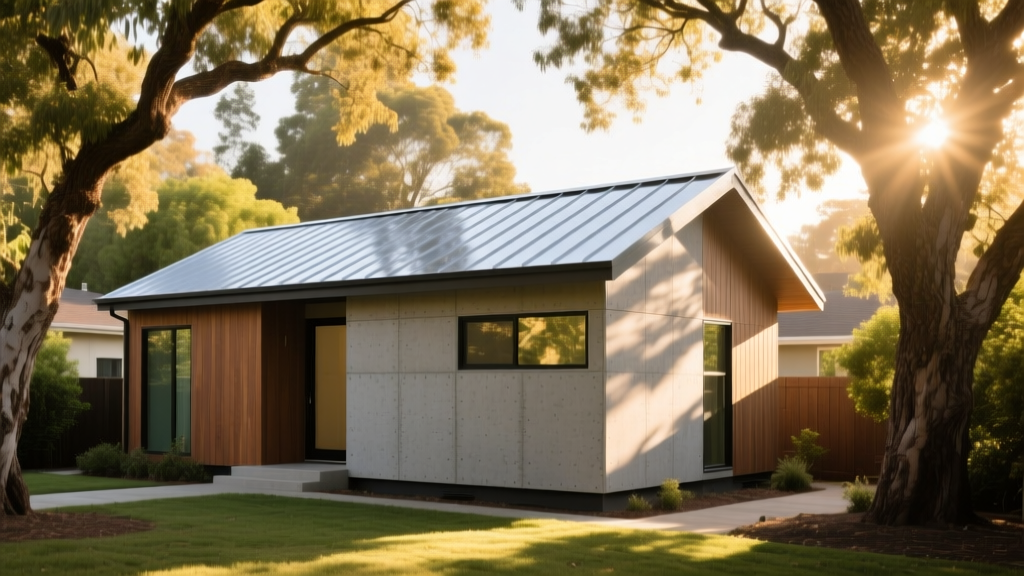
Financial ROI: Does a Sunnyvale ADU Make Sense?
Despite the high upfront capital requirements, the financial mechanics of a Sunnyvale ADU are highly favorable due to the local rental market.
Rental Income Potential
A well-finished 1-bedroom detached ADU in Sunnyvale currently commands $2,800 to $3,400 per month in long-term lease revenue. At a $350,000 construction cost, the gross rental yield is approximately 9.6% to 11.6% annually, outperforming many traditional real estate investments.
Property Value Uplift
Appraisers in Santa Clara County typically assign a 12% to 18% premium to properties with permitted, turnkey ADUs. On a $2.2 million primary residence, an ADU can increase the total property valuation by $260,000 to $390,000, effectively recouping the construction cost in equity alone.
Step-by-Step Pre-Construction Checklist
Before soliciting bids from general contractors, complete this due diligence to ensure your budget estimates are accurate:
- Step 1: Pull your property's preliminary title report to identify any easements (e.g., PG&E utility easements) that restrict where the ADU can be placed.
- Step 2: Locate your main sewer cleanout and electrical main panel. Measure the distance to the proposed ADU site to estimate trenching costs.
- Step 3: Verify your lot's Floor Area Ratio (FAR) and maximum lot coverage with the Sunnyvale planning portal to ensure your desired ADU size is legally permissible without a variance.
- Step 4: Request three itemized bids from licensed Bay Area contractors (B-1 General Building license required). Ensure bids explicitly separate "Site Prep/Utility Trenching" from "Vertical Construction" to avoid hidden change orders later.
Written by
David NakamuraDavid Nakamura is a licensed architect (AIA) and construction technology writer focused on sustainable building methods, mass timber engineering, and high-performance building envelopes. He holds a Master of Architecture from the University of Washington and is a certified Passive House Consultant (CPHC). David spent eight years at the Seattle firm Mithun, where he led the design of three LEED Platinum projects, before founding his own practice specializing in net-zero residential design. He serves on the editorial advisory board of GreenBuilder Magazine and has authored peer-reviewed papers on cross-laminated timber (CLT) connections for the Journal of Structural Engineering. In his spare time, David teaches woodworking at Pratt Fine Arts Center and kayaks the Puget Sound.
More from David Nakamura
View all
Construction Cost
Labor Cost to Build a Deck Per Sq Ft: 2026 Installation Guide
Discover the exact labor cost to build a deck per sq ft in 2026. This installation guide breaks down contractor rates, complexity factors, and hidden fees.
Aug 4, 2026

Construction Cost
How Much Does It Cost to Build a 3 Bedroom House? Financing Guide
Learn exactly how much it costs to build a 3 bedroom house and explore 2026 financing options, construction loan types, and budget frameworks for your build.
Aug 4, 2026

Construction Cost
Cost to Build a Tennis Court: 2026 Guide
How much does it cost to build a tennis court in 2026? Breakdowns for asphalt, concrete, and synthetic surfaces plus fencing and lighting.
Jul 30, 2026