Average Cost to Build a Pool in Texas: 2026 Budget Guide
Discover the average cost to build a pool in Texas for 2026. Break down gunite, fiberglass, and vinyl prices, plus hidden soil and permit expenses.

The True Baseline: 2026 Texas Pool Construction Costs by Material
When calculating the average cost to build a pool in Texas, homeowners must look beyond national averages. The unique geological and regulatory landscape of the Lone Star State introduces specific cost variables that do not apply in other regions. For 2026, the baseline average cost to build a standard 14x28-foot in-ground pool in Texas ranges from $65,000 to $115,000. However, this figure is heavily dependent on the shell material, local soil composition, and municipal permitting requirements.
According to industry data tracked by the Pool & Hot Tub Alliance (PHTA), regional labor rates and material logistics play a massive role in final pricing. Texas boasts a highly competitive pool construction market, but the sheer size of the state means a build in El Paso will have a vastly different cost profile than one in The Woodlands.
Cost Matrix: Gunite vs. Fiberglass vs. Vinyl in Texas
| Shell Material | Base Cost Range (14x28) | Texas Heat Tolerance | Installation Timeline | Long-Term Maintenance |
|---|---|---|---|---|
| Gunite (Concrete) | $75,000 - $120,000+ | Excellent (with proper curing) | 10 - 14 weeks | High (acid washing, resurfacing every 10-15 yrs) |
| Fiberglass | $60,000 - $85,000 | Very Good (flexes with soil movement) | 4 - 6 weeks | Low (non-porous gelcoat resists algae) |
| Vinyl Liner | $45,000 - $65,000 | Poor (UV degradation from intense TX sun) | 6 - 8 weeks | High (liner replacement every 7-10 yrs) |
For Texas climates, gunite remains the most popular choice due to its customizability and durability, but fiberglass is rapidly gaining market share. The intense UV index and high summer temperatures in Texas cause vinyl liners to degrade and fade significantly faster than they would in northern states, making vinyl the least cost-effective option over a 20-year lifecycle.
The 'Texas Dirt' Factor: Soil Engineering and Excavation
The single most misunderstood variable in the average cost to build a pool in Texas is the soil. Large swaths of the state, particularly the Blackland Prairie region running through Dallas-Fort Worth, Waco, and Austin, are dominated by expansive smectite clays. These soils swell significantly when wet and shrink deeply during droughts.
To mitigate this, structural engineers often prescribe specific foundation modifications. You can utilize the USDA Web Soil Survey to check the exact soil profile of your property before interviewing builders. Common engineering solutions that impact your budget include:
- Over-Excavation and Select Fill: Digging 2 to 3 feet deeper than the pool shell and backfilling with compacted, non-expansive crushed limestone. Cost Adder: $2,500 - $4,500.
- Bell-Bottom Piers: Drilling concrete piers down to stable bedrock to support the pool deck and equipment pads. Cost Adder: $3,000 - $7,000.
- Rock Excavation: In the Texas Hill Country and parts of Austin, builders frequently hit shallow limestone bedrock (Austin Chalk). Breaking this rock requires heavy pneumatic equipment or blasting. Cost Adder: $4,000 - $12,000+ depending on yard access.
Regional Price Variations Across the Lone Star State
Texas is not a monolith. The average cost to build a pool in Texas fluctuates based on local water tables, municipal codes, and labor density. Here is how the major metropolitan regions compare in 2026:
Dallas-Fort Worth (DFW)
DFW features some of the most challenging expansive clay soils in the state. Furthermore, many suburban HOAs enforce strict aesthetic and setback rules, requiring expensive architectural renderings and specialized retaining walls if the pool is near a property line. Expect base costs to skew 10-15% higher than the state average due to engineering requirements and high permit fees.
Houston and the Gulf Coast
The primary cost driver in Houston is the high water table. During the excavation phase, the hole will frequently fill with groundwater. Builders must deploy well-point dewatering systems—running continuous pumps for days to keep the hole dry enough to lay plumbing and shoot gunite. This adds $1,500 to $3,000 to the excavation budget.
Austin and the Hill Country
Austin builders face strict environmental regulations regarding runoff and tree preservation. If your pool design requires encroaching on the critical root zone of a protected heritage oak, you will need to hire an arborist and install specialized root aeration systems. Additionally, the shallow bedrock mentioned earlier makes Austin excavation notoriously expensive.
Hidden Budget Killers: Texas Permits, Codes, and Equipment
When planning your budget, line items that seem like minor afterthoughts can quickly consume your contingency fund. Texas state law and local municipal codes mandate specific safety and efficiency standards.
Barrier and Fencing Codes
The Texas Department of Licensing and Regulation and local municipalities enforce strict barrier codes to prevent unauthorized access. A 48-inch minimum fence with self-closing, self-latching gates is mandatory. If your home's back door opens directly to the pool area, you must install specialized door alarms or a motorized safety cover. Budget $3,500 to $6,000 for a code-compliant wrought iron or aluminum fence if your existing yard is not already enclosed.
Energy and Pump Regulations
Texas summers demand long pump run times to keep water clear and cool. Single-speed pumps are effectively obsolete and often violate local energy codes. You must budget for a high-efficiency variable speed pump, such as the Pentair IntelliFlo3 VSF or the Hayward TriStar VS. While these units cost $1,200 to $1,800 upfront, they reduce pool energy consumption by up to 90%, paying for themselves within two Texas summers.
Water Restrictions and Fill Costs
Many Texas municipalities operate under year-round or seasonal water restrictions. Filling a 15,000-gallon pool with a standard garden hose can take days and may violate local ordinances. Builders often hire water delivery trucks to fill the pool rapidly with treated water, costing between $400 and $800 per delivery.
Step-by-Step Budget Allocation Framework
To ensure your project remains financially viable, structure your capital using this percentage-based allocation framework, tailored specifically for a $100,000 Texas gunite pool build:
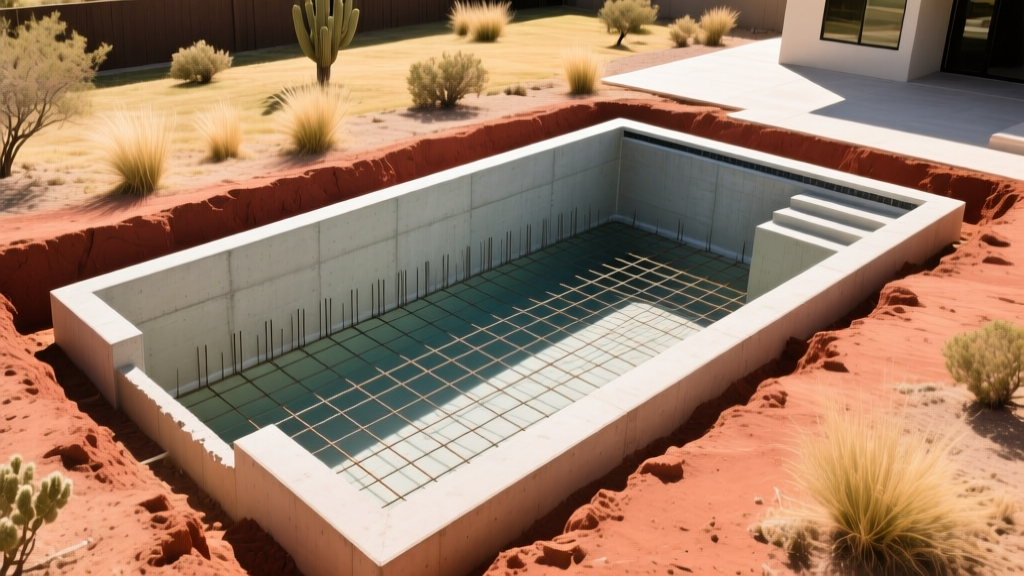
- Excavation, Soil Prep, and Shell (40% - $40,000): Covers the dig, steel rebar grid, plumbing rough-in, and the gunite application.
- Equipment, Electrical, and Gas (20% - $20,000): Includes the variable speed pump, cartridge filter, salt chlorine generator, automation panels, and equipotential bonding (a strict electrical code requirement for metal pool components).
- Coping, Tile, and Decking (20% - $20,000): Bullnose brick or travertine coping, waterline tile, and a minimum 600-square-foot brushed concrete or stamped deck. Travertine is highly recommended in Texas as it stays significantly cooler on bare feet than standard concrete or pavers.
- Permits, Engineering, and Fencing (10% - $10,000): Geotechnical reports, city permits, HOA approvals, and safety barriers.
- The 'Texas Contingency' (10% - $10,000): Held strictly in reserve for unforeseen rock encounters, dewatering needs, or utility line rerouting.
By understanding the specific geological and regulatory demands of your exact zip code, you can accurately forecast the true average cost to build a pool in Texas, avoiding the sticker shock that plagues unprepared homeowners.
Written by
Sarah WhitfieldSarah Whitfield is a chartered quantity surveyor (MRICS) and construction cost analyst with 15 years of experience in material pricing, procurement strategy, and project budgeting. She earned her degree in Construction Management from the University of Reading (UK) and has worked on projects ranging from $2M custom homes to $180M mixed-use developments across North America and Europe. Sarah currently leads cost estimating for BuildMat Insight, maintaining a proprietary database of 4,000+ material price points updated quarterly. She is a frequent contributor to RSMeans cost data panels and has presented at the International Cost Engineering Council (ICEC) congress. Based in Denver, CO, Sarah is an avid trail runner and volunteer mentor for Women in Construction.
More from Sarah Whitfield
View all
Wood & Lumber
What Are the Different Types of Wood? A Builder's Guide
Compare structural softwoods, finish hardwoods, and engineered lumber. Analyze Janka ratings, MOE values, and 2026 pricing for construction.
Aug 4, 2026

Walls & Panels
Steel Framing vs Wood Framing: Corrosion and Moisture Defense
Compare steel framing vs wood framing for moisture resistance. Learn about galvanized coatings, condensation risks, and corrosion protection strategies.
Jul 21, 2026

Stone & Masonry
How to Cut Stone Veneer: Wet Saw vs Grinder Comparison
Compare the best tools for cutting stone veneer. We review wet saws, angle grinders, and chop saws to help you achieve clean, chip-free cuts.
Jul 21, 2026