What Are the Different Types of Wood? A Builder's Guide
Compare structural softwoods, finish hardwoods, and engineered lumber. Analyze Janka ratings, MOE values, and 2026 pricing for construction.

Key Takeaways
- European structural grades (C16, C24, C30) denote characteristic bending strength in N/mm².
- C24 is the industry standard for residential floor joists and roof rafters, offering 50% more bending strength than C16.
- Engineered woods like Laminated Veneer Lumber (LVL) provide predictable, high-capacity spans exceeding 10 meters.
Structural timber grades classify wood based on its load-bearing capacity, primarily measured by characteristic bending strength. In the European Standard EN 338 system, grades like C16, C24, and C30 indicate the timber's bending strength in Newtons per square millimeter (N/mm²). This structural timber grades comparison provides the exact mechanical data needed to specify safe, code-compliant framing materials.
This guide is specifically written for structural engineers, residential builders, and architects who need to select appropriate load-bearing lumber for modern construction projects. Understanding these classifications prevents over-engineering and ensures structural integrity under 2026 building codes.
Understanding Structural Timber Grading Systems
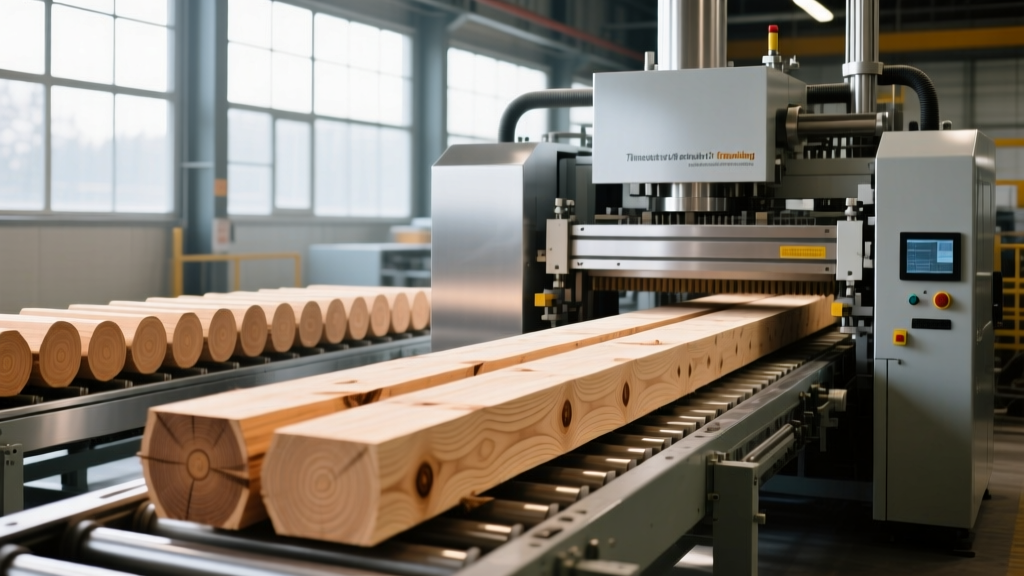
Timber grading ensures that every piece of lumber used in load-bearing applications meets minimum strength thresholds. Grading is performed using two primary methodologies: visual inspection and machine stress rating.
Machine Stress Grading: A non-destructive testing method where timber is passed through a machine that applies a mechanical load to measure stiffness. The system calculates the modulus of elasticity and assigns a strength grade automatically, ensuring high accuracy for high-volume production.
Visual Stress Grading: A traditional assessment where trained inspectors evaluate timber for natural strength-reducing characteristics. Inspectors measure knot sizes, grain slope, and fissures against standardized rulebooks to determine the allowable stress category.
According to the Timber Research and Development Association (TRADA), machine grading is now the dominant method for softwood construction timber in Europe, processing over 85% of structural spruce and pine (TRADA Technical Guidance).
Solid Timber Grades Comparison
Solid softwood timber remains the backbone of residential light-frame construction. The C-grade system defines the characteristic bending strength, which directly dictates allowable spans and load capacities.
C16 vs C24 vs C30 Comparison Matrix
| Property | C16 Grade | C24 Grade | C30 Grade |
|---|---|---|---|
| Characteristic Bending Strength | 16 N/mm² | 24 N/mm² | 30 N/mm² |
| Characteristic Tensile Strength (Parallel to Grain) | 9.6 N/mm² | 14.5 N/mm² | 18.0 N/mm² |
| Modulus of Elasticity (Mean) | 8,000 N/mm² | 11,000 N/mm² | 12,000 N/mm² |
| Primary Application | Internal stud walls, low-load rafters | Floor joists, roof trusses, load-bearing walls | Heavy-duty beams, commercial framing |
| Relative Cost Index (2026) | 1.0x (Baseline) | 1.25x | 1.60x |
C24 is the most widely specified grade for residential floor joists. It offers a 50% increase in bending strength over C16 while maintaining a relatively tight cost premium. For standard 45mm x 145mm joists at 400mm centers, C24 allows clear spans up to 3.6 meters under typical domestic floor loads.
Engineered Structural Timber Grades
When solid timber span limits are exceeded, engineered wood products provide superior dimensional stability and load capacity. These products are manufactured under strict factory conditions, eliminating natural defects.
Laminated Veneer Lumber (LVL)
Laminated Veneer Lumber (LVL) is produced by bonding thin wood veneers (typically 3mm thick) with parallel grain orientation. This structural timber grades comparison highlights LVL for its exceptional tensile strength and consistency.
Manufacturers grade LVL based on its modulus of elasticity, commonly offering 1.8E, 1.9E, and 2.0E grades. A 2.0E LVL beam possesses a modulus of elasticity of 2,000,000 pounds per square inch (psi), making it ideal for long-span headers and ridge beams exceeding 10 meters in length.
Glued Laminated Timber (Glulam)
Glued Laminated Timber (Glulam) consists of dimension lumber laminations bonded with structural adhesives. The American Wood Council categorizes Glulam into bending stress classes, such as 24F-V4 and 28F-V8, where the number indicates the allowable bending stress in hundreds of psi (American Wood Council Publications).

Key Factors Influencing Grade Selection
Selecting the correct grade requires more than just matching bending strength. Environmental and geometric factors drastically alter the effective capacity of the timber.
Moisture Content and Service Classes
Timber strength values are standardized at a maximum moisture content of 20%. The European Standard EN 338 defines three Service Classes to account for environmental moisture exposure.
- Service Class 1: Heated indoor environments with moisture content not exceeding 20%.
- Service Class 2: Covered outdoor structures or unheated buildings where moisture content occasionally exceeds 20% but remains below 85% relative humidity.
- Service Class 3: Fully exposed exterior structures subject to frequent wetting, requiring specific modification factors that reduce allowable stress by up to 40%.
Duration of Load Modification
Timber exhibits viscoelastic behavior, meaning its strength decreases under sustained loading. A C24 joist supporting a permanent dead load has a lower allowable stress than the same joist resisting a short-duration wind load. Engineers must apply duration-of-load factors (ranging from 0.6 for permanent loads to 1.1 for wind loads) to the base grade values.
Frequently Asked Questions
What is the difference between C16 and C24 timber?
The primary difference lies in the characteristic bending strength. C16 timber has a bending strength of 16 N/mm², making it suitable for non-critical internal stud walls. C24 timber has a bending strength of 24 N/mm², providing 50% more load-bearing capacity, which is essential for floor joists and roof rafters.
How are structural timber grades determined?
Grades are determined through visual stress grading or machine stress grading. Visual grading relies on human inspectors measuring knots and grain slope, while machine grading uses mechanical deflection tests to calculate the modulus of elasticity and assign a precise strength class.
What grade of timber is used for floor joists?
C24 is the industry standard for residential floor joists in Europe and the UK. In North America, equivalent framing lumber is typically graded as No. 2 or Select Structural by agencies like the National Lumber Grades Authority (NLGA) or the Southern Pine Inspection Bureau (SPIB).
Conclusion and Next Steps
A precise structural timber grades comparison ensures that framing materials align perfectly with structural demands and budget constraints. While C16 serves basic partition needs, C24 remains the critical baseline for residential floors and roofs, and engineered products like Laminated Veneer Lumber (LVL) resolve long-span challenges.
Do not rely on visual estimates for load-bearing applications. Your next step is to consult the specific span tables provided by your local building authority or use a certified structural engineering software to input the exact Service Class and duration-of-load factors for your project site.
Written by
Sarah WhitfieldSarah Whitfield is a chartered quantity surveyor (MRICS) and construction cost analyst with 15 years of experience in material pricing, procurement strategy, and project budgeting. She earned her degree in Construction Management from the University of Reading (UK) and has worked on projects ranging from $2M custom homes to $180M mixed-use developments across North America and Europe. Sarah currently leads cost estimating for BuildMat Insight, maintaining a proprietary database of 4,000+ material price points updated quarterly. She is a frequent contributor to RSMeans cost data panels and has presented at the International Cost Engineering Council (ICEC) congress. Based in Denver, CO, Sarah is an avid trail runner and volunteer mentor for Women in Construction.
More from Sarah Whitfield
View all
Walls & Panels
Steel Framing vs Wood Framing: Corrosion and Moisture Defense
Compare steel framing vs wood framing for moisture resistance. Learn about galvanized coatings, condensation risks, and corrosion protection strategies.
Jul 21, 2026

Stone & Masonry
How to Cut Stone Veneer: Wet Saw vs Grinder Comparison
Compare the best tools for cutting stone veneer. We review wet saws, angle grinders, and chop saws to help you achieve clean, chip-free cuts.
Jul 21, 2026

General Materials
Core Materials You Need to Build a House: An Application Guide
Discover the exact materials you need to build a house in 2026. This application guide covers structural, MEP, and finish specs with real costs.
Jul 3, 2026