How to Cut Stone Veneer: Wet Saw vs Grinder Comparison
Compare the best tools for cutting stone veneer. We review wet saws, angle grinders, and chop saws to help you achieve clean, chip-free cuts.

Key Takeaways
- Use a 10-inch wet tile saw with a continuous rim diamond blade for manufactured stone veneer to prevent edge chipping.
- Deploy a 4.5-inch brushless angle grinder with a turbo rim blade for natural stone veneer and rapid field cuts.
- Always utilize water suppression or HEPA vacuum attachments to comply with silica dust regulations.
- Measure stone thickness before cutting; most manufactured veneers require a 1.5-inch cutting depth capacity.
How to Cut Stone Veneer: The Direct Answer
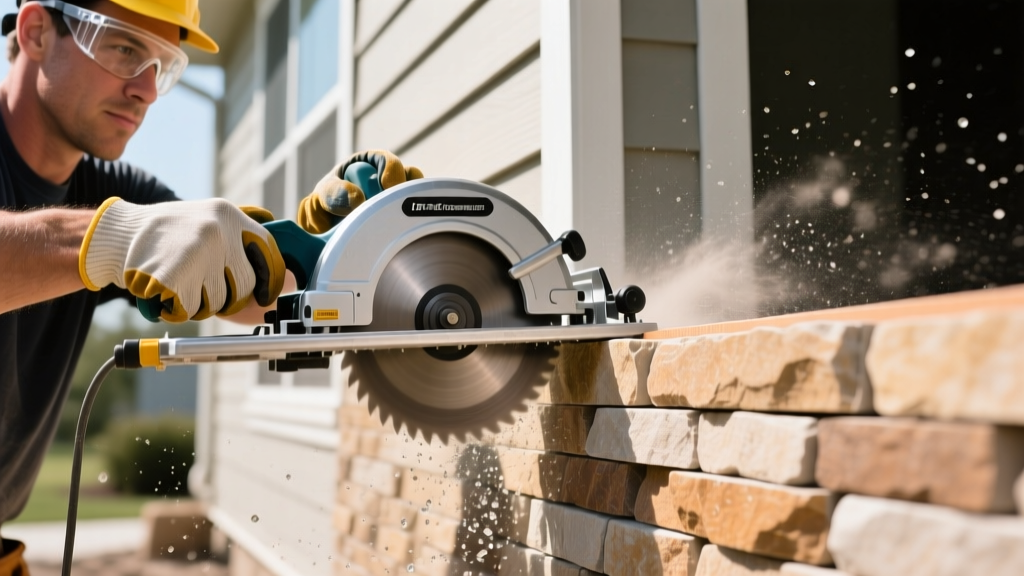
The most effective way to cut stone veneer is using a 10-inch wet tile saw equipped with a continuous rim diamond blade for manufactured stone, or a 4.5-inch angle grinder with a turbo rim blade for natural stone. This guide is written for DIY homeowners and professional masonry contractors seeking precision cuts without material waste.
Selecting the correct tool depends entirely on your stone type, cut volume, and workspace constraints. Manufactured stone requires water cooling to prevent edge blowout, while natural stone demands high-torque grinding for dense substrates. Understanding these distinctions ensures structural integrity and aesthetic perfection on your exterior or interior cladding project.
Key Masonry Definitions
Manufactured Stone Veneer
A lightweight, cast-concrete building material engineered to replicate the exact appearance of natural fieldstone for exterior cladding. It typically measures 1.5-inch to 2.5-inch in thickness and cuts significantly cleaner with water-cooled blades to prevent unsightly edge chipping during installation.
Continuous Rim Diamond Blade
A specialized masonry cutting accessory featuring a smooth, uninterrupted steel edge embedded with industrial diamond segments. This specific blade design produces the cleanest cuts on brittle materials like manufactured stone veneer by grinding rather than aggressively chipping the substrate.
Stone Veneer Cutting Tool Comparison
Choosing the right equipment dictates the speed and finish quality of your masonry work. Below is a decision framework comparing the primary cutting tools available in 2026.
| Tool Type | Best Application | Recommended Blade | Cut Quality | Dust Control |
|---|---|---|---|---|
| 10-inch Wet Tile Saw | Manufactured stone, precision corners | Continuous Rim Diamond | Excellent (No chipping) | Superior (Water suppression) |
| 4.5-inch Angle Grinder | Natural stone, quick field cuts | Turbo Rim Diamond | Good (Minor edge roughness) | Poor (Requires HEPA vacuum shroud) |
| 14-inch Masonry Chop Saw | High-volume production, thick ledgestone | Segmented Diamond | Fair (Aggressive cut) | Moderate (Water attachment required) |
Wet Tile Saws for Manufactured Stone
Wet tile saws remain the industry standard for cutting manufactured stone veneer. Models like the DeWalt D24000 provide a 1.5-inch cutting depth and a stable rolling table. The water pump continuously cools the blade, eliminating the silica dust hazard and preventing the concrete matrix from overheating and spalling.
Angle Grinders for Natural Stone and Field Cuts
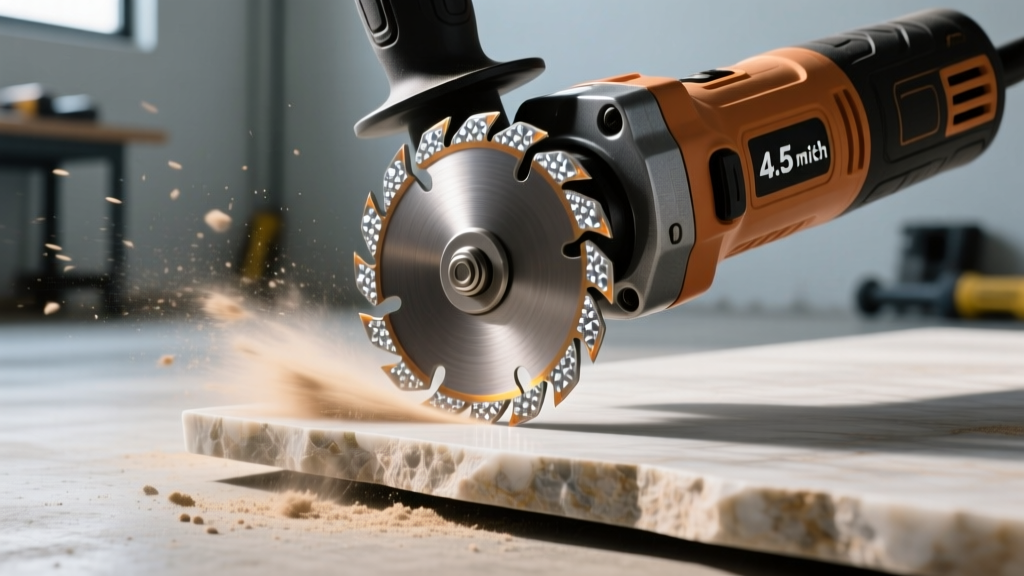
For natural stone veneer or quick modifications on the scaffold, a brushless 4.5-inch angle grinder is essential. As of 2026, brushless motors deliver sustained torque without stalling when biting into dense quartzites. However, dry cutting generates hazardous silica dust. The Occupational Safety and Health Administration strictly mandates water delivery systems or HEPA-filtered vacuum shrouds for all dry masonry cutting operations.
Masonry Saws for High-Volume Projects
When installing thousands of square feet of thick ledgestone, a 14-inch gas-powered masonry saw saves immense labor time. These saws cut through 3-inch thick profiles in a single pass. They require a dedicated 7/8-inch arbor blade and a pressurized water feed to maintain blade life and reduce noise levels below 85 decibels.
Step-by-Step Guide to Cutting Stone Veneer
Preparation and Safety
Don your personal protective equipment, including ANSI-rated safety glasses, hearing protection, and an N95 respirator if dry cutting. Measure the required stone dimensions using a tape measure and mark the cut line on the back of the veneer piece with a lumber crayon. Marking the back ensures any minor blowout occurs on the unexposed mortar-facing side.
Making the Cut
Secure the stone firmly against the saw fence or workbench. Feed the stone into the blade at a steady, moderate pace; forcing the material will warp the blade and cause a 1/16-inch kerf deviation. For L-cuts or outlets, make the primary straight cut first, then carefully back the stone out to execute the perpendicular relief cut.
Frequently Asked Questions
Can you cut stone veneer with a standard tile saw?
Yes, you can cut manufactured stone veneer with a standard wet tile saw provided the saw accommodates the stone thickness. Most residential tile saws max out at a 1-inch to 1.5-inch cutting depth. If your stone veneer exceeds this thickness, you must use a masonry saw or make partial cuts and snap the remainder.
How do you cut stone veneer without a wet saw?
To cut stone veneer without a wet saw, use a 4.5-inch angle grinder equipped with a turbo rim diamond blade. Score the perimeter of the stone on all sides, then carefully grind through the thickest sections. Always attach a dust-extraction shroud connected to a HEPA vacuum to capture airborne silica particles.
What is the best blade for cutting manufactured stone?
The best blade for cutting manufactured stone is a continuous rim diamond blade designed specifically for porcelain and glass. These blades feature a highly concentrated diamond matrix that grinds through the concrete and aggregate smoothly, leaving a factory-finished edge that blends seamlessly with uncut stones.
Conclusion and Next Steps
Selecting between a wet tile saw and an angle grinder depends entirely on your specific stone type and project scale. Manufactured stone demands the clean edges of a wet saw, while natural stone yields to the torque of a grinder. Your next step is to measure your total installation square footage and calculate the required number of diamond blades before purchasing your equipment.
Written by
Sarah WhitfieldSarah Whitfield is a chartered quantity surveyor (MRICS) and construction cost analyst with 15 years of experience in material pricing, procurement strategy, and project budgeting. She earned her degree in Construction Management from the University of Reading (UK) and has worked on projects ranging from $2M custom homes to $180M mixed-use developments across North America and Europe. Sarah currently leads cost estimating for BuildMat Insight, maintaining a proprietary database of 4,000+ material price points updated quarterly. She is a frequent contributor to RSMeans cost data panels and has presented at the International Cost Engineering Council (ICEC) congress. Based in Denver, CO, Sarah is an avid trail runner and volunteer mentor for Women in Construction.
More from Sarah Whitfield
View all
Wood & Lumber
What Are the Different Types of Wood? A Builder's Guide
Compare structural softwoods, finish hardwoods, and engineered lumber. Analyze Janka ratings, MOE values, and 2026 pricing for construction.
Aug 4, 2026

Walls & Panels
Steel Framing vs Wood Framing: Corrosion and Moisture Defense
Compare steel framing vs wood framing for moisture resistance. Learn about galvanized coatings, condensation risks, and corrosion protection strategies.
Jul 21, 2026

General Materials
Core Materials You Need to Build a House: An Application Guide
Discover the exact materials you need to build a house in 2026. This application guide covers structural, MEP, and finish specs with real costs.
Jul 3, 2026