How Much Does a Wind Turbine Cost to Build? 2026 Scope Calculator
Calculate exactly how much a wind turbine costs to build. Explore sizing metrics, tower costs, BOS variables, and grid-tied vs. off-grid budgets.
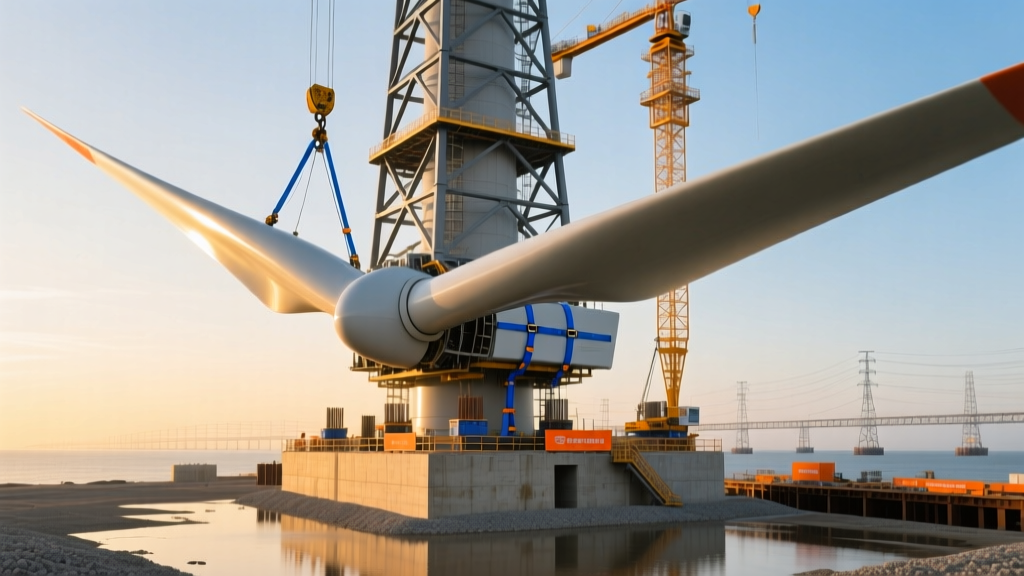
The Sizing Framework: Capacity vs. Swept Area
When evaluating how much does a wind turbine cost to build, the most common mistake is pricing solely by kilowatt (kW) capacity. In reality, construction costs are driven by the swept area (blade length) and the tower height required to clear ground turbulence. A 5kW turbine with a 21-foot rotor diameter will capture significantly less energy at low wind speeds than a 5kW turbine with a 23-foot rotor, yet the larger rotor demands a heavier, more expensive tower and foundation.
According to the U.S. Department of Energy's WINDExchange program, residential and small commercial wind projects typically range from $3,000 to $8,000 per kilowatt of installed capacity. However, this wide variance is entirely dependent on your site's scope variables: soil bearing capacity, trenching distance, and grid interconnection requirements.
2026 Construction Cost Matrix by System Size
The following matrix breaks down average turnkey construction costs for the most common small-wind configurations. These figures assume standard soil conditions (Class 2 or better) and a trenching distance of under 150 feet from the tower base to the main service panel.
| System Size | Typical Rotor Diameter | Tower Height | Turbine & Tower Cost | BOS & Installation | Total Build Cost |
|---|---|---|---|---|---|
| 1.5 kW | 10 - 12 ft | 60 ft (Guyed) | $6,000 - $9,000 | $4,500 - $7,000 | $10,500 - $16,000 |
| 5.0 kW | 18 - 21 ft | 80 ft (Guyed) | $15,000 - $22,000 | $9,000 - $14,000 | $24,000 - $36,000 |
| 10.0 kW | 23 - 26 ft | 100 ft (Freestanding) | $32,000 - $45,000 | $16,000 - $25,000 | $48,000 - $70,000 |
| 20.0 kW | 30 - 33 ft | 120 ft (Lattice) | $65,000 - $85,000 | $30,000 - $45,000 | $95,000 - $130,000 |
Tower Engineering and Foundation Scope
The tower and its foundation often account for 30% to 40% of the total build cost. The structural requirements scale exponentially with height and rotor weight.
Foundation Variables
A standard 5kW turbine on an 80-foot tilt-up tower requires a reinforced concrete pad. In standard 2,500 PSI soil, this pad typically measures 4 feet by 4 feet by 4 feet deep, requiring roughly 9.5 cubic yards of concrete and a specific #5 rebar cage matrix. If your site features expansive clay or high water tables, a geotechnical engineer may mandate driven steel piles or a bell-bottom pier foundation, which can add $4,000 to $8,000 to the scope.
Guyed vs. Freestanding Lattice Towers
- Guyed Towers: Cost 40% less than freestanding towers but require a massive footprint. An 80-foot guyed tower needs a clear radius of 60 to 80 feet for the anchor cables. If you lack this acreage, you must upgrade to a freestanding lattice or monopole tower.
- Freestanding Lattice Towers: Require a significantly larger concrete base (e.g., a 100-foot tower for a 10kW turbine may need a 6ft x 6ft x 6ft pad weighing over 30,000 lbs) to counteract the overturning moment. Crane rental for erection adds $2,500 to $5,000 per day to the project scope.
Balance of System (BOS): The Hidden Cost Multiplier
The Balance of System encompasses everything between the turbine's slip rings and your main breaker panel. According to Energy.gov guidelines on small wind electric systems, proper wire sizing and safety disconnects are non-negotiable for both efficiency and code compliance.
Wild AC vs. DC Transmission
Modern turbines (like those from Bergey Windpower or Primus Wind Power) typically output "wild AC" (variable frequency and voltage). This requires heavy-gauge, multi-conductor underground cabling run down the tower and trenched to the inverter.
Rule of Thumb: For a 10kW system with a 200-foot trench run, you will need 2/0 AWG aluminum triplex or quadruplex cable to minimize voltage drop. Trenching costs average $15 to $30 per linear foot, plus the cost of direct-burial rated conduit and copper grounding rods at the tower base.
Inverter and Dump Load Sizing
Grid-tied wind inverters (such as the Schneider Electric Conext SW series or specialized wind inverters) must handle the peak surge of the turbine during high-wind gusts. Budget $3,500 to $7,000 for a UL 1741-SA certified wind inverter. Additionally, a diversion (dump) load—usually a bank of heavy-duty resistors housed in a weatherproof NEMA 3R enclosure—is required to absorb excess energy if the grid drops or batteries reach full charge, preventing the turbine from over-speeding and destroying its bearings.
Grid-Tied vs. Off-Grid Infrastructure Delta
Deciding between grid-tied and off-grid drastically alters the financial scope of the build.
Warning on Off-Grid Wind: Wind turbines are notoriously hard on battery banks due to the high-amperage, irregular charging profiles during storm fronts. If building off-grid, you must oversize your battery bank's BMS (Battery Management System) to handle peak absorption currents, or utilize a DC diversion load to protect lithium cells.
Off-Grid Battery Scope (2026 Pricing)
While LiFePO4 (Lithium Iron Phosphate) battery prices have continued to stabilize, a full off-grid battery bank capable of sustaining a home through a 3-day wind lull remains a massive capital expense. For a 10kW turbine system, expect to install a 30kWh to 45kWh battery bank. Using server-rack style 48V 100Ah LiFePO4 modules (approx. 5.12kWh each), you will need 6 to 9 modules. At roughly $1,200 to $1,500 per module in 2026, plus battery racks, heavy-duty busbars, and Class-T fuses, the battery scope alone adds $12,000 to $22,000 to the project.
Zoning, Setbacks, and Interconnection Realities
Before pouring concrete, the administrative scope must be calculated. Local zoning boards dictate maximum tower heights and setback requirements.
- Setback Requirements: Most municipalities require the tower to be set back from all property lines and structures by at least 1.1 to 1.5 times the total tower height. A 100-foot tower requires a 150-foot clear radius from property lines.
- FAA Notification: If your proposed tower exceeds 200 feet Above Ground Level (AGL), or if you are within a defined radius of a registered airport or helipad, you must file FAA Form 7460-1 (Notice of Proposed Construction). While usually approved for residential heights, the administrative timeline can add 60 to 90 days to your scope.
- Utility Interconnection: For grid-tied systems, your utility will require a formal interconnection application. Many utilities require an external, lockable AC disconnect switch mounted on the exterior of your home, plus a dedicated bi-directional meter. Budget $1,500 to $3,000 for utility-mandated upgrades and electrical engineering stamp fees.
Expert Sizing Recommendations by Property Type
To finalize your scope calculator inputs, match your property profile to the recommended system architecture:
- Suburban/Small Acreage (1-3 Acres): Limit scope to a 1.5kW to 3kW turbine on a 60-foot tilt-up guyed tower. Focus on hybridizing with a 5kW solar array to compensate for lower tower heights and ground-level wind turbulence.
- Rural Homestead (5-15 Acres): The sweet spot for a 5kW to 10kW turbine on an 80-to-100-foot freestanding lattice tower. Ensure you have a clear wind corridor (free of tree lines) to the prevailing west/southwest winds.
- Commercial/Agri-Facility (20+ Acres): Scale to a 20kW+ system. At this scope, consider a medium-voltage transmission setup and a dedicated pad-mounted transformer, which shifts the project from standard residential electrical codes into commercial utility-grade engineering.
Written by
Priya KapoorPriya Kapoor is a real estate market analyst and construction economics researcher with expertise in housing affordability, development feasibility, and infrastructure investment. She holds a Master of Regional Planning from Cornell University and previously worked as a senior analyst at CBRE's Investment Properties group, where she modeled returns for $4B in mixed-use development pipelines. Priya now runs an independent research practice advising developers, municipalities, and REITs on construction cost forecasting and market timing. She publishes the quarterly "BuildMat Market Pulse" report tracking material price indices across 12 commodity categories. Based in Austin, TX, Priya serves on the board of Habitat for Humanity Austin and is a marathon runner.
More from Priya Kapoor
View all
Construction Cost
Cost to Build a 1600 Sq Ft Home in 2026: Full Breakdown
Accurate 2026 cost to build a 1600 sq ft home—material, labor, and regional pricing breakdowns included. Plan your budget with real-time estimates.
Aug 11, 2026

Wood & Lumber
Name the Types of Wood for Pressure Treatment and Preservation
Learn how to name the types of wood best suited for pressure treatment. Compare species treatability, chemical retention levels, and 2026 preservation costs.
Aug 4, 2026

Stone & Masonry
Stone Veneer Suppliers Lindenhurst: 2026 Cost Analysis
Analyze 2026 stone veneer costs in Lindenhurst, NY. Compare local supplier pricing, delivery fees, and Suffolk County installation labor rates.
Aug 4, 2026