Wonder of the Seas Cost to Build: Regional Shipyard Analysis
Analyze the Wonder of the Seas cost to build through a regional price lens, comparing European luxury shipyards with Asian commercial hubs.
The Baseline: Breaking Down the Wonder of the Seas Cost to Build
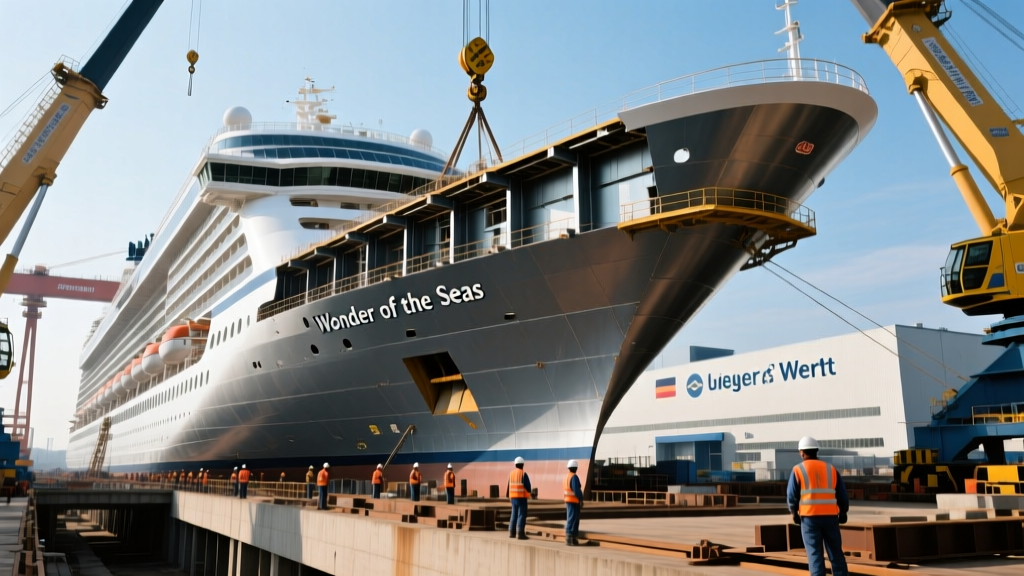
When evaluating mega-structure construction, few projects rival the sheer scale and financial complexity of modern cruise ships. The Wonder of the Seas, an Oasis-class vessel delivered to Royal Caribbean, carries an estimated price tag of $1.35 billion. For construction cost estimators and maritime economists, understanding the wonder of the seas cost to build requires looking past the final invoice and examining the regional economics that dictated where, how, and by whom the vessel was constructed.
Vessel Cost Metrics at a Glance
- Total Estimated Cost: $1.35 Billion (USD)
- Gross Tonnage (GT): 235,600 GT
- Cost per Gross Ton: ~$5,730 / GT
- Passenger Capacity: 6,988 (Maximum)
- Cost per Berth: ~$193,188 / Berth
Unlike commercial freighters, where cost-per-ton is driven almost entirely by raw steel and propulsion, luxury maritime construction is heavily weighted toward hospitality outfitting, complex HVAC systems, and specialized entertainment infrastructure. This distinction is the primary driver behind the regional shipyard selection process.
Regional Shipyard Economics: Why Saint-Nazaire Over Asia?
The global shipbuilding industry is heavily concentrated in Asia. According to data tracked by the UNCTAD Review of Maritime Transport, South Korea, China, and Japan collectively control over 90% of the global shipbuilding market by gross tonnage. Yet, the Wonder of the Seas was constructed at the Chantiers de l'Atlantique shipyard in Saint-Nazaire, France. Why pay premium European labor rates when Asian yards offer massive economies of scale?
The answer lies in the bifurcation of the maritime supply chain. Asian shipyards excel at standardized, high-volume commercial vessels (bulk carriers, container ships, LNG tankers). European shipyards, particularly in France, Italy, and Germany, have monopolized the highly specialized, low-volume luxury cruise market.
| Cost & Capability Factor | European Luxury Yards (France/Italy) | Asian Commercial Yards (South Korea/China) |
|---|---|---|
| Base Labor Rates | High (Unionized, specialized maritime trades) | Low to Moderate (High volume, standardized labor) |
| Hospitality Outfitting | Deep local supply chain for luxury interiors | Limited; requires importing specialized subcontractors |
| Entertainment Engineering | Expertise in acoustics, theaters, and water parks | Focused on cargo handling and fuel efficiency |
| Project Management | Accustomed to 3,000+ concurrent specialized contractors | Optimized for linear, repetitive assembly processes |
| Steel Fabrication Cost | Higher (Smaller batch purchasing) | Lower (Massive economies of scale) |
Attempting to build an Oasis-class vessel in Ulsan, South Korea, or Shanghai, China, would result in severe logistical bottlenecks. The cost of flying in thousands of European interior fitters, marine acousticians, and specialized HVAC engineers to Asia would entirely negate the savings on raw steel and hull fabrication.
Supply Chain Geography: Sourcing Materials Across Continents
The $1.35 billion price tag is not just a reflection of French labor; it is a masterclass in global supply chain integration. The OECD Council Working Party on Shipbuilding frequently highlights how modern maritime construction relies on a decentralized network of high-tech suppliers. The Wonder of the Seas acts as a floating city, requiring municipal-grade infrastructure squeezed into a marine environment.
Heavy Machinery and Propulsion
The vessel's power plant and propulsion systems represent roughly 20% to 25% of the total build cost. The Wonder of the Seas utilizes six marine diesel engines and three Azipod azimuth thrusters. These are not commoditized parts; they are highly engineered systems often sourced from specialized European firms like ABB (headquartered in Switzerland/Sweden) or Wärtsilä (Finland). The regional proximity of these manufacturers to the Saint-Nazaire shipyard reduces heavy-freight transport costs and allows for just-in-time delivery of multi-ton propulsion units.
Vertical Transportation and HVAC
Moving 6,988 passengers across 18 decks requires robust vertical logistics. The ship features over 20 elevators, typically supplied by Kone (Finland) or Schindler (Switzerland). Furthermore, the HVAC requirements for a vessel with indoor climate-controlled zones, ice rinks, and aqua theaters demand custom marine air-handling units. Sourcing these from regional European manufacturers ensures compliance with strict EU maritime safety directives and reduces the lead times associated with transoceanic shipping of oversized ductwork.
Labor Cost Disparities and Specialized Maritime Engineering
Labor accounts for nearly 40% of the total cost to build a luxury cruise ship. However, the term 'labor' in this context extends far beyond welders and pipefitters. The Saint-Nazaire shipyard operates as a massive integration hub, managing a workforce that peaks at over 5,000 concurrent workers, including thousands of subcontractors.
- Marine Architects & Naval Engineers: Commanding premium rates, these professionals ensure the vessel's stability, hydrodynamics, and structural integrity meet International Maritime Organization (IMO) standards.
- Acoustic Engineers: Critical for isolating engine vibration from passenger cabins and designing Broadway-style theaters at sea.
- Luxury Carpentry & Stonework: Subcontracted primarily from specialized Italian and French firms capable of installing high-end hospitality finishes that can withstand constant marine vibration and humidity.
- Marine Electricians: Wiring a floating smart-city requires thousands of miles of marine-grade, fire-retardant cabling, installed by certified specialists familiar with SOLAS (Safety of Life at Sea) regulations.
While an Asian commercial shipyard might pay a welder $25 to $40 per hour, a specialized marine outfitter in France or Italy commands significantly higher rates. Yet, the efficiency and error-rate reduction achieved by these specialized trades prevent the catastrophic rework costs that would occur if a commercial yard attempted to learn luxury outfitting on the fly.
Inflation and 2026 Mega-Project Projections
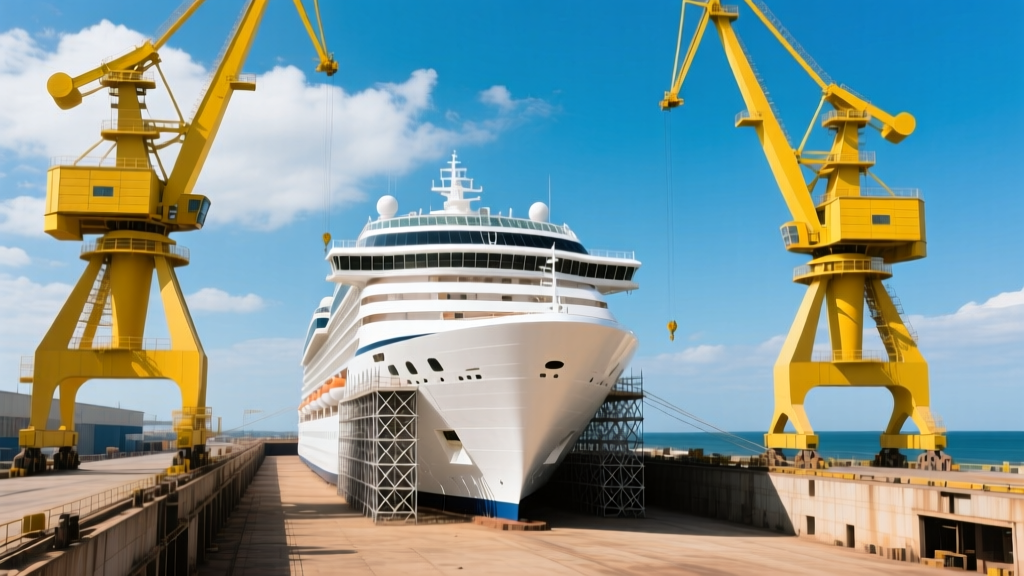
The Wonder of the Seas was delivered in early 2022. For estimators pricing similar Oasis-class or next-generation mega-vessels in 2026, the baseline $1.35 billion figure must be adjusted for severe maritime inflation and regulatory shifts.
'The era of the $1.3 billion mega-ship is over. Between green-technology mandates, supply chain realignments, and specialized labor shortages, 2026 projections for equivalent gross-tonnage vessels push the ceiling well past $1.6 billion.'
Several key factors are driving 2026 cost escalations:
- Dual-Fuel Mandates: Newer vessels are being designed with LNG (Liquefied Natural Gas) or methanol dual-fuel propulsion systems to meet IMO 2030 carbon intensity targets. Integrating cryogenic fuel tanks and specialized handling systems adds $50M to $80M to the base hull cost.
- Advanced Wastewater & Scrubber Systems: Stricter regional emission and discharge laws in ports across Europe and North America require massive investments in closed-loop scrubber systems and advanced wastewater treatment plants, driving up mechanical engineering costs by 15%.
- Steel Tariffs and Energy Costs: European steel production, heavily impacted by energy market fluctuations, has seen sustained price floors, keeping hull fabrication costs elevated compared to the pre-2021 averages.
Strategic Takeaways for Mega-Construction Estimators
Analyzing the wonder of the seas cost to build offers profound lessons for estimators working on complex, multi-regional terrestrial mega-projects (such as international airports, stadium complexes, or high-speed rail terminals).
First, match the supply chain to the finish level. Just as Royal Caribbean chose France over South Korea for luxury outfitting, terrestrial estimators must align regional contractor selection with the specific architectural finishes required, rather than defaulting to the lowest initial bid. Second, account for integration friction. The true cost of a mega-project lies in the seams where structural steel meets luxury interiors. Budget heavily for specialized project management and systems integration. Finally, price regulatory compliance as a primary material. In 2026, environmental and safety systems are no longer secondary add-ons; they are foundational cost drivers that dictate the physical footprint and engineering requirements of the entire structure.
Written by
Elena RodriguezElena Rodriguez is a civil engineer and technical writer specializing in concrete technology, masonry systems, and ASTM/ACI compliance. She earned her B.S. in Civil Engineering from Texas A&M University and spent a decade at a materials testing laboratory, performing over 2,000 concrete compressive strength tests and masonry prism evaluations. Elena is an ACI-certified Field Testing Technician (Grade I) and a member of ASTM Committee C12 on Natural Building Stone. She currently consults on forensic engineering cases involving concrete failures and moisture intrusion. Based in San Antonio, TX, Elena is a proud member of the Society of Women Engineers (SWE) and coaches her daughter's FIRST Robotics team.
More from Elena Rodriguez
View all
Walls & Panels
Cost Analysis: Light Gauge Steel Framing Advantages and Disadvantages
Evaluate light gauge steel framing advantages and disadvantages through a strict cost analysis lens, comparing material, labor, and lifecycle expenses.
Aug 4, 2026

Walls & Panels
Gypsum Board Types: Exact Specifications, Thickness & Dimensions
Compare standard, Type X, and moisture-resistant gypsum board types. Get exact specifications, thicknesses, dimensions, and ASTM standards for your project.
Aug 4, 2026

Fire Resistance
Best Fire-Resistant Outdoor Decking Materials: 2026 Buyer Guide
Discover the best fire-resistant outdoor decking materials for 2026. Compare Class A PVC, aluminum, and hardwood options for WUI compliance and safety.
Aug 4, 2026