Above Ground Swimming Pool Deck Ideas: 2026 Brand Deep-Dive
Explore top above ground swimming pool deck ideas for 2026, featuring deep-dives into moisture-resistant composite brands and aluminum framing systems.
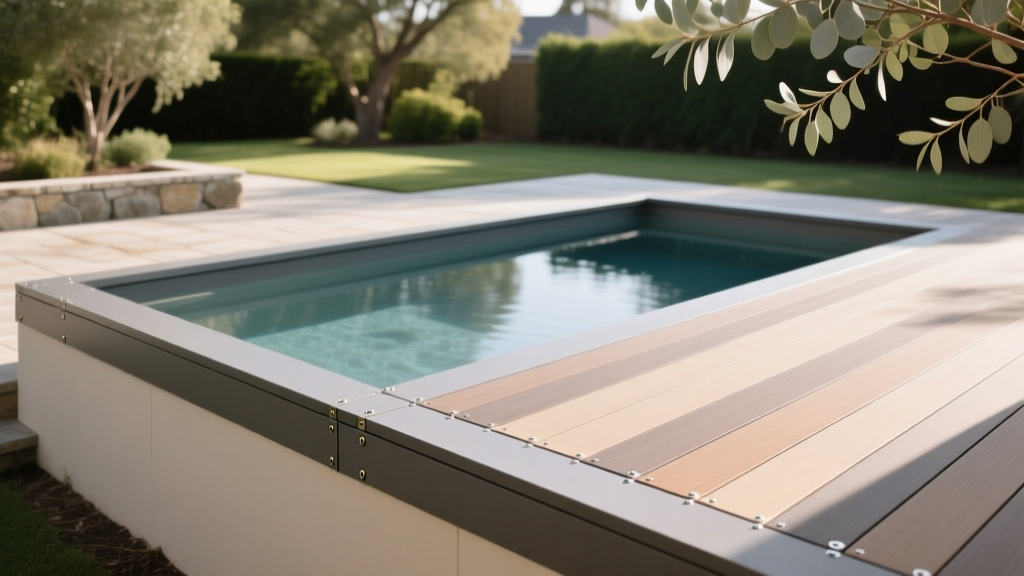
The Physics of Poolside Environments: Why Standard Materials Fail
When evaluating above ground swimming pool deck ideas, the primary constraint is not just visual appeal, but extreme moisture and chemical exposure. A standard 15-foot round, 4-foot deep above-ground pool holds approximately 5,300 gallons of water. Because water weighs 8.34 pounds per gallon, that single structure exerts over 44,000 pounds of hydrostatic pressure. The microclimate generated by this massive body of water—combined with constant splashing of chlorinated or salt-treated water—creates one of the most hostile environments for exterior building materials.
Traditional pressure-treated pine framing and standard wood-plastic composite (WPC) decking frequently fail in these conditions. Wood joists rot from the inside out due to trapped humidity, while uncapped or poorly capped composite boards absorb pool chemicals, leading to surface degradation, mold growth, and dangerous slip hazards. To build a lasting poolside structure in 2026, you must specify materials engineered for submersion, thermal stability, and high slip resistance.
Top Composite Decking Brands for Pool Environments
Not all composite decking is created equal. For above-ground pool applications, you must select boards with either a solid, non-absorbent core or advanced mineral-based compositions. Here is a deep-dive into the specific product lines that outperform in poolside conditions.
MoistureShield: Vision and Infuse Lines
MoistureShield remains the industry benchmark for high-moisture applications due to its proprietary Solid Core technology. Unlike traditional composites that use a foamed center to reduce weight and material costs, MoistureShield boards are solid all the way through. This means the boards can be submerged in water, buried in the ground, or installed directly over a pool's splash zone without voiding the manufacturer's warranty.
- Slip Resistance: The Vision line features an embossed wood-grain texture that achieves an ADA-compliant slip resistance rating, crucial for barefoot traffic on wet surfaces.
- Chemical Resistance: The dense polyethylene core resists absorption of chlorine and bromine, preventing the chemical breakdown that causes cheaper boards to chalk and fade.
- 2026 Pricing: Expect to pay between $8.50 and $11.00 per linear foot for the Vision line, depending on the color palette and regional distributor markups.
Trex: Transcend Lineage
While Trex is known for its broad catalog, the Transcend Lineage collection is specifically engineered for high-heat, high-traffic zones. Pool decks receive intense, unshaded UV exposure, which can cause standard composite boards to absorb heat and burn bare feet.
- Heat Mitigation: Lineage utilizes specialized heat-mitigating reflective pigments in its four-sided polymer cap. Independent testing shows these boards stay significantly cooler than traditional dark-colored composites under direct midday sun.
- Four-Sided Capping: The fully wrapped shell prevents moisture intrusion from the bottom, a common failure point in pool decks where humidity gets trapped between the joist and the board.
- 2026 Pricing: Premium pricing applies here, ranging from $9.50 to $12.50 per linear foot.
Deckorators: Mineral-Based Composite (MBC)
Deckorators disrupted the market with its Mineral-Based Composite technology. By replacing wood flour with advanced minerals and polypropylene, they created a board with virtually zero water absorption and exceptional dimensional stability.
- Thermal Expansion: MBC boards exhibit almost no thermal expansion or contraction. This is critical for pool decks, where boards are often laid tight against metal pool coping. Standard composites can buckle in the summer heat if adequate gapping isn't provided; MBC eliminates this risk.
- Weight and Strength: The mineral matrix makes the boards lighter but structurally stiffer, allowing for wider joist spacing (up to 16 inches on-center for diagonal layouts) without sagging.
Framing Systems: Aluminum vs. Pressure-Treated Wood
The deck surface is only as durable as the substructure beneath it. In 2026, relying on pressure-treated (PT) lumber for a pool deck frame is a calculated risk. The constant humidity trapped beneath an above-ground pool deck accelerates wood decay, particularly at the joist hangers and ledger boards. Aluminum framing has emerged as the superior, albeit more expensive, alternative.
Never lag-screw your deck's inner rim joist directly into the above-ground pool's top metal rail. The pool wall expands and contracts with water temperature and hydrostatic pressure. The deck framing does not move at the same rate. Within two seasons, this differential movement will either buckle the deck boards or tear the pool's top rail apart, compromising the pool wall's structural integrity. Always frame the deck independently, leaving a 1/2-inch expansion gap between the deck's inner rim joist and the pool coping.
| Feature | Wahoo Decks Aluminum Joists | #2 Grade Pressure-Treated Pine |
|---|---|---|
| Material Cost (per LF) | $18.00 - $24.00 | $4.50 - $6.50 |
| Moisture Resistance | Impervious (Extruded 6063-T6 Aluminum) | Susceptible to rot if moisture is trapped |
| Water Drainage | Integrated pre-engineered drainage channels | Requires manual sloping and flashing tape |
| Lifespan in Pool Zone | 50+ Years | 10 - 15 Years (High failure rate at joints) |
Railing Systems: Navigating the Greenhouse Effect
When integrating railing systems into your above ground swimming pool deck ideas, avoid full glass panels. While glass offers unobstructed views, it creates a localized greenhouse effect over the pool water, raising the water temperature and accelerating chlorine off-gassing. Furthermore, constant splashing leaves hard water stains on glass that require weekly maintenance.
Instead, specify aluminum railing systems with horizontal cable infill or tightly spaced vertical pickets. Brands like Fortress Ironworks and Trex Signature offer powder-coated aluminum rails that withstand pool chemicals without rusting. Ensure the bottom rail is installed at least 2 inches above the deck surface to allow for sweeping and water runoff, preventing debris accumulation at the base of the posts.
2026 Cost Breakdown for a 400 Sq. Ft. Pool Deck
Building a wrap-around deck for a standard 15-foot above-ground pool typically requires about 400 square feet of decking material. Below is a realistic 2026 material cost breakdown for a premium, low-maintenance build.
- Premium Capped Composite Decking (e.g., Trex Lineage): $3,800 - $4,600
- Aluminum Substructure (Wahoo Decks): $2,200 - $2,800
- Hidden Fastening System (Trex Hideaway): $450 - $550
- Aluminum Railing (120 linear feet): $4,800 - $6,500
- Concrete Footings & Helical Piles: $800 - $1,200
- Total Material Cost Estimate: $12,050 - $15,650
Pro-Tip on Fasteners: Never use face-screwed top-down fasteners on a pool deck. Exposed screw heads will eventually back out due to thermal cycling, creating a severe laceration hazard for bare feet. Always use hidden clip systems (like the Trex Hideaway or MoistureShield Clip) and ensure the clips are made of stainless steel or high-density fiberglass to resist chlorine corrosion.
Critical Installation Specs for Poolside Decks
According to guidelines referenced by the North American Decking and Railing Association (NADRA), poolside structures require stricter tolerances than standard residential decks. Adhere to these specific measurements during installation:
- Board Gapping: Maintain a strict 3/16-inch gap between composite boards. This allows rapid drainage of pool splash while preventing high heels or small children's toes from getting caught.
- Deck Slope: The deck surface must slope away from the pool coping at a minimum rate of 1/4 inch per foot. This prevents chlorinated water from pooling against the metal pool wall, which can cause premature oxidation.
- Joist Flashing: If using wood framing instead of aluminum, every single joist must be covered with a butyl-rubber flashing tape (such as Trex Protect or Grace Vycor) before the deck boards are laid. This prevents water from sitting on the horizontal surface of the joist, which is the primary cause of substructure rot.
- Independent Footings: Do not pour concrete footings that touch or support the pool's vertical wall. Use helical piles driven at least 5 feet deep, positioned at least 12 inches away from the pool's bottom track to avoid undermining the pool's foundation.
Frequently Asked Questions
Can I attach the deck to the above-ground pool's upright supports?
No. Above-ground pools are engineered as self-supporting tension rings. Attaching a deck frame to the pool's vertical uprights transfers the live load of the deck (and the people on it) onto the pool wall. This can cause the pool wall to buckle outward, leading to catastrophic failure and flooding. The deck must be 100% freestanding.
How do I handle the gap between the deck and the pool coping?
Leave a 1/2-inch gap between the inner edge of the deck boards and the pool's top rail. Fill this gap with a flexible, closed-cell backer rod and seal it with a high-quality, UV-stable polyurethane sealant (like Sikaflex-1a). This allows both structures to expand and contract independently while preventing debris and water from falling into the void beneath the deck.