Deck Painting Durability: Expected Lifespan and Failure Analysis
Discover the true lifespan of deck painting on wood surfaces. Analyze durability factors, failure modes, and top coating systems for long-lasting results.
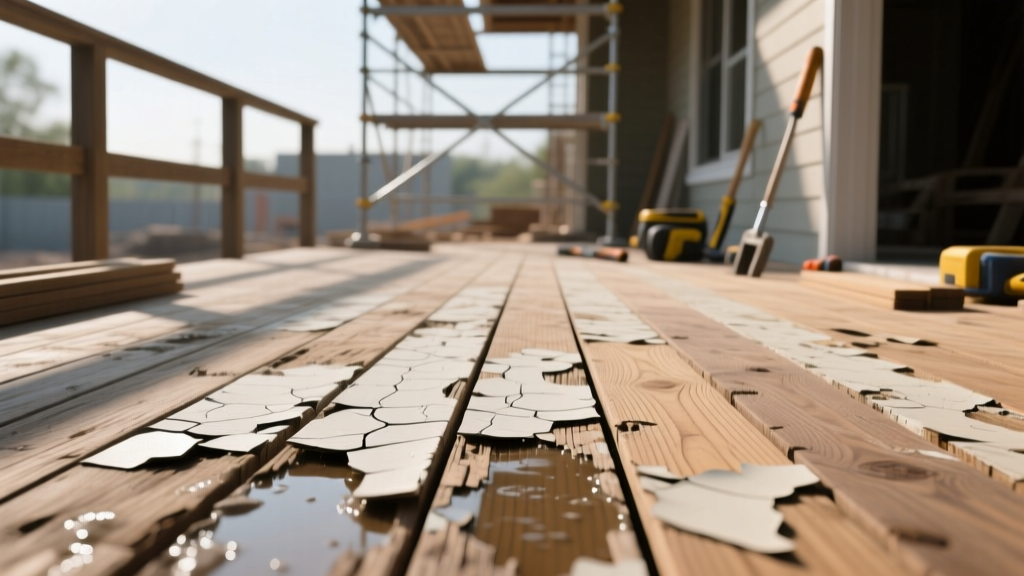
The Reality of Deck Painting Lifespan
Horizontal wood surfaces represent the most hostile environment for architectural coatings. Unlike vertical siding, deck floors endure direct UV radiation, standing water, snow loads, and abrasive foot traffic. When evaluating deck painting from a durability perspective, the fundamental challenge is managing dimensional instability. Wood swells and shrinks with moisture fluctuations; if the applied coating lacks adequate elasticity or traps moisture, catastrophic adhesion failure is inevitable.
Key Lifespan Metrics (2026 Baseline)
- Standard Acrylic Solid Stain: 2 to 4 years on horizontal surfaces.
- Alkyd/Oil-Based Porch Paint: 3 to 5 years (limited to covered/protected areas).
- Elastomeric Deck Coatings: 5 to 8 years (highly dependent on prep and moisture management).
- Average Cost for Pro Application: $4.50 to $7.50 per square foot, including chemical stripping and priming.
According to research from the USDA Forest Products Laboratory, film-forming finishes like paint and solid-color stains generally require more frequent maintenance on horizontal surfaces compared to penetrating finishes. The key to extending the lifespan of deck painting lies not just in the product chosen, but in mitigating the specific failure modes that destroy the coating bond.
Failure Mode Analysis: Why Deck Paint Peels
To maximize durability, you must understand how and why deck coatings fail. Peeling is rarely a product defect; it is almost always a substrate or preparation failure.
1. Moisture Entrapment and Hydrostatic Pressure
Wood is hygroscopic. If deck boards are painted when their internal moisture content exceeds 15%, or if the bottom and end-grains of the boards are left unsealed, moisture will attempt to escape through the top surface when heated by the sun. A non-breathable film-forming paint traps this vapor. The resulting hydrostatic pressure creates blisters that eventually rupture, leading to widespread peeling. Always verify substrate moisture using a pinless meter, such as the Wagner Orion 910, ensuring readings are consistently below 15% before application.
2. Intercoat Adhesion Failure
Applying a new acrylic deck paint over an existing, chalky, or oxidized alkyd coating without a proper bonding primer guarantees failure. The new paint adheres to the loose chalk rather than the wood substrate. Furthermore, applying elastomeric coatings over existing penetrating oils (like linseed or tung oil) will result in immediate delamination, as the oil prevents the water-based elastomer from achieving a mechanical grip.
3. UV Degradation and Chalking
While UV rays primarily cause fading and chalking (a powdery residue on the surface), severe UV degradation breaks down the binder in the paint. Once the binder degrades, the pigment washes away during rain, leaving the wood exposed. Premium 100% acrylic resins and advanced polyurethane hybrids resist UV breakdown significantly longer than cheaper vinyl-acrylic blends.
Comparative Lifespan Matrix: Deck Coating Systems
Selecting the right chemistry is critical. The table below compares the primary coating systems used for deck painting, analyzing their physical properties and expected horizontal lifespans.
| Coating Type | Film Thickness | Horizontal Lifespan | Moisture Permeability | Material Cost (per gal) |
|---|---|---|---|---|
| 100% Acrylic Solid Stain | 2-3 mils | 2-4 Years | Moderate (Breathable) | $55 - $75 |
| Alkyd/Oil Porch Paint | 3-4 mils | 3-5 Years (Covered) | Low (Traps Moisture) | $45 - $60 |
| Elastomeric Restore Coating | 15-20 mils | 5-8 Years | Very Low (Waterproof) | $85 - $120 |
| Acrylic-Polyurethane Hybrid | 4-5 mils | 4-6 Years | Low-Moderate | $70 - $95 |
Environmental & Substrate Variables
The lifespan of your deck paint will fluctuate wildly based on the wood species and the local microclimate. The University of Minnesota Extension notes that wood density and natural extractives heavily influence coating adhesion.
- Pressure-Treated Pine (PT): Highly porous but prone to severe warping and checking as it dries. PT lumber must cure for 3 to 6 months before painting. Paint lifespan on PT is typically on the lower end of the spectrum due to dimensional movement.
- Cedar and Redwood: Contain natural tannins that will bleed through standard acrylic paints, causing ugly brown stains. You must use a stain-blocking alkyd primer (like Zinsser Cover Stain) before applying the topcoat.
- Tropical Hardwoods (Ipe, Cumaru): Do not paint these woods. Their extreme density and natural oils prevent paint adhesion. Film-forming coatings will peel off tropical hardwoods within 12 months. Stick to penetrating UV-inhibitor oils for these species.
Pro-Grade Preparation Protocols for Maximum Adhesion
Preparation accounts for 80% of a deck coating's lifespan. Follow this exact sequence for previously painted or bare wood decks:
- Chemical Stripping (If Removing Old Paint): Apply a methylene chloride-free stripper (e.g., Dumond Smart Strip). Allow it to dwell for 45 minutes, then scrape with a carbide-tipped pull scraper.
- Pressure Washing: Use a gas-powered washer delivering 1,200 to 1,500 PSI with a 25-degree (green) tip. Keep the nozzle 12 inches from the wood. Higher pressure or narrower tips will "fur" the wood, destroying the surface fibers and ruining paint adhesion.
- Oxalic Acid Brightening: Washing raises the wood pH and opens the grain. Apply an oxalic acid-based deck brightener to neutralize the surface, drop the pH to around 5.0, and dissolve remaining tannins. Rinse thoroughly.
- Moisture Testing: Wait 48 to 72 hours. Test multiple boards in shaded and sunny areas with a pinless moisture meter. Do not proceed if readings exceed 15%.
- End-Grain Sealing: Before priming, coat all exposed end-grains and the bottoms of stair treads with a clear penetrating epoxy sealer (like Smith & Co. Clear Penetrating Epoxy Sealer) to block the primary moisture entry points.
Top Recommended Coating Systems
For maximum durability in 2026, specify these professional-grade systems based on your substrate condition:
For Bare or Stripped Wood: Sherwin-Williams SuperDeck Solid Color Stain
Despite the word "stain," this is a 100% acrylic, film-forming opaque coating. It offers excellent UV resistance and remains flexible enough to handle the expansion and contraction of pressure-treated pine. Apply two coats at a spread rate of 250-300 square feet per gallon.
For Older Decks with Hairline Cracks: Rust-Oleum RockSolid Deck Restore
This is an elastomeric coating that applies 10 times thicker than standard paint. It bridges gaps up to 1/4 inch wide and creates a textured, slip-resistant surface. Because it is virtually impermeable, it requires flawless preparation and absolute moisture control during application. Budget for $110 per gallon and expect a coverage rate of only 40-50 square feet per gallon due to the high build thickness.
For Covered Porches (Protected from Rain/Direct Sun): Benjamin Moore INSL-X Tough Shield
A water-based polyurethane-acrylic floor and patio paint. It offers superior scuff resistance and dries to a hard, enamel-like finish. It is not recommended for fully exposed decks due to its low vapor permeability, but it excels in covered outdoor living spaces where foot traffic is the primary wear factor.
Frequently Asked Questions
Can I paint pressure-treated pine immediately after building the deck?
No. Kiln-dried-after-treatment (KDAT) lumber can be painted after a 30-day acclimation period, but standard wet pressure-treated pine requires 3 to 6 months of weathering to drop below 15% moisture content. Painting wet PT lumber will trap preservatives and moisture, resulting in blistering within the first summer.
How do I test if my existing deck paint is ready for a recoat?
Perform the cross-hatch adhesion test. Use a utility knife to score a 1-inch grid (about 6 lines by 6 lines) through the existing paint down to the wood. Press a piece of duct tape firmly over the grid, wait 60 seconds, and pull it off at a 180-degree angle. If more than 20% of the paint flakes pull off with the tape, the existing coating has failed and must be completely stripped before repainting.