How to Maintain Cool Decking Material for Maximum Heat Reflection
Learn how to properly clean and maintain cool decking material. Discover PSI limits, stain removal tips, and how to protect heat-reflective caps.

The Physics of Heat-Reflective Decking: Why Maintenance is Different
Cool decking materials, such as MoistureShield's CoolDeck technology and TimberTech's Advanced PVC lines, utilize specialized infrared-reflective (IRR) pigments embedded in their polymer cap layers. Unlike standard composite boards that absorb up to 90% of solar radiation, these engineered caps reflect specific infrared wavelengths, keeping the surface temperature up to 35% cooler in direct sunlight. However, this thermal advantage is entirely dependent on the integrity of the outer cap shell.
When homeowners treat cool decking material exactly like traditional wood or standard composite, they inadvertently degrade the IRR layer. Scratches, chemical burns from improper cleaners, and thermal trapping from dark rugs compromise the cap's ability to reflect heat. This guide provides a precise, chemistry-aware maintenance protocol to preserve the heat-reflective properties and structural integrity of your investment.
The 4-Step Routine Cleaning Protocol
Routine cleaning removes organic debris and atmospheric pollutants that can create a microscopic film over the IRR pigments, reducing their solar reflectance index (SRI). Follow this exact sequence to clean the boards without damaging the polymer shell.
- Dry Removal: Use a soft-bristle push broom or a leaf blower to remove loose dirt, pollen, and leaves. Never use a stiff wire brush or metal rake, which will micro-scratch the cap layer.
- Pre-Rinse: Wet the deck surface with a standard garden hose. This prevents the cleaning solution from drying too quickly and leaving residue.
- Chemical Application: Mix a solution of sodium percarbonate (oxygen bleach) and warm water at a ratio of 1 cup per gallon. Apply using a pump sprayer. Allow it to dwell for 10 to 15 minutes, but do not let it dry on the surface.
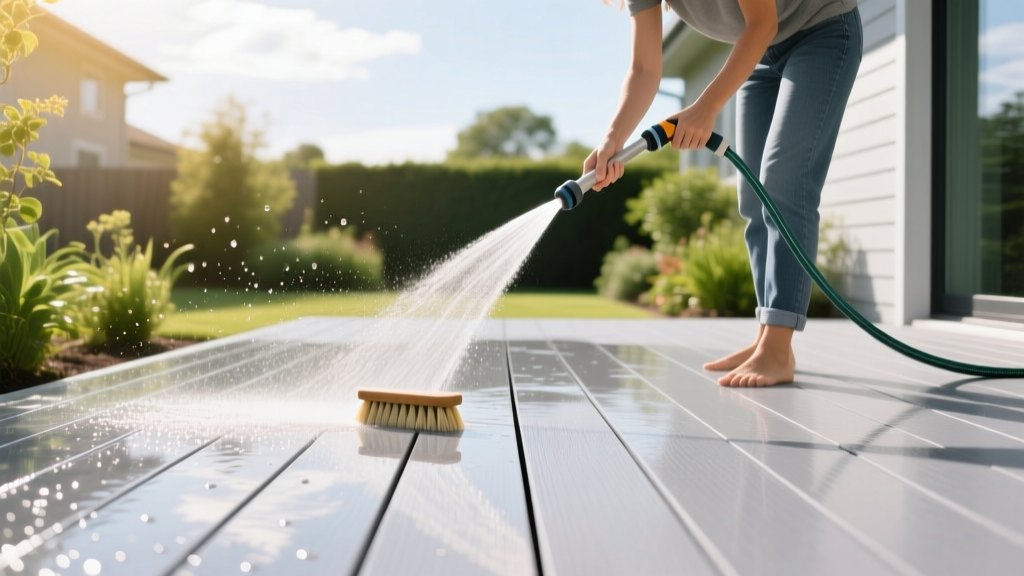
- Agitation and Rinse: Gently agitate with a soft-bristle deck brush (nylon, not wire) along the grain of the boards. Rinse thoroughly with a garden hose or a low-pressure washer.
Never use chlorine bleach (sodium hypochlorite) on cool decking material. Chlorine bleach breaks down the UV inhibitors and IRR pigments in the cap layer, leading to permanent chalking and loss of heat-reflective capabilities. Furthermore, if you must use a pressure washer, restrict the pressure to a maximum of 2,000 PSI, use a 40-degree fan tip, and keep the nozzle at least 8 inches from the surface. Exceeding these limits will etch the cap, exposing the darker, heat-absorbing core underneath.
Protecting the Infrared-Reflective (IRR) Cap from Physical Damage
Maintaining the temperature-reducing benefits of cool decking material requires strict protocols regarding what is placed on the surface. The IRR cap is typically only 1.5mm to 3mm thick; once it is breached, the board will absorb heat like a standard composite.
Furniture and Foot Traffic
All patio furniture must be fitted with protective pads. Avoid standard felt pads, which can trap moisture and degrade quickly outdoors. Instead, use marine-grade, UV-stabilized rubber pads with a Shore A hardness rating of 70 or lower. This provides enough cushion to prevent scratching without being so soft that heavy furniture legs sink into the pad and scrape the deck.
The Outdoor Rug Hazard
Placing dark-colored or rubber-backed outdoor rugs on cool decking material creates a 'thermal trap.' The dark rug absorbs solar heat, while the rubber backing prevents airflow and moisture evaporation. This localized heat buildup can cause the composite boards to exceed their thermal expansion limits, leading to warping, buckling, and the growth of anaerobic mold beneath the rug. If you must use rugs, choose light-colored, 100% woven polypropylene rugs without solid rubber backing, and remove them weekly to allow the deck to breathe.
Maintenance Cost and Schedule Matrix
Proactive maintenance is significantly cheaper than replacing heat-damaged or warped boards. The following matrix outlines the expected costs and frequencies for maintaining a 400-square-foot cool deck.
| Maintenance Task | Frequency | DIY Cost (400 sq ft) | Pro Service Cost |
|---|---|---|---|
| Deep Clean (Oxygen Bleach) | Bi-Annually (Spring/Fall) | $25 - $40 | $150 - $250 |
| Furniture Pad Replacement | Annually | $15 - $30 | N/A |
| Tannin Stain Treatment | As Needed | $20 (Deck Brightener) | $75 - $120 |
| Board Replacement (Scratched Cap) | As Needed | $60 - $95 per board | $150+ per board |
Winter Protocols: Ice Melt and Snow Removal
Winter maintenance poses a unique threat to cool decking material. The primary objective is to remove snow and ice without abrading the IRR cap or introducing corrosive salts that degrade the polymer matrix.
- Snow Removal: Use a plastic-blade snow shovel. Never use a metal shovel or a pusher with a metal wear-strip. Shovel with the grain of the deck boards, not across them, to minimize the risk of catching the board edges and delaminating the cap.
- Ice Melt Chemicals: Use only calcium chloride-based ice melt products. Avoid sodium chloride (rock salt) blends that contain added traction agents (like sand or pumice). These traction agents act as an abrasive slurry underfoot, effectively sandblasting the microscopic IRR pigments off the surface of the deck.
- Post-Winter Rinse: As soon as temperatures rise above freezing in early spring, thoroughly rinse the deck to wash away residual calcium chloride, which can leave a white, chalky film that temporarily reduces solar reflectance.
Troubleshooting Common Cool Decking Issues
Symptom: Localized 'Hot Spots' on the Deck
Cause: A hot spot indicates that the IRR cap has been breached or heavily scratched in that specific area, exposing the darker, heat-absorbing wood-plastic composite core beneath. This is often caused by dragging heavy planters or using chairs with exposed metal screws on the feet.
Fix: For micro-scratches, carefully applying a heat gun on a low setting (keeping it moving and at least 6 inches away) can sometimes melt the surrounding polymer just enough to smooth the scratch and blend the cap. For deep gouges where the core is visibly exposed, the board must be replaced to restore uniform thermal performance. According to the MoistureShield Care and Cleaning Guidelines, attempting to paint or stain over a scratched composite cap will void the warranty and trap moisture.
Symptom: Chalking or White Haze on the Surface
Cause: Chalking is usually the result of using harsh chemicals (like chlorine bleach or undiluted vinegar) that strip the UV inhibitors, or it is a natural, mild weathering process of the outermost polymer molecules.
Fix: Wash the deck with a dedicated composite deck cleaner containing a mild surfactant and a UV protectant. If the chalking is severe due to chemical damage, the IRR properties may be permanently compromised in that area. Prevention through proper chemical selection, as outlined by Trex Official Maintenance Instructions, is the only reliable safeguard.
Symptom: Tannin Stains from Potted Plants
Cause: Water draining from potted plants leaches tannins from the soil and wood roots, leaving dark, tea-like stains on the light-colored cool decking.
Fix: Apply a commercial deck brightener containing oxalic acid. Oxalic acid chemically neutralizes tannins. Apply the solution, let it sit for 15 minutes, and rinse. Always place potted plants on elevated, breathable risers (at least 1 inch off the deck) to ensure proper drainage and airflow, preventing both tannin staining and moisture-related mold growth.
Frequently Asked Questions
Does cool decking material require special sealants or re-coating?
No. High-quality cool decking materials feature a fully encapsulated, co-extruded polymer cap. Applying aftermarket sealants, paints, or water-repellent coatings will actually trap moisture inside the board and create a surface film that ruins the infrared-reflective properties. The cap is engineered to be completely maintenance-free regarding sealants.
Will placing a grill mat damage the heat-reflective cap?
Standard PVC or rubber grill mats can trap heat and moisture, similar to outdoor rugs. If you use a grill mat, choose a breathable, felt-lined mat specifically designed for composite decking, and ensure it is light-colored. More importantly, clean up any grease splatters immediately using a degreaser safe for polymers (like a simple dish soap and warm water mixture), as animal fats can stain the porous microscopic texture of the cap if left to bake in the sun.
Written by
Elena RodriguezElena Rodriguez is a civil engineer and technical writer specializing in concrete technology, masonry systems, and ASTM/ACI compliance. She earned her B.S. in Civil Engineering from Texas A&M University and spent a decade at a materials testing laboratory, performing over 2,000 concrete compressive strength tests and masonry prism evaluations. Elena is an ACI-certified Field Testing Technician (Grade I) and a member of ASTM Committee C12 on Natural Building Stone. She currently consults on forensic engineering cases involving concrete failures and moisture intrusion. Based in San Antonio, TX, Elena is a proud member of the Society of Women Engineers (SWE) and coaches her daughter's FIRST Robotics team.
More from Elena Rodriguez
View all
Walls & Panels
Cost Analysis: Light Gauge Steel Framing Advantages and Disadvantages
Evaluate light gauge steel framing advantages and disadvantages through a strict cost analysis lens, comparing material, labor, and lifecycle expenses.
Aug 4, 2026

Walls & Panels
Gypsum Board Types: Exact Specifications, Thickness & Dimensions
Compare standard, Type X, and moisture-resistant gypsum board types. Get exact specifications, thicknesses, dimensions, and ASTM standards for your project.
Aug 4, 2026

Fire Resistance
Best Fire-Resistant Outdoor Decking Materials: 2026 Buyer Guide
Discover the best fire-resistant outdoor decking materials for 2026. Compare Class A PVC, aluminum, and hardwood options for WUI compliance and safety.
Aug 4, 2026