Hard Water & Mineral Deposit Decking: Material Selection Guide
Compare how wood, composite, PVC, and aluminum handle hard water and mineral deposits. Select the best deposit-resistant decking for pools.
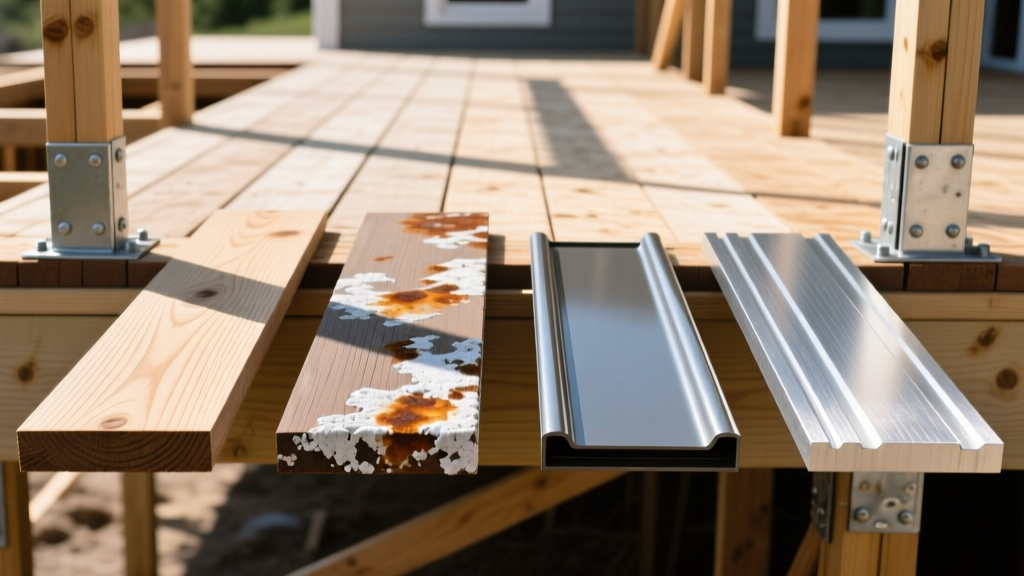
The Chemistry of Outdoor Decking Deposits
Mineral and hard water deposits transform premium outdoor living spaces into unsightly, chalky eyesores. When managing deposit decking issues around poolscapes, hot tubs, and coastal environments, the root cause is almost always evaporative mineral precipitation. As water containing dissolved solids evaporates, it leaves behind calcium carbonate ($CaCO_3$), magnesium, sodium chloride, and silica. Over time, these compounds crystallize and bond to the deck surface.
The severity of this buildup depends entirely on the micro-porosity and chemical composition of your decking material. A material that absorbs moisture at the microscopic level will trap these minerals below the surface, making them nearly impossible to remove without damaging the board. Conversely, non-porous materials force deposits to remain on the surface where they can be easily dissolved and washed away. Understanding this material taxonomy is critical for selecting a deck that will withstand high-mineral environments in 2026 and beyond.
Material Taxonomy: Porosity and Deposit Adhesion
Not all decking materials react to hard water and pool chemicals equally. Below is a breakdown of how the four primary decking categories handle mineral deposits.
1. Natural Wood (Pressure-Treated, Cedar, Ipe)
Wood is inherently hygroscopic. Even when sealed, the xylem and phloem pathways in natural timber absorb mineral-laden water. When the water evaporates, calcium and magnesium crystals embed themselves deep within the wood grain. Attempting to scrub these deposits out often requires stiff bristle brushes and acidic cleaners that strip the wood's natural oils and protective sealants, leading to accelerated splintering and UV degradation.
2. Capped Wood-Composite
Modern capped composites feature a polyethylene (PE) or polypropylene (PP) shell over a wood-flour core. While the cap prevents water from reaching the core, manufacturers intentionally add micro-textures to the shell to improve slip resistance. These microscopic grooves act as traps for calcium carbonate and salt. If you are dealing with deposit decking buildup on composites, the minerals physically lock into the texture, requiring specialized enzymatic or mild acidic cleaners to dissolve the bond without voiding the manufacturer's warranty.
3. Advanced Cellular PVC
Polyvinyl chloride (PVC) decking contains zero wood flour and is entirely non-porous. High-end PVC lines, such as TimberTech Advanced PVC, feature a dense, impermeable polymer shell. Because there is no microscopic porosity, hard water deposits sit entirely on the surface. PVC is widely considered the gold standard for poolside applications because mineral crystals cannot penetrate the material, allowing for simple wipe-down maintenance.
4. Powder-Coated Aluminum
Aluminum decking is impervious to water absorption. However, in coastal or saltwater pool environments, accumulated salt deposits can trigger galvanic corrosion if the powder-coated finish is scratched or compromised. While aluminum won't stain from calcium, it requires periodic rinsing to prevent salt-induced oxidation at the fastener points and board joints.
Comparative Matrix: Deposit Resistance & 2026 Pricing
| Material Type | Porosity Level | Deposit Adhesion Risk | Warranty-Safe Cleaning Method | 2026 Avg. Material Cost (per sq. ft.) |
|---|---|---|---|---|
| Pressure-Treated Pine | High | Severe (Deep Staining) | Oxalic Acid Brighteners | $3.50 - $5.50 |
| Capped Composite | Low (Surface Texture) | Moderate (Texture Trapping) | 50/50 Vinegar & Water | $7.00 - $10.50 |
| Cellular PVC | Zero | Minimal (Surface Only) | Mild Dish Soap or CLR | $9.50 - $14.00 |
| Powder-Coated Aluminum | Zero | Low (Corrosion Risk) | Fresh Water Rinse | $11.00 - $16.00 |
Selection Framework for High-Deposit Environments
Choosing the right material requires matching the environmental exposure to the material's chemical resistance. Use this decision framework to guide your selection:
Scenario A: Chlorinated or Saltwater Poolside
Recommendation: Cellular PVC or Aluminum.
Why: Pool splash zones experience constant wet-dry cycles. PVC resists both calcium scaling and chlorine degradation. According to the TimberTech Care and Cleaning Guide, their PVC lines are specifically engineered to resist staining from pool chemicals and hard water, making them the safest long-term investment for immediate pool perimeters.
Scenario B: Hard Water Irrigation Overspray
Recommendation: Smooth-finish Capped Composite or PVC.
Why: Sprinkler systems using well water or hard municipal water will leave daily calcium rings on decking. Avoid heavily embossed composite textures. Opt for composites with a smoother, wire-brushed finish (like the Trex Transcend Lineage series) which minimizes the physical grooves where irrigation minerals accumulate. Always consult the Trex Care and Cleaning documentation before applying any commercial descalers to ensure you do not void the fade and stain warranty.
Remediation: Removing Existing Mineral Deposits
If you are retrofitting an existing space or maintaining a composite deck that has already accumulated scaling, proper chemical remediation is required. Never use mechanical scraping, which will permanently gouge composite and PVC caps.
- The Vinegar Solution: For light to moderate calcium carbonate buildup, mix a 50/50 solution of white household vinegar and warm water. Spray generously, allow it to dwell for 10 to 15 minutes to dissolve the alkaline minerals, and agitate with a soft-bristled nylon brush.
- Commercial Descalers: For severe scaling, use a diluted commercial calcium, lime, and rust (CLR) remover. Always test in an inconspicuous area first.
- Thorough Rinsing: Residual acid from cleaners will attract more dirt and degrade UV inhibitors. Rinse the deck thoroughly with a garden hose (never use a high-pressure washer over 1,500 PSI on composite materials).
⚠️ Critical Warning: Avoid Muriatic Acid
Never use muriatic acid (hydrochloric acid) or undiluted bleach to remove mineral deposits from composite or PVC decking. These harsh chemicals will permanently strip the polymer shell of its UV stabilizers, leading to rapid fading, chalking, and structural embrittlement. Furthermore, muriatic acid will cause immediate, irreversible corrosion to aluminum joists and hidden steel fasteners.
Frequently Asked Questions
Can I apply a sealant to my composite deck to prevent hard water stains?
No. Applying aftermarket acrylic or polyurethane sealants to capped composite or PVC decking is strongly discouraged by manufacturers. These products trap moisture beneath the film, cause peeling, and will immediately void your 25-to-50-year limited warranty. Rely on the factory-engineered polymer cap for protection.
Does rain wash away hard water deposits naturally?
Rainwater is naturally slightly acidic and can help mitigate minor dust and dirt, but it is not effective at dissolving established calcium carbonate or pool salt crystals. In fact, if rainwater pools on a flat deck and evaporates, it can actually contribute to secondary mineral ring staining.
What is the best joist material for high-deposit areas?
If your deck surface is exposed to heavy salt or mineral runoff, your substructure is equally at risk. Use hot-dipped galvanized steel (G185 coating) or structural aluminum framing. Standard pressure-treated joists will retain mineral-rich moisture against the metal hardware, accelerating fastener corrosion from the inside out.