Maintaining Your Pool Deck Project Bundle: A Cleaning Playbook
Protect your investment with our expert cleaning playbook for pool deck project bundles, covering PSI limits, chemical matrices, and joint care.
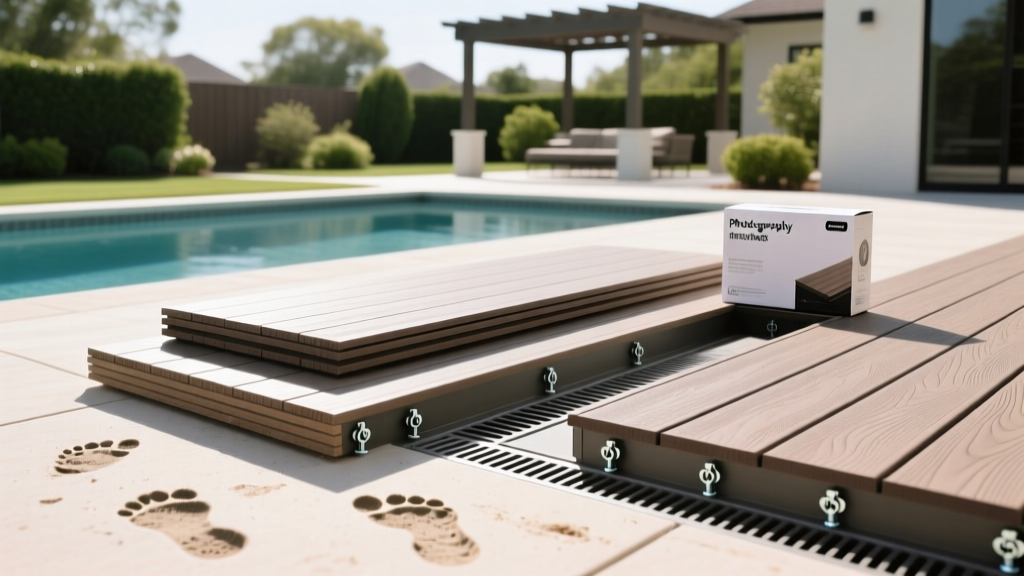
The Anatomy of a Modern Pool Deck Project Bundle
When contractors and homeowners invest in a pool deck project bundle, they are not just buying surface materials; they are purchasing a coordinated, engineered system. A standard 2026 bundle typically includes three interdependent layers: textured concrete or porcelain pavers, polymer-modified jointing sand, and a penetrating silane/siloxane sealer. Treating this system like a standard concrete slab is the fastest way to destroy it.
Standard pressure washing and acidic pool-splash cleaners will strip the sealer, degrade the polymer binders in the joints, and cause the pavers to shift. According to guidelines published by the Interlocking Concrete Pavement Institute (ICPI), improper maintenance is the leading cause of premature failure in interlocking pool decks. This playbook provides the exact chemical, mechanical, and temporal protocols required to maintain your bundle without voiding manufacturer warranties.
Bundle Vulnerability Matrix
- Surface (Pavers): Vulnerable to efflorescence (calcium carbonate bloom) and acid etching.
- Joints (Polymeric Sand): Vulnerable to high-PSI washout and chlorine degradation.
- Seal (Penetrating): Vulnerable to solvent-based degreasers and UV oxidation over time.
The 4-Step Maintenance & Cleaning Playbook
Routine cleaning of a pool deck project bundle requires a delicate balance between removing organic pool-side debris (algae, sunscreen oils, leaf tannins) and preserving the engineered joint and seal layers. Follow this exact sequence for quarterly deep cleans.
Step 1: Dry Extraction and Pre-Treatment
Never wet a dirty paver surface. Water turns pollen, dust, and fine debris into a slurry that gets forced deep into the paver pores and joint lines during the wash phase.
- Use a stiff-bristle push broom (nylon, not wire) to agitate and sweep all loose debris.
- Target joint lines specifically with a leaf blower set to a minimum 150 MPH output to extract fine particulate matter trapped in the polymeric sand.
Step 2: Chemical Application (The pH Rule)
Pool environments are already highly alkaline or acidic depending on water chemistry. Your cleaner must be strictly pH-neutral (between 6.5 and 7.5) to avoid reacting with the polymeric sand binders.
- Recommended Product: Techniseal Paver Prep or Alliance Gator Clean (diluted at a 1:10 ratio with water).
- Application: Apply using a low-pressure pump sprayer. Allow a 10-minute dwell time. Do not let the solution dry on the surface.
Step 3: Low-PSI Agitation
The ASTM International standards for permeable and interlocking pavements strictly warn against high-pressure washing, which destroys joint integrity.
- Equipment: Pressure washer capped at 1,200 PSI maximum.
- Nozzle: Use a 15-degree white tip or a rotary surface cleaner with a minimum 16-inch diameter.
- Technique: Maintain a strict 12-inch distance from the surface. Never hold the nozzle closer than 8 inches, as the concentrated pressure cone will excavate the polymeric sand.
Step 4: Rinsing and Joint Protection
Rinse the deck with a standard garden hose rather than the pressure washer. Push all runoff away from the pool edge to comply with Association of Pool & Spa Professionals (APSP) recommendations for preventing chemical contamination and debris influx into the pool filtration system.
Chemical Compatibility Matrix for Bundle Components
Not all cleaners are safe for every layer of your project bundle. Use this matrix to evaluate any cleaning agent before application.
| Cleaning Agent | Paver Surface | Polymeric Sand | Penetrating Sealer |
|---|---|---|---|
| Muriatic Acid | Destroys (Etches) | Destroys (Dissolves binder) | Strips completely |
| Chlorine Bleach | Fades pigments | Weakens polymer over time | Safe (Short-term) |
| pH-Neutral Soap | Safe | Safe | Safe |
| Solvent Degreaser | Safe | Safe | Dissolves acrylic/siloxane |
Troubleshooting: When the Bundle Fails
Even with proper maintenance, pool deck environments are harsh. Here is how to diagnose and fix the three most common bundle failures without tearing up the hardscape.
Problem: White Hazing (Efflorescence)
Cause: Water-soluble calcium salts migrating to the paver surface and reacting with pool humidity. Often exacerbated by using unsealed joint sand.
The Fix: Do not scrub with water. Apply a dedicated efflorescence remover (like SureBond SRW) that converts the calcium carbonate into a soluble salt that washes away. Wait for 48 hours of dry weather before applying, and follow up with a fresh coat of penetrating sealer to block future moisture migration.
Problem: Joint Washout and Paver Shifting
Cause: Pressure washing exceeded 1,200 PSI, or the polymeric sand was not properly activated with a fine mist during the original installation, leaving the binder only on the top 1/4 inch of the joint.
The Fix: Use a specialized joint-cleaning tool to excavate the failed sand to a depth of at least 1 inch. Vacuum the joints completely. Refill with a high-performance polymeric sand (e.g., Gator Dust or Alliance Super Sand), compact with a plate compactor, and activate with a gentle misting nozzle—never a direct stream.
Problem: Sealer Peeling or Flaking
Cause: A film-forming acrylic sealer was applied over a damp surface, or the deck was sealed during high humidity, trapping moisture beneath the plastic-like film.
The Fix: Film-forming sealers are generally not recommended for pool deck bundles due to slip hazards and moisture trapping. You must strip the failing acrylic using a chemical stripper (like xylene or a soy-based eco-stripper), power wash the residue, let the deck cure for 72 hours, and reapply a breathable, penetrating silane/siloxane sealer that will not peel.
Long-Term Upkeep: Resealing and Joint Metrics
A pool deck project bundle is not a 'install and forget' system. The UV exposure and chemical splash from a pool environment accelerate the degradation of surface treatments.
The Water Drop Test
To determine if your penetrating sealer is still active, perform the water drop test. Place three drops of water in different high-traffic zones (e.g., near the pool ladder, by the lounge chairs, and near the gate).
- Pass: The water beads up and remains on the surface for 3+ minutes. Your sealer is intact.
- Fail: The water absorbs into the paver within 30 seconds, darkening the stone. It is time to reseal.
Cost and Timing Metrics for 2026
For a standard 500-square-foot pool deck bundle, expect the following maintenance costs and intervals:
- Penetrating Sealer Reapplication: Every 2 to 3 years. Material cost: $180–$250 for a 5-gallon pail of high-solids siloxane. Professional application: $350–$500.
- Polymeric Sand Touch-ups: Every 4 to 5 years for high-splash zones. Material cost: $40–$60 per 40lb bag (typically 2-3 bags needed for spot repairs).
- Quarterly Deep Cleaning: $80–$120 in professional labor, or $25 in DIY chemical costs per session.
By adhering to strict PSI limits, utilizing pH-neutral chemistry, and monitoring joint integrity, your pool deck project bundle will maintain its structural lock and aesthetic appeal for decades, far outlasting standard poured concrete alternatives.