Durable Deck Skirting Materials: Lifespan and Performance Compared
Compare durable deck skirting materials by lifespan, moisture resistance, and cost to protect your substructure from rot, pests, and UV degradation.

When enclosing the underside of an elevated outdoor structure, selecting the right deck skirting materials is a structural decision, not merely a cosmetic one. The substructure of a deck is highly vulnerable to moisture wicking, rodent nesting, UV degradation, and freeze-thaw heaving. While traditional pressure-treated lattice may cost less upfront, it typically succumbs to rot and warping within 5 to 8 years. For homeowners and contractors prioritizing longevity, modern skirting solutions must balance impermeability, thermal expansion tolerance, and proper substructure ventilation.
This guide evaluates the most durable deck skirting materials available in 2026, analyzing their real-world lifespans, failure modes, and precise installation requirements to ensure your outdoor space remains protected for decades.
The Primary Enemies of Skirting Longevity
Before selecting a material, it is critical to understand the specific environmental forces that cause skirting to fail prematurely:
- Hydrostatic Pressure and Wicking: Materials that rest directly on soil absorb ground moisture, leading to cellular breakdown, delamination, or rot.
- Thermal Expansion and Contraction: Rigid materials without adequate expansion gaps will buckle, warp, or tear fasteners out of the framing during seasonal temperature swings.
- Galvanic Corrosion: When dissimilar metals or certain composites interact with aluminum deck framing in the presence of moisture, rapid electrochemical corrosion occurs.
- Substructure Suffocation: Sealing a deck without integrating adequate ventilation traps humidity, accelerating the decay of wooden joists and promoting toxic mold growth.
Top Durable Deck Skirting Materials Ranked
1. Capped Composite Skirting (Lifespan: 25 to 50+ Years)
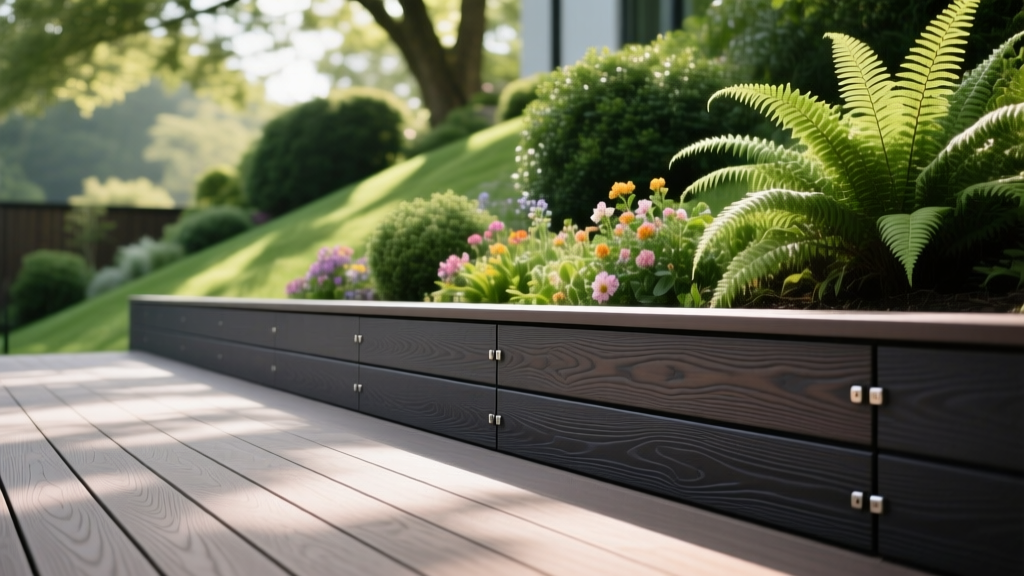
Capped composite boards, such as Trex Transcend or TimberTech Landmark, represent the gold standard for residential deck skirting. Unlike first-generation composites that absorbed water and swelled, modern capped composites feature a high-performance polymer shell that completely encases the wood-flour core.
Failure Modes & Edge Cases: The most common failure with composite skirting is buckling due to thermal expansion. Composite materials expand and contract at a rate of approximately 3/16 inch per 10 feet for every 50°F temperature change. Installers must leave a strict 1/8-inch gap between board ends and use slotted hidden fastener systems rather than face-screwing, which restricts lateral movement and causes the boards to split.
Cost Estimate: $12 to $18 per linear foot (materials only).
2. Cellular PVC Trim Boards (Lifespan: 30 to 50+ Years)
Cellular PVC, such as AZEK Trim or Versatex, is entirely impervious to water absorption. Because it contains no wood fibers, it is biologically immune to rot, fungal decay, and termite infiltration. It can be routed, milled, and painted, offering unmatched design flexibility for custom architectural skirting profiles.
Failure Modes & Edge Cases: PVC is highly susceptible to UV-induced chalking and thermal expansion (expanding up to 30% more than wood). To prevent premature fading, specify PVC boards with integrated UV inhibitors or apply a high-quality, vinyl-safe acrylic latex paint (with a Hunter L-value of 50 or higher to prevent heat absorption). Furthermore, standard steel screws will rust and stain the PVC; you must use hot-dipped galvanized or stainless steel fasteners.
Cost Estimate: $8 to $14 per linear foot.
3. Corten Steel & Corrugated Metal Panels (Lifespan: 40 to 60+ Years)
For modern, industrial, or contemporary architecture, weathering steel (Corten A606-4) or powder-coated aluminum corrugated panels offer extreme durability. Corten steel is engineered to develop a dense, protective rust patina that halts further corrosion, eliminating the need for paint or sealants.
Failure Modes & Edge Cases: If you are using aluminum deck framing, you cannot allow raw steel or certain fasteners to touch the aluminum directly, as galvanic corrosion will rapidly destroy the structural framing. You must install a dielectric barrier, such as a continuous strip of EPDM rubber or neoprene tape, between the metal skirting J-channel and the aluminum rim joist.
Cost Estimate: $15 to $25 per linear foot.
Never bury composite, PVC, or wood skirting directly in the dirt. Soil retains moisture and shifts during freeze-thaw cycles, which will crush or rot the bottom edge. Always install a 4-inch deep trench filled with 3/4-inch crushed gravel, or pour a continuous 4-inch concrete curb to serve as the base track for your skirting panels.
Material Durability & Performance Matrix
| Material | Expected Lifespan | Moisture Resistance | Thermal Movement | Maintenance Level |
|---|---|---|---|---|
| Capped Composite | 25 - 50 Years | Excellent (if capped) | Moderate | Very Low (Wash only) |
| Cellular PVC | 30 - 50 Years | Superior (0% absorption) | High | Low (May need repainting) |
| Corten Steel | 40 - 60 Years | Superior | Low | Zero |
| Pressure-Treated Lattice | 5 - 10 Years | Poor (Absorbs water) | Low | High (Stain/Replace) |
Substructure Ventilation: The Hidden Lifespan Factor
The most durable skirting material in the world will destroy your deck if it suffocates the substructure. Trapped humidity beneath a deck causes wooden joists to rot and metal connectors to corrode prematurely. According to the International Residential Code (IRC Section R408.1), enclosed under-floor spaces require a minimum of 1 square foot of net-free ventilation area for every 150 square feet of under-deck space.
When installing solid composite or PVC skirting, you must integrate specialized ventilation solutions:
- Louvered Skirting Vents: Install color-matched, stainless-steel mesh-backed louvered vents every 8 to 10 feet along the skirting perimeter to allow cross-breezes while blocking rodents.
- Gap-and-Batten Technique: Instead of tongue-and-groove sealing, install vertical composite boards with a 1/2-inch gap between them, covered by a wider batten strip. This creates a continuous, concealed airflow channel that meets code requirements without compromising aesthetics.
- Access Doors: Always frame and install a weather-stripped access door (minimum 18x24 inches) for future plumbing, electrical, or structural inspections.
Climate-Specific Decision Framework
To maximize your investment, align your material choice with your specific regional climate challenges:
- Coastal & High-Humidity Zones: Choose Cellular PVC or Powder-Coated Aluminum. Salt spray and constant moisture will rapidly degrade the wood-flour core of composites if the protective cap is scratched during installation.
- Extreme Freeze-Thaw Regions: Choose Capped Composite. The slight flexibility of composite materials handles the ground heaving and extreme temperature contraction better than rigid PVC, which can become brittle and crack in sub-zero temperatures.
- Wildfire & WUI (Wildland-Urban Interface) Zones: Choose Corten Steel or Metal Panels. Building codes in wildfire-prone areas strictly prohibit combustible materials (like wood and some composites) within 5 feet of the primary structure. Metal skirting provides a non-combustible, ember-resistant barrier.
Summary
Investing in premium deck skirting materials like capped composite, cellular PVC, or weathering steel pays dividends by protecting your substructure and eliminating the recurring costs of replacing rotted lattice. By respecting thermal expansion gaps, isolating dissimilar metals, and strictly adhering to cross-ventilation codes, your skirting will remain structurally sound and visually striking for the lifetime of the deck itself.
Written by
Sarah WhitfieldSarah Whitfield is a chartered quantity surveyor (MRICS) and construction cost analyst with 15 years of experience in material pricing, procurement strategy, and project budgeting. She earned her degree in Construction Management from the University of Reading (UK) and has worked on projects ranging from $2M custom homes to $180M mixed-use developments across North America and Europe. Sarah currently leads cost estimating for BuildMat Insight, maintaining a proprietary database of 4,000+ material price points updated quarterly. She is a frequent contributor to RSMeans cost data panels and has presented at the International Cost Engineering Council (ICEC) congress. Based in Denver, CO, Sarah is an avid trail runner and volunteer mentor for Women in Construction.
More from Sarah Whitfield
View all
Wood & Lumber
What Are the Different Types of Wood? A Builder's Guide
Compare structural softwoods, finish hardwoods, and engineered lumber. Analyze Janka ratings, MOE values, and 2026 pricing for construction.
Aug 4, 2026

Walls & Panels
Steel Framing vs Wood Framing: Corrosion and Moisture Defense
Compare steel framing vs wood framing for moisture resistance. Learn about galvanized coatings, condensation risks, and corrosion protection strategies.
Jul 21, 2026

Stone & Masonry
How to Cut Stone Veneer: Wet Saw vs Grinder Comparison
Compare the best tools for cutting stone veneer. We review wet saws, angle grinders, and chop saws to help you achieve clean, chip-free cuts.
Jul 21, 2026