Trex Transcend Lineage Composite Deck Board: Durability & Lifespan
An in-depth durability and lifespan analysis of the Trex Transcend Lineage composite deck board, covering thermal limits, structural spans, and failure modes.
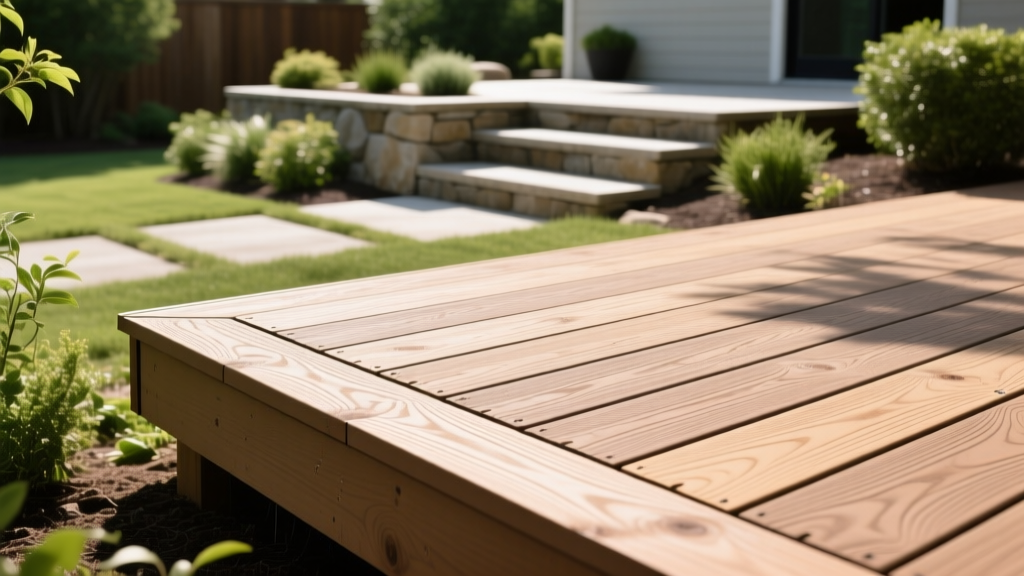
The Engineering Behind the 50-Year Warranty
The Trex Transcend Lineage composite deck board represents the premium tier of the manufacturer's portfolio, engineered specifically to address the historical shortcomings of early-generation wood-plastic composites (WPC). Unlike traditional uncapped composites that suffered from moisture intrusion, mold proliferation, and severe UV fading, the Lineage series utilizes a advanced co-extrusion manufacturing process. This creates a dense, recycled wood-polyethylene core fully encapsulated by a high-performance polymer cap.
This proprietary cap is not merely a cosmetic layer; it is a structural shield loaded with UV inhibitors, acrylic polymers, and inorganic pigments. According to the Trex Transcend Lineage Product Specifications, this shell technology is the primary reason the product carries a 50-year limited residential fade and stain warranty. However, a 50-year warranty is a legal baseline, not a guarantee of physical immortality. The actual lifespan of the decking in the field depends heavily on thermal management, structural framing, and chemical exposure.
Shell Thickness and Scratch Resistance
The polymer cap on the Transcend Lineage measures approximately 2.5mm to 3mm in thickness. This depth is critical for scratch resistance. While no composite decking is entirely impervious to deep gouges from dragged metal furniture, the Lineage cap is formulated with a higher modulus of elasticity than standard PVC decking, allowing it to absorb minor impacts without cracking or 'whitening' (stress marking), which is a common failure point in rigid PVC alternatives.
Thermal Dynamics and Heat-Mitigating Technology
One of the most significant durability threats to composite decking is thermal expansion and contraction, which can lead to fastener blowouts, board buckling, and cap delamination if not properly managed. The Transcend Lineage integrates a proprietary heat-mitigating pigment package designed to reflect infrared (IR) radiation rather than absorb it.
In direct sunlight at 85°F ambient temperature, standard dark-brown composite boards can reach surface temperatures of 145°F to 160°F. The Transcend Lineage boards, even in darker hues like Jasper, typically register surface temperatures 20°F to 35°F cooler due to IR-reflective inorganic pigments. This reduction in thermal mass directly decreases the coefficient of linear expansion, reducing stress on hidden fastener systems over the deck's lifespan.
Despite this technology, the wood-plastic core still expands and contracts primarily along its length. The Trex Official Installation Guidelines mandate strict gapping protocols to prevent structural failure. At an installation temperature of 40°F, a 1/4-inch end-to-end gap is required. If installed at 70°F, a 1/8-inch gap suffices. Failure to adhere to these tolerances will result in the boards pushing against each other during peak summer heat, causing 'tenting' or pulling the hidden fasteners through the composite core.
Structural Load, Creep, and Joist Spacing
Wood-plastic composites exhibit a phenomenon known as 'creep'—a slow, permanent deformation under continuous mechanical stress. The USDA Forest Products Laboratory on Wood-Plastic Composites notes that WPCs have a lower modulus of elasticity (MOE) compared to solid pressure-treated lumber, meaning they are more flexible and prone to long-term sagging if joist spacing is too wide.
| Installation Angle | Maximum Joist Spacing (OC) | Tread/Step Spacing |
|---|---|---|
| Straight (90° to joists) | 16 inches | 12 inches |
| Diagonal (45° to joists) | 12 inches | Not Recommended |
| Stair Stringers | 9 inches (max span) | Requires 2x6 solid wood blocking |
Attempting to push the joist spacing to 24 inches on center—a common practice with rigid hardwoods or thick PVC—will result in noticeable sponginess and eventual creep deflection in the Transcend Lineage boards. For commercial applications or decks expecting heavy point loads (like hot tubs), reducing the spacing to 12 inches on center is highly recommended to eliminate deflection entirely.
Documented Failure Modes and Edge Cases
While the Transcend Lineage is highly durable, field analysis reveals specific edge cases where premature degradation occurs. Understanding these failure modes is critical for maximizing the product's lifespan.
- Fastener Blowout at Board Ends: When using top-down screws instead of hidden grooved fasteners, driving a screw closer than 1 inch from the board end can cause the composite core to fracture or 'mushroom.' Always use a composite-specific drill bit to create a clearance hole if face-fastening.
- Static Electricity Buildup: The polymer cap can generate a static charge in low-humidity environments, particularly when dragging synthetic outdoor rugs or plastic furniture. This does not damage the board but can cause uncomfortable shocks. Trex recommends applying an anti-static treatment or using natural fiber rugs.
- End-Grain Moisture Wicking: While the cap seals the top and sides, the cut ends of the board expose the wood-fiber core. If these cut ends rest directly on the ground or in standing water, they will wick moisture, leading to localized swelling. Cut ends must be sealed with a composite end-sealant or elevated at least 4 inches above grade.
Chemical Incompatibilities and Maintenance Protocols
The 50-year stain warranty is robust, but it contains strict exclusions regarding chemical exposure. The polymer cap is susceptible to plasticizer migration and surface etching when exposed to specific organic and synthetic compounds.
Warning: Sunscreens containing Avobenzone, insect repellents with DEET, and citronella-based candles will chemically etch the polymer cap if left to sit in direct sunlight. These chemicals break down the acrylic surface layer, resulting in permanent, un-warrantable whitish stains. Always use a protective mat under citronella devices and clean sunscreen spills immediately with mild soap and water.
Proper Cleaning Techniques
To maintain the heat-reflective properties and aesthetic grain of the Lineage boards, routine maintenance must avoid abrasive actions.
- Routine Cleaning: Use a soft-bristle brush and a solution of warm water mixed with a mild, non-bleach dish detergent. Rinse thoroughly with a garden hose.
- Pressure Washing Limits: If a power washer is necessary for deep cleaning, the pressure must not exceed 3,100 PSI. More importantly, the nozzle must be kept at least 8 inches from the surface and sprayed at a 45-degree angle. Direct, perpendicular high-pressure streams will scar the polymer cap, creating micro-grooves that trap dirt and void the stain warranty.
- Snow and Ice Removal: Use a plastic shovel with a straight edge. Metal shovels or those with serrated edges will gouge the cap. For ice melt, use calcium chloride-based products. Avoid rock salt (sodium chloride) or sand, which will scratch the surface and leave a corrosive residue that attracts moisture.
Cost vs. Lifespan ROI Analysis
In 2026, the material cost for Trex Transcend Lineage ranges from $11.50 to $14.00 per square foot, placing it at the absolute top of the composite market. When factoring in the required hidden fastener systems (approx. $1.20 per sq. ft.) and specialized composite substructure tape to protect the wooden joists, the initial capital outlay is significant.
However, the durability analysis justifies the premium for long-term holds. Unlike pressure-treated pine, which requires annual sealing ($0.75 - $1.50 per sq. ft. annually) and typically requires replacement after 15 to 20 years due to rot and structural decay, the Lineage board requires near-zero financial maintenance. Over a 30-year amortization period, the total cost of ownership (TCO) for the Transcend Lineage is often 15% to 20% lower than premium hardwoods like Ipe, while offering superior thermal comfort and splinter-free performance.
Technical FAQ
Can I bend Trex Transcend Lineage boards for curved deck perimeters?
No. Unlike some fully PVC decking lines that can be heat-formed, the wood-plastic core of the Transcend Lineage does not respond well to thermal bending. Attempting to heat-bend these boards will result in core delamination and cap blistering. For curved applications, use a flexible PVC fascia or a dedicated bending-grade PVC deck board for the border, transitioning to Lineage for the main field.
Does the hidden fastener system restrict thermal movement?
When installed correctly, no. The Trex Universal Hidden Fastener is designed with a slight lateral play that accommodates the natural expansion and contraction of the board width. However, the fastener must be seated flush against the groove without being overtightened, which could snap the plastic clip or restrict the board's ability to slide longitudinally.
How does the Lineage perform in high-moisture, shaded environments?
Because the core is encapsulated, it does not absorb the ambient moisture that causes traditional wood to rot or uncapped composites to grow mold. However, in heavily shaded, damp environments, surface mildew can grow on top of the polymer cap. This is not a failure of the board, but an environmental accumulation that requires periodic cleaning with a composite-safe deck wash to maintain the slip-resistant texture of the embossed wood grain.