Above Ground Pool to Deck Transition: Cleaning & Care Playbook
Master the above ground pool to deck transition with this maintenance playbook. Prevent chemical corrosion, clear expansion gaps, and protect substructures.
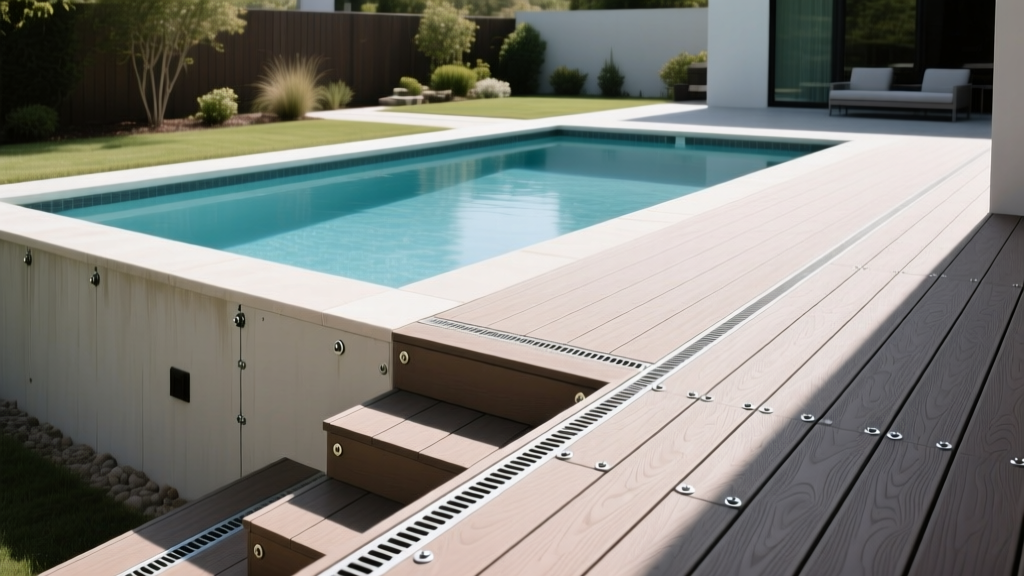
The Microclimate of the Pool-to-Deck Transition Zone
The physical junction where an above ground pool to deck structure meets is the most vulnerable microclimate in any backyard. This specific transition zone endures a punishing combination of constant chlorinated splash-out, trapped humidity, UV degradation, and extreme thermal cycling. While homeowners often focus on cleaning the pool water or sweeping the main deck surface, the transition gap and underlying substructure are frequently ignored until catastrophic failure occurs.
Maintaining this connection requires a specialized approach. Standard deck cleaning protocols will not address the unique chemical exposure from pool sanitizers, nor will they manage the physical expansion dynamics of the pool wall itself. This playbook provides exact, actionable maintenance procedures to protect your deck boards, fasteners, and framing from the specific hazards of the poolside environment.
Chemical Splash and Fastener Corrosion Matrix
The most common point of failure in the above ground pool to deck transition is hardware corrosion. Pool water contains high concentrations of chlorine, bromine, or salt (in saltwater generator systems). When this water splashes onto the deck and evaporates, it leaves behind highly corrosive chemical residues that attack metal fasteners and joist hangers.
Fastener Selection and Chemical Resistance
Choosing the correct hardware for the first 3 feet of decking adjacent to the pool is critical. According to the Simpson Strong-Tie corrosion guidelines, standard zinc-plated hardware will fail rapidly in poolside environments.
| Fastener Type | Material Composition | Chlorine Resistance | Saltwater (SWG) Resistance | Verdict for Pool Transition |
|---|---|---|---|---|
| Hot-Dip Galvanized (HDG) | Zinc coating over steel | Moderate | Poor | Avoid in splash zones |
| Type 304 Stainless Steel | 18% Chromium, 8% Nickel | Good | Fair | Acceptable for freshwater pools |
| Type 316 Marine Stainless | Adds 2-3% Molybdenum | Excellent | Excellent | Mandatory for all pool transitions |
| Polymer-Coated Carbon Steel | Epoxy/Polymer over steel | Excellent (until scratched) | Excellent (until scratched) | Good, but risky if driver bit strips coating |
The 4-Step Weekly Cleaning Playbook
Routine maintenance of the deck surface immediately bordering the pool requires specific techniques to avoid damaging composite or wood materials while neutralizing chemical residues. The Trex care and cleaning guidelines emphasize avoiding harsh abrasives that can strip the protective polymer cap layer off composite boards.
- Dry Extraction First: Before introducing water, use a stiff-bristled push broom (nylon bristles only, never wire) to sweep away dry debris, pollen, and crystallized chemical salts. Sweeping dry prevents you from creating a caustic slurry that can stain the deck surface.
- Chemical Neutralization: If you notice a chalky white residue on the deck boards near the pool edge, this is dried calcium hypochlorite or sodium chloride. Apply a pH-neutral composite deck cleaner (such as Corte Clean or 30 SECONDS Outdoor Cleaner) specifically formulated to break down pool chemicals without degrading UV inhibitors.
- Targeted Agitation: Use a soft-bristle deck brush to agitate the cleaner along the grain of the boards. Pay special attention to the embossed wood-grain textures where chemical salts tend to accumulate and cause micro-staining.
- Low-Pressure Rinse: Rinse the transition zone with a garden hose. If using a pressure washer, never exceed 3,100 PSI, keep the fan tip at least 8 inches from the surface, and always spray in the direction of the board grain to prevent delamination of the composite cap.
Managing the Expansion Gap: Debris and Algae Control
Building codes and structural engineering principles dictate that an above ground pool to deck transition must include a physical expansion gap—typically 1/2-inch to 3/4-inch wide—between the deck boards and the pool's top rail or coping. This gap is non-negotiable. When an above-ground pool fills with water and heats up in the summer sun, the steel or resin walls expand outward. If the deck boards are flush against the pool wall, this lateral hydrostatic and thermal pressure (which can exceed 2,000 lbs of force on a 24-foot pool) will buckle the deck joists or rupture the pool wall.
Clearing the Gap Safely
This 3/4-inch trench is a magnet for pine needles, dirt, and organic matter, which quickly turns into a breeding ground for algae and moss when exposed to constant moisture.
- Tool Selection: Never use a metal screwdriver or putty knife to dig debris out of the gap; you risk puncturing the pool liner or scratching the resin coping. Use a specialized plastic crevice tool or a wooden paint stirrer with a beveled edge.
- Biological Treatment: If green algae forms in the gap, do not use bleach, which can degrade the pool's plastic components and rust the steel wall. Instead, spray a 50/50 solution of white vinegar and water directly into the gap, let it sit for 10 minutes, and flush it out with a high-pressure hose nozzle.
- Gap Covers: For a permanent solution to debris accumulation, install a flexible pool-to-deck gap seal (such as Deck-Gap or a custom-cut marine-grade neoprene strip). This bridges the gap to stop debris while remaining flexible enough to accommodate the pool's outward expansion.
Substructure Protection and Joist Tape Maintenance
The framing directly beneath the pool-to-deck transition is subjected to constant drip-line moisture. Water splashing off the pool edge runs down the face of the deck boards and drips directly onto the outermost joists and rim boards.
During your annual spring inspection, check the substructure in this zone. Look for black staining, soft wood, or rusted joist hangers. To protect this high-risk framing, the outermost joists should be capped with a butyl-based flashing tape (like Trex Protect or G-Tape). Unlike asphalt-based tapes, butyl tape remains pliable in extreme heat and forms a permanent, waterproof seal over the top of the joist, preventing water intrusion into the end-grain of the lumber. If you find existing joist tape peeling or degraded, clean the wood surface with isopropyl alcohol, allow it to dry completely, and apply a fresh layer of butyl tape, ensuring it overlaps the sides of the joist by at least 1/4 inch.
Troubleshooting Common Transition Failure Modes
When the above ground pool to deck connection begins to fail, it usually presents specific, identifiable symptoms. Use this diagnostic framework to address issues before they require full structural rebuilding.
- Symptom: White, powdery residue pooling around screw heads.
- Diagnosis: Galvanic corrosion. The fasteners are likely 304 stainless steel or HDG, and the chlorine is eating the zinc/nickel. Fix: Extract the failing screws and replace them immediately with Type 316 Marine Grade stainless steel screws. Apply a dab of clear marine sealant over the new screw heads to block chemical ingress.
- Symptom: Deck boards immediately adjacent to the pool are cupping or warping upward.
- Diagnosis: Moisture imbalance. The top of the board is constantly baked by the sun and splashed with water, while the underside is trapped in a high-humidity shadow zone created by the pool wall. Fix: Improve under-deck ventilation by removing solid skirting near the pool edge and replacing it with lattice. Ensure the gap between boards is a full 1/4-inch to allow rapid moisture escape.
- Symptom: The pool's top rail is rubbing against the deck fascia board, causing scuff marks.
- Diagnosis: Insufficient expansion gap or deck framing shift. The pool is expanding outward into the deck structure. Fix: Measure the gap. If it is less than 1/2-inch, you must trim the edge of the composite deck boards using a track saw to re-establish a 3/4-inch clearance. Do not attempt to push the pool back.
By treating the above ground pool to deck transition as a specialized mechanical joint rather than just another section of decking, you can extend the lifespan of both structures, prevent costly chemical damage, and maintain a safe, pristine outdoor living environment.