Deck Stain Types & Selection Guide: Clear, Semi, Solid Compared
Compare deck stain types including clear, semi-transparent, and solid. Learn binder chemistry, coverage rates, and wood species matching for lasting results.
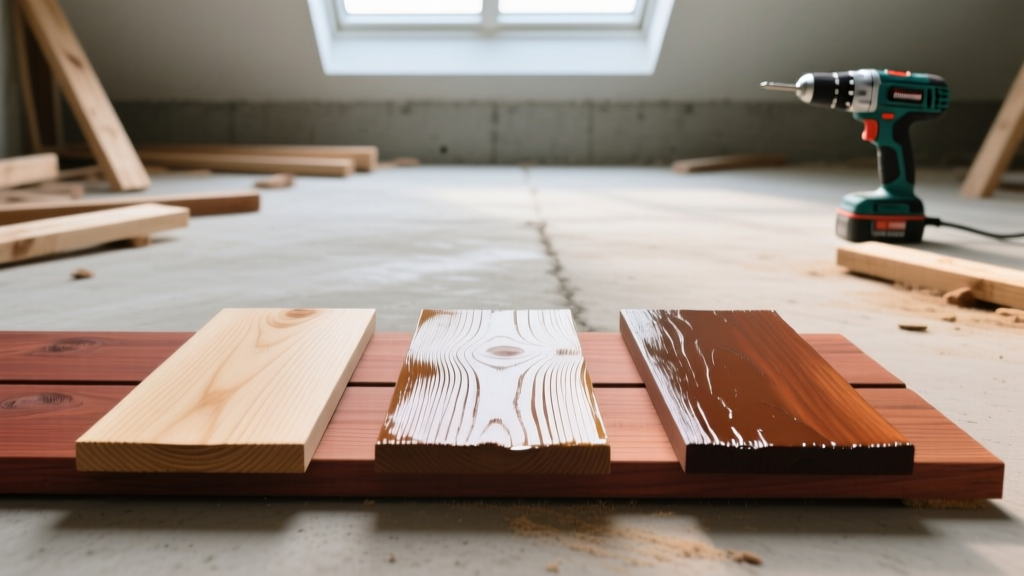
The Core Taxonomy: Pigment Load and UV Protection
Selecting the correct deck stain requires understanding the direct correlation between pigment load, ultraviolet (UV) protection, and the product's ultimate lifespan. The common misconception that 'clear' sealers protect wood longer than pigmented stains is fundamentally incorrect. UV radiation degrades lignin—the natural polymer binding wood fibers together. Without adequate pigment to block these rays, the wood surface will gray and break down, regardless of the water repellency provided by the binder.
The architectural coatings industry categorizes exterior wood stains into four distinct tiers based on their pigment concentration by volume. Understanding this taxonomy is the first step in preventing premature finish failure.
| Stain Category | Pigment Load | UV Protection Mechanism | Wood Grain Visibility | Average Lifespan (Horizontal) |
|---|---|---|---|---|
| Clear / Transparent | 0% - 5% | Chemical UV absorbers (benzotriazoles) | 100% visible | 1 - 2 Years |
| Semi-Transparent | 5% - 15% | Iron oxide / transoxide pigments | Highly visible | 2 - 3 Years |
| Semi-Solid | 15% - 30% | Heavy inorganic pigmentation | Partially obscured | 3 - 4 Years |
| Solid Color (Opaque) | 30% - 50% | Total UV blockage via titanium dioxide | Completely hidden | 5 - 7 Years |
Expert Insight: For horizontal deck surfaces subjected to direct sunlight and foot traffic, semi-transparent or semi-solid stains offer the optimal balance of aesthetic wood enhancement and functional durability. Clear sealers should be strictly reserved for vertical applications (fences, pergolas) or shaded, covered porches where UV degradation is minimal.
Binder Chemistry: Penetrating Oils vs. Water-Based Acrylics
Beyond pigment, the resin binder dictates how the stain interacts with the wood substrate. The market is currently split between traditional penetrating oils and modern water-based acrylic emulsions, each with distinct failure modes and maintenance profiles.
Penetrating Alkyd and Natural Oils
Oil-based stains (utilizing alkyd resins, linseed, or tung oil) do not form a surface film. Instead, they penetrate the wood's cellular structure, lubricating the fibers from within. When these stains degrade, they oxidize and fade gradually. They do not peel or flake, making reapplication significantly easier—often requiring only a light cleaning rather than a full chemical strip and sand.
However, traditional oils are under strict regulatory pressure. According to the Environmental Protection Agency (EPA), volatile organic compounds (VOCs) in architectural coatings contribute heavily to ground-level ozone. Consequently, high-solvent oil stains (exceeding 100 g/L VOCs) are banned in numerous states, including California, New York, and Colorado. In regulated areas, manufacturers now utilize modified alkyds or water-based alkyd hybrids to maintain penetration while meeting environmental mandates.
Water-Based Acrylic Emulsions
Acrylic stains utilize water as the primary carrier, resulting in ultra-low VOC emissions (typically under 50 g/L). As the water evaporates, the acrylic polymers cross-link to form a flexible, breathable film on the wood's surface. Modern acrylics, such as Defy Extreme or Benjamin Moore Arborcoat, utilize nano-particle zinc oxide technology for superior UV resistance and mildew inhibition.
Film-forming acrylic stains are highly susceptible to moisture entrapment. If applied to wood with a moisture content exceeding 15%, or if applied over a previously oiled deck that has not been chemically stripped, the acrylic film will trap internal moisture. This inevitably leads to catastrophic peeling, blistering, and black mildew growth beneath the finish. Always verify moisture content with a pin-type meter before applying water-based coatings.
Decision Matrix: Matching Stain Type to Wood Species
Wood density, porosity, and natural extractive content dictate which stain chemistry will perform optimally. Applying the wrong taxonomy to a specific species is a primary cause of warranty-voiding failures.
- Pressure-Treated Pine (PTI): Highly porous but prone to warping. Recommendation: Semi-transparent penetrating oil. The oil conditions the wood, reducing checking and splintering. Avoid solid stains on new PT lumber, as the high moisture and chemical preservatives (like copper azole) will prevent proper film adhesion.
- Western Red Cedar & Redwood: Naturally rot-resistant but rich in tannic acid. Recommendation: Semi-solid water-based acrylic. The higher pigment load masks the uneven weathering common in cedar, while the acrylic binder resists tannin bleed-through better than raw oils. Pre-treatment with an oxalic acid brightener is mandatory to neutralize surface tannins.
- Exotic Hardwoods (Ipe, Cumaru, Tigerwood): Extremely dense (Janka hardness >2000 lbf) with high natural oil content. Recommendation: Clear or lightly tinted penetrating oil specifically formulated for hardwoods (e.g., Ipe Oil or Armstrong Clark). Film-forming acrylics and solid stains will fail almost immediately on these species because the dense cellular structure prevents penetration, and the natural oils repel water-based binders.
- Aged / Weathered Softwoods: Wood that has been left untreated for 2+ years. Recommendation: Solid color opaque stain. Once the lignin on the surface has photodegraded, the wood loses its structural integrity at the microscopic level. Penetrating stains will absorb unevenly, resulting in a blotchy appearance. Solid stains bridge the degraded surface layer and provide a uniform, protective shell.
Real-World Cost, Coverage, and Maintenance Data
Budgeting for a deck staining project requires calculating the cost per square foot of protected area, factoring in both the initial material cost and the frequency of reapplication. Data below reflects 2026 average retail pricing for professional-grade architectural coatings.
| Stain Type | Avg. Cost per Gallon | Coverage Rate (Sq Ft/Gal) | Cost per Sq Ft (Material) | Reapplication Cycle |
|---|---|---|---|---|
| Clear Sealer | $45 - $60 | 300 - 400 | $0.15 | Annual |
| Semi-Transparent | $55 - $85 | 200 - 250 | $0.34 | Every 2-3 Years |
| Semi-Solid | $60 - $90 | 175 - 225 | $0.40 | Every 3-4 Years |
| Solid Color | $50 - $75 | 250 - 300 | $0.25 | Every 5-7 Years |
Note: Coverage rates assume a single coat on smooth, milled lumber. Rough-sawn or heavily weathered wood can absorb up to 40% more material on the first coat due to open cellular structures. For comprehensive industry standards on coating application and lifecycle expectations, refer to the technical guidelines published by the American Coatings Association.
Forensic Troubleshooting: Why Stains Fail Prematurely
When a deck stain fails before its expected lifecycle, the root cause is almost always a substrate preparation error rather than a defective product. Understanding these failure modes is critical for long-term selection and application.
Failure Mode 1: Mill Glaze and Adhesion Loss
New pressure-treated and cedar lumber is planed at the mill using high-speed, heated blades. This process compresses the surface wood fibers and melts the natural resins, creating a hardened, impermeable barrier known as 'mill glaze.' If a stain is applied directly over mill glaze, it will pool on the surface, dry unevenly, and wash off during the first heavy rain. The Fix: New smooth wood must be allowed to weather for 3 to 6 months, followed by a chemical wash using a sodium percarbonate cleaner, and lightly sanded with 80-grit paper to open the pores before staining.
Failure Mode 2: Tannin Bleed and Black Spotting
When dark, shadow-like stains appear through a newly applied semi-transparent or solid coating on cedar or redwood, this is tannin bleed. Tannic acid is a water-soluble extractive that migrates to the surface when exposed to moisture. Standard deck cleaners do not remove tannins. The Fix: The wood must be treated with an oxalic acid-based wood brightener. Oxalic acid chemically reacts with the iron and tannins, neutralizing them and pulling the dark pigmentation out of the wood matrix before the stain is applied.
Failure Mode 3: Over-Application and Film Build
A common DIY error is applying stain like interior paint, attempting to achieve a 'richer' color by flooding the surface. Penetrating oils and semi-transparent acrylics are designed to soak into the wood; they cannot cure if left in a thick puddle on the surface. Over-application results in a sticky, tacky surface that attracts dirt and eventually cracks into a spider-web pattern. The Fix: Always apply stain using a 'wet-on-wet' technique, maintaining a wet edge and back-brushing aggressively to force the material into the grain and wipe away any excess pooling immediately.