Black Vinyl Fence Cost Calculator & 2026 Pricing Guide
Calculate your black vinyl fence cost with our 2026 pricing guide. Get exact material formulas, brand comparisons, and hidden installation fees.
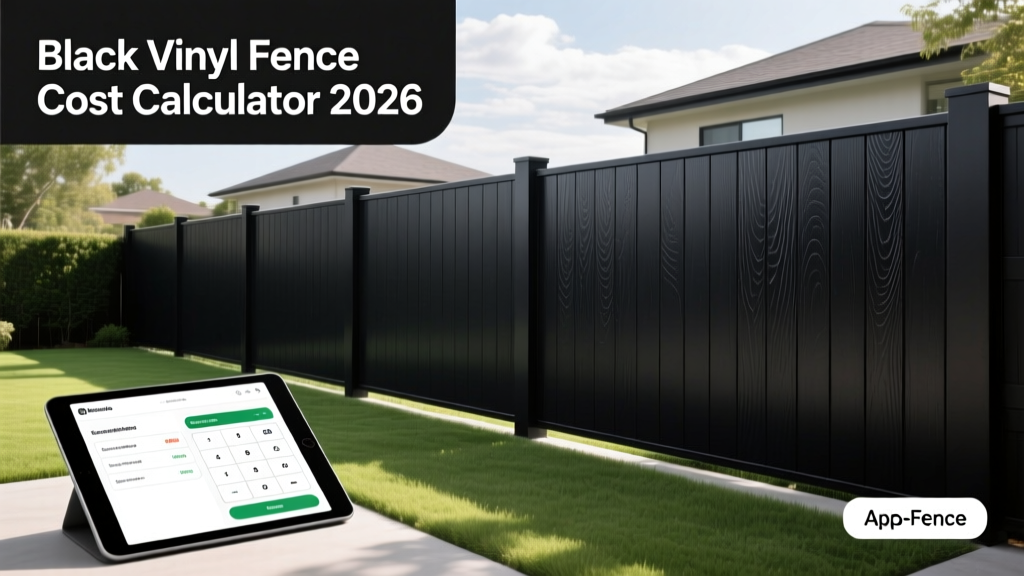
The 2026 Black Vinyl Fence Cost Breakdown
Installing a black vinyl fence commands a distinct premium over traditional white PVC. In 2026, the national average for a fully installed 6-foot black vinyl privacy fence ranges from $65 to $115 per linear foot, compared to $40 to $65 for white equivalents. This price delta is driven by specialized manufacturing processes, required structural reinforcements, and lower market availability.
| Fence Style | Material Cost (Per LF) | Labor Cost (Per LF) | Total Installed Cost (Per LF) |
|---|---|---|---|
| 6 ft. Privacy (Solid) | $42 - $75 | $25 - $45 | $67 - $120 |
| 5 ft. Semi-Privacy | $38 - $65 | $22 - $40 | $60 - $105 |
| 4 ft. Picket / Pool | $30 - $55 | $20 - $35 | $50 - $90 |
| 3 ft. Ranch / Split Rail | $18 - $35 | $15 - $25 | $33 - $60 |
The Material Science Premium: Why Black Costs More
Standard white vinyl relies on titanium dioxide (TiO2) as a primary pigment and UV reflector. Black vinyl, however, utilizes carbon black pigments, which inherently absorb solar radiation rather than reflecting it. On a 95°F summer day, a black vinyl fence surface can easily exceed 160°F. Because polyvinyl chloride (PVC) begins to soften and lose structural rigidity around 140°F, manufacturers must engineer black fencing differently to meet ASTM F964 standards for impact resistance and weathering.
Co-Extrusion and Cap Stock Technology
To prevent warping and UV degradation, premium black vinyl fences use a co-extrusion manufacturing process. The inner substrate consists of recycled PVC and impact modifiers for structural strength, while the outer 'cap stock' layer contains high concentrations of advanced UV inhibitors and heat-reflective acrylic polymers. This dual-layer process increases raw material and extrusion costs by 20% to 35%, directly impacting the retail price.
The Quantity Calculator: Formulas for Accurate Estimation
Accurately estimating materials prevents mid-project shortages and reduces waste. Use the following formulas to calculate your exact material requirements based on your site's linear footage.
1. Panels and Posts Calculation
- Panels: Total Linear Footage / Panel Width (usually 6 ft or 8 ft). Always round up to the nearest whole number.
- Posts: Total Panels + 1 (for the terminal post). Add 2 extra posts for every standalone gate.
- Post Caps: Matches total post count. Opt for aluminum or copper-topped caps; standard black vinyl caps can trap moisture and fade unevenly.
2. Post Hole and Concrete Requirements
Black vinyl posts require deeper, wider footings than wood to counteract thermal softening and wind load.
- Hole Depth: Calculate 1/3 of the above-ground post height, plus 6 inches for a gravel drainage base. (e.g., A 6-foot fence requires a 7.5-foot post, buried 30 inches deep + 6 inches gravel = 36-inch total hole depth).
- Hole Diameter: Minimum 10 inches for 4x4 posts; 12 inches for 5x5 posts.
- Concrete Volume: Use the formula: (Hole Radius^2 * 3.14 * Hole Depth) - Post Volume. For a standard 10-inch diameter, 30-inch deep hole around a 4x4 post, you will need approximately 1.8 bags of 80-lb concrete per post.
Hidden Variables That Inflate Your Final Quote
When using a black vinyl fence cost calculator, contractors often exclude site-specific variables that can add 15% to 30% to the final invoice. Factor these into your budget:
- Old Fence Demolition and Haul-Away: Removing an existing wood or chain-link fence costs $4 to $9 per linear foot. Concrete footing removal adds $15 to $25 per post.
- Sloped Terrain Stepping: Black vinyl panels cannot be racked (angled) like aluminum. They must be 'stepped' down slopes. This requires custom-cut panels and taller posts on the downhill side, adding $8 to $15 per linear foot in labor and material waste.
- Aluminum Post Inserts: Because black PVC softens in high heat, 5x5 black vinyl posts often require internal aluminum stiffeners to maintain rigidity for gate hinges and terminal tension. Budget $25 to $45 per aluminum insert.
- Heavy-Duty Gate Hardware: Standard vinyl gate hinges will sag under the weight and thermal expansion of a 6-foot black vinyl gate. Upgrade to black powder-coated, stainless-steel adjustable hinges ($40 to $85 per set).
Brand Comparison: Top Black Vinyl Manufacturers
Not all black vinyl is created equal. According to industry data tracked by Angi's fencing cost guides, material quality varies drastically between big-box store generics and specialized architectural brands. Below is a comparison of leading 2026 models.
| Brand / Model | Material Type | Est. Price (Per LF) | Warranty | Heat Resistance Tech |
|---|---|---|---|---|
| Barrette Outdoor Living (Black Privacy) | Co-Extruded PVC | $50 - $65 | Lifetime Limited | Standard UV Cap Stock |
| CertainTeed (Homestead Black) | Virgin PVC Blend | $55 - $75 | Lifetime Transferable | High-Impact Substrate |
| Trex Seclusions (Saddle/Black) | Wood-Plastic Composite | $85 - $115 | 25-Year Limited | Composite Core (No Warping) |
| SimTek (Black EcoStone) | Recycled Composite | $70 - $95 | Lifetime Limited | Stone-Texture Heat Dissipation |
Frequently Asked Cost Questions
Does a black vinyl fence fade over time?
Yes, but differently than white vinyl. While white vinyl tends to 'chalk' and turn stark white, black vinyl will gradually fade to a charcoal or dark gray hue after 10 to 15 years of intense UV exposure. Premium brands with acrylic cap stocks delay this process significantly, but some color shift is chemically inevitable with carbon black pigments.
Can I paint a white vinyl fence black to save money?
No. Painting vinyl voids the manufacturer's warranty. More importantly, standard exterior paints trap heat and lack the flexibility required for PVC's thermal expansion cycle. The paint will crack, peel, and cause the underlying vinyl to warp and blister under the sun. If you want black, you must purchase factory-extruded black vinyl or composite.
Is black composite fencing cheaper than black vinyl?
Generally, no. True composite fencing (like Trex) uses a blend of wood fibers and recycled plastics, which is inherently more expensive to manufacture than pure PVC. However, composite does not suffer from the same thermal softening issues as black PVC, eliminating the need for costly aluminum post inserts and heavy-duty hardware, which can narrow the final installed cost gap.