Metal Privacy Fence Cost Calculator and 2026 Pricing Guide
Calculate your metal privacy fence cost with our 2026 estimator. Get exact pricing for aluminum, steel, and corrugated panels plus installation rates.
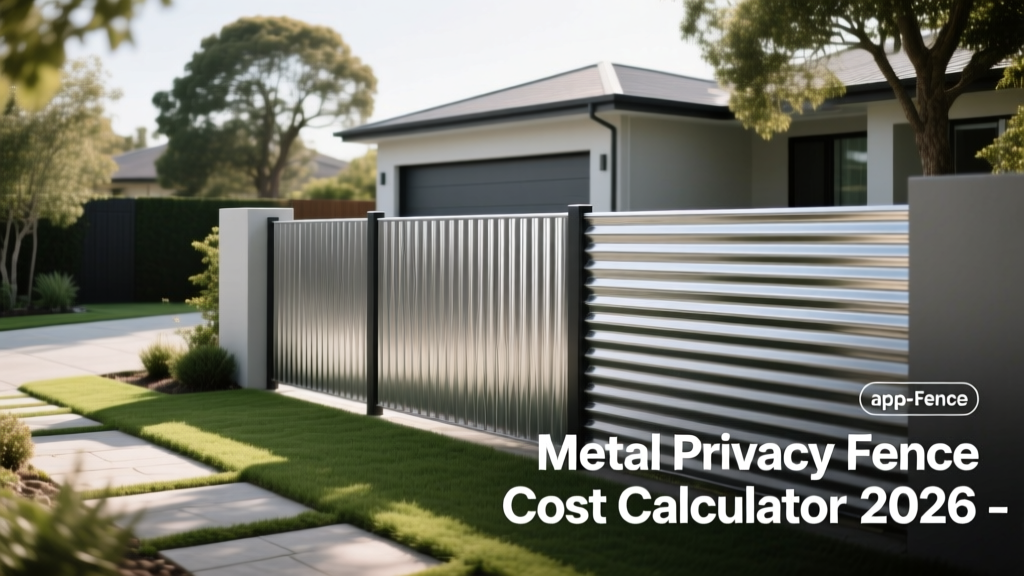
Core Material Costs: Aluminum vs. Corrugated Steel
Estimating the cost of a metal privacy fence requires separating the material into three distinct categories: extruded aluminum privacy panels, corrugated steel (Galvalume or Corten) with structural framing, and solid security-grade steel. In 2026, supply chain stabilization has normalized aluminum extrusion costs, while weathering steel (Corten) has seen a 4% price increase due to specialized milling demands.
| Material Type | Specs & Gauge | Material Cost (Per Linear Foot) | Expected Lifespan |
|---|---|---|---|
| Extruded Aluminum Privacy | 6'x6' Panels, 0.065" wall thickness, powder-coated | $48 – $82 | 30+ Years |
| Corrugated Galvalume Steel | 22-gauge AZ50 coating, requires wood/steel framing | $32 – $55 | 20–25 Years |
| Corten Weathering Steel | 20-gauge, develops protective rust patina | $45 – $75 | 30+ Years |
| Solid Security Steel | 14-gauge welded mesh/solid picket, anti-climb | $115 – $185 | 50+ Years |
According to Forbes Home fencing cost data, the national average for a complete metal fence installation ranges from $3,500 to $8,500 for a standard 150-linear-foot residential lot, heavily dependent on whether you choose lightweight aluminum or heavy-gauge steel.
The Quantity Calculator Framework
To accurately estimate your material order, you must calculate linear footage, account for structural waste, and determine post spacing. Metal privacy fences act as solid wind sails; therefore, post spacing dictates the structural integrity of the entire run.
Step 1: Linear Footage and Panel Math
- Measure Total Perimeter: Use a laser distance meter for runs over 50 feet to avoid tape sag errors.
- Subtract Gate Openings: Standard pedestrian gates are 3' or 4' wide; double drive gates are 10' to 12'. Subtract these from your total linear footage.
- Calculate Panel Quantity: Divide the remaining fence line by your panel width (typically 6 feet for aluminum, 8 feet for corrugated metal sheets). Always round up.
- Apply the Waste Factor: Add 5% for straight runs and 8% for properties with multiple corners or slopes to account for off-cuts.
Step 2: Post and Foundation Quantities
For a 6-foot tall metal privacy fence, line posts must be spaced a maximum of 72 inches on-center (O.C.) in standard wind zones (up to 115 mph). In high-velocity hurricane zones (HVHZ), reduce spacing to 48 inches O.C.
- Total Posts: (Total Linear Footage ÷ Post Spacing) + 1 (for the end post) + Corner Posts + Gate Hinge/Latch Posts.
- Concrete Volume: A standard 2.5" x 2.5" aluminum post set in a 10" diameter hole at 30" depth requires 0.045 cubic yards of concrete per post. For 20 posts, you need 0.9 cubic yards (or roughly thirty-five 50lb bags of Quikrete 5000).
Never mount bare aluminum privacy panels directly to untreated steel posts or use standard steel screws on aluminum rails. The dissimilar metals will trigger galvanic corrosion, destroying the aluminum within 2 to 3 seasons. Always use dielectric separators (nylon washers) and hot-dipped galvanized or 304 stainless steel fasteners (e.g., #10 x 1.5" Tek screws) when mixing metals.
Labor Rates & Site Preparation Variables
Installation costs for metal privacy fencing are highly sensitive to soil composition and topography. As reported in Bob Vila's fencing material breakdown, labor typically accounts for 40% to 50% of the total project cost.
2026 Labor Rate Breakdown
- Standard Soil (Loam/Clay): $35 – $50 per linear foot (includes digging, setting posts in concrete, and panel attachment).
- Rocky/Caliche Soil: Add $12 – $20 per linear foot. Requires rock bars, rotary hammers, or specialized skid-steer augers with carbide teeth.
- Sloped Terrain (Stepping): Add $8 – $15 per linear foot. Metal privacy panels cannot be "racked" (angled) like chain link; they must be "stepped" down the slope, requiring custom-cut filler panels and additional posts at every drop point.
Hidden Costs: Wind Load and Permitting
Because metal privacy fences lack the airflow of wrought iron or chain link, they are subject to severe lateral wind loads. Engineering for this requires deeper footings and heavier posts, which impacts the budget.
Engineering and Permitting Additions
| Hidden Cost Factor | Estimated Cost Impact | When It Applies |
|---|---|---|
| Engineering Stamp (Wind Load) | $350 – $600 flat fee | Required in coastal counties or wind zones >110 mph |
| Property Line Survey | $400 – $800 flat fee | If existing boundary pins are missing or disputed |
| HOA Architectural Review | $0 – $150 application fee | Mandatory for planned communities (Corten often rejected) |
| Utility Locate (811) | Free (or $150 for private lines) | Mandatory before digging; private irrigation lines cost extra to locate |
Decision Matrix: Which Metal Fence Fits Your Budget?
Selecting the right metal privacy fence depends on balancing upfront capital expenditure with long-term maintenance and aesthetic requirements. Use this matrix to finalize your material choice.
1. Extruded Aluminum Privacy (Best Overall ROI)
Ideal for suburban residential properties. Brands like Fortress Alu-Gard offer fully routed posts that hide fasteners, providing a clean, modern look. It will not rust, requires zero painting, and the powder-coated finishes (typically AAMA 2604 standard) resist UV fading for decades. Best for: Homeowners wanting a permanent, zero-maintenance solution who are willing to pay a premium upfront.
2. Corrugated Galvalume with Cedar Framing (Best Budget Option)
This hybrid approach uses pressure-treated lumber or cedar for the structural frame and horizontal rails, with 22-gauge Galvalume steel sheets screwed vertically to the face. It provides excellent privacy and a modern industrial aesthetic at a lower cost than full aluminum. Best for: DIYers and budget-conscious projects. Note: The wood frame will eventually rot (15-20 years), requiring rebuilding while the steel panels remain intact.
3. Corten Weathering Steel (Best Architectural Statement)
Corten steel intentionally rusts, forming a dense, protective oxide layer that halts further degradation. However, the initial rusting phase (3 to 6 months) causes rust-laden water to runoff, which will permanently stain adjacent concrete driveways, light-colored stucco, or limestone. Best for: High-end architectural landscapes with gravel or mulch borders where runoff staining is not an issue.
Final Estimation Checklist
Before ordering materials or signing a contractor bid, verify these critical data points:
- Post Wall Thickness: Ensure aluminum line posts are a minimum of 0.085" wall thickness for 6-foot privacy panels. Thinner posts (0.065") will deflect under 40+ mph wind loads.
- Gate Hardware: Standard hinges will sag on heavy metal privacy gates. Specify heavy-duty cantilever hinges or drop-pin hinges with a minimum 400 lb weight rating, and always include an adjustable turnbuckle or anti-sag cable kit.
- Clearance: Maintain a 2-inch gap between the bottom of the metal panels and the grade line to prevent soil moisture from trapping debris and accelerating basal corrosion, particularly on painted steel products.