Deer Fence Material Taxonomy: Selecting the Right Mesh, Wire, or Electric Barrier
Compare polypropylene, woven wire, and electric deer fence materials. Expert taxonomy, cost data, and selection frameworks for effective exclusion.
The Physics of Deer Exclusion: Why Material Dictates Success
White-tailed deer possess a vertical leap capacity of up to 8 feet and a horizontal spread of 25 feet. However, their physical limitation is an inability to clear both height and width simultaneously. Effective exclusion relies on exploiting this biomechanical constraint. According to the Internet Center for Wildlife Damage Management, a standard vertical barrier must reach a minimum of 7.5 to 8 feet to prevent jumping, while a 6-foot fence can suffice if angled outward at 45 degrees to confuse the deer's depth perception. Selecting the correct material is not merely an aesthetic choice; it determines the fence's tensile resilience against pushing, its longevity against UV degradation, and its overall cost per linear foot.
Taxonomy of Deer Fencing Materials
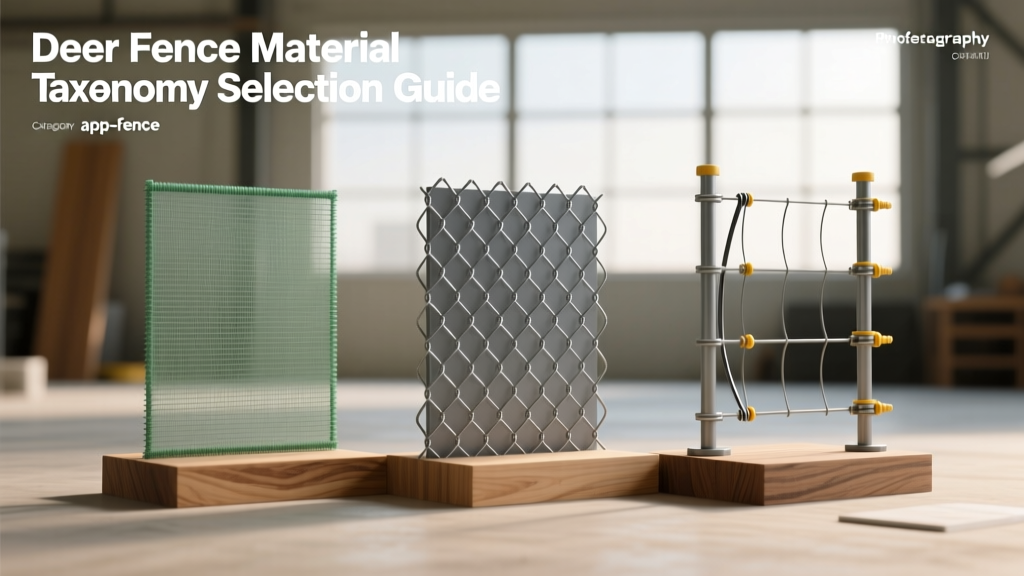
The market segments deer exclusion materials into three primary categories: extruded polymers, metallurgical wire systems, and electrical psychological barriers. Each possesses distinct mechanical properties suited for specific environmental pressures.
1. Polypropylene (Extruded Plastic Mesh)
Polypropylene deer fencing is the dominant choice for residential and light agricultural applications due to its low visual impact and flexibility. High-quality variants are manufactured using UV-stabilized extruded polypropylene, typically dyed with carbon black to prevent solar breakdown.
- Mesh Geometry: Opt for 1.5-inch to 2-inch hexagonal or square apertures. Smaller meshes catch wind and increase structural load, while larger meshes allow fawns to slip through.
- Tensile Strength: Commercial-grade poly mesh must possess a breaking strength of 600 to 800 pounds per linear foot. Anything below 400 lbs will tear when a panicked deer attempts to push through.
- Post Compatibility: Requires 4x4 pressure-treated timber or 2-inch galvanized steel line posts spaced no more than 10 to 12 feet apart to prevent sagging.
2. Metal Wire Systems (Woven and Welded)
For high-pressure agricultural zones or commercial orchards, metal wire provides an impenetrable physical barrier. The Rutgers New Jersey Agricultural Experiment Station frequently recommends woven wire for permanent agricultural exclusion due to its structural rigidity.
- Woven Wire (Field Fence): Specified in 12.5-gauge high-carbon steel with a Class 3 zinc coating. The 'stay' wires are knotted, allowing the fence to absorb impact and return to its original shape. Standard height is 84 inches (7 feet), often topped with a single strand of barbed or smooth wire to reach 8 feet.
- PVC-Coated Welded Wire: A 14-gauge galvanized core encapsulated in a 6-mil polyvinyl chloride coating. This provides a softer aesthetic that blends into woodland edges but costs 30-40% more than bare galvanized options.
3. Electric and High-Tensile Options
Electric fencing acts as a psychological barrier rather than a physical one. It requires the deer to investigate and receive a memorable shock to the highly sensitive nose.
- Polytape vs. Polywire: Use 1.5-inch to 2-inch wide polytape woven with stainless steel filaments. The width is critical; deer have poor close-up vision and will walk through thin, invisible polywire without triggering the shock.
- Energizer Sizing: A low-impedance energizer delivering a minimum of 0.5 to 1.0 output joules is required. High vegetation contact will drain weaker chargers, dropping the voltage below the 3,000V threshold needed to penetrate a deer's thick hide.
Deer are highly motivated to forage and will readily crawl under a fence if the bottom gap exceeds 6 inches. Regardless of the material chosen, the bottom edge must be secured to the ground using 24-inch rebar stakes driven every 5 feet, or pinned down with heavy-duty landscape staples over a tensioned bottom wire.
Material Selection Matrix
Use the following decision matrix to align your material choice with your property's specific deer pressure and terrain constraints.
| Material Type | Deer Pressure Level | Terrain Suitability | Expected Lifespan | Visual Impact |
|---|---|---|---|---|
| Black Polypropylene | Low to Moderate | Excellent (Rolls over slopes) | 7 - 10 Years | Nearly Invisible |
| Class 3 Woven Wire | Severe / Agricultural | Moderate (Requires stepping) | 20 - 30 Years | High / Industrial |
| PVC-Coated Welded | Moderate to High | Poor (Rigid panels only) | 15 - 20 Years | Moderate |
| 1.5" Electric Polytape | Variable (Training dependent) | Excellent | 5 - 7 Years (Tape) | Low to Moderate |
Cost Breakdown per Linear Foot
Pricing fluctuates based on steel tariffs and polymer resin costs. The data below reflects average material and professional installation rates for an 8-foot vertical exclusion system.
| System Component | Material Cost (per ft) | Installed Cost (per ft) |
|---|---|---|
| Heavy-Duty Polypropylene | $1.50 - $2.75 | $8.00 - $14.00 |
| Galvanized Woven Wire (84") | $4.50 - $6.50 | $18.00 - $26.00 |
| 5-Strand Electric High-Tensile | $2.00 - $3.50 | $10.00 - $15.00 |
| Wood Privacy (8ft Board-on-Board) | $35.00 - $55.00 | $65.00 - $110.00 |
Critical Installation Variables That Dictate Material Choice
Material selection cannot be isolated from the physical installation environment. Three variables must be evaluated before procurement:
Topographical Sloping
If your property features slopes exceeding a 15-degree grade, rigid welded wire panels will fail to maintain a flush ground line, creating crawl-under gaps. Extruded polypropylene or high-tensile wire systems are mandatory for sloped terrain, as they can be stepped or contoured to follow the earth's natural grade.
The Outrigger (Angle-Out) Technique
For properties where an 8-foot vertical fence violates local HOA height restrictions or zoning ordinances, builders utilize the outrigger method. This involves erecting a 6-foot vertical fence and attaching 2-foot extensions angled outward at 45 degrees. Woven wire and poly mesh adapt well to this technique, whereas rigid ornamental aluminum does not.
Gate Hardware and Tensioning
The most common failure point in any deer fence is the gate. Deer will test the perimeter by pushing against gate edges. For poly mesh, gates must be framed in 2x4 pressure-treated lumber with heavy-duty 6-inch strap hinges. For woven wire, gates require a diagonal tension rod (truss cable) to prevent the heavy metal mesh from sagging over time, which would otherwise lift the latch-side edge off the ground.
Common Failure Modes and Preventative Maintenance
Even premium materials fail if maintenance protocols are ignored. Anticipate these specific degradation vectors:
- UV Embrittlement in Plastics: Non-UV-stabilized poly meshes will shatter under tension after 24 months of direct sunlight. Always verify the manufacturer's UV-inhibitor warranty (minimum 5-year prorated).
- Vegetation Shorting Electric Lines: Fast-growing vines and tall grasses will ground out electric polytape, dropping voltage to ineffective levels. A 3-foot wide herbicide or mulch strip must be maintained beneath all electric perimeter lines.
- Snow Load Collapse: In northern climates, wet snow clinging to 1.5-inch poly mesh can exceed the tensile limit of the line posts. In heavy snow zones, reduce post spacing from 12 feet to 8 feet, or switch to smooth-wire electric systems that shed snow naturally.
By matching the specific tensile properties, visibility requirements, and topographical constraints of your property to the correct material taxonomy, you can engineer a deer exclusion system that remains structurally sound and economically viable for decades.