Benjamin Moore Wrought Iron Fence Paint Cost & Quantity Calculator
Calculate exact paint quantities and costs for refinishing your fence with Benjamin Moore Wrought Iron. Includes coverage rates, prep costs, and 2026 pricing.
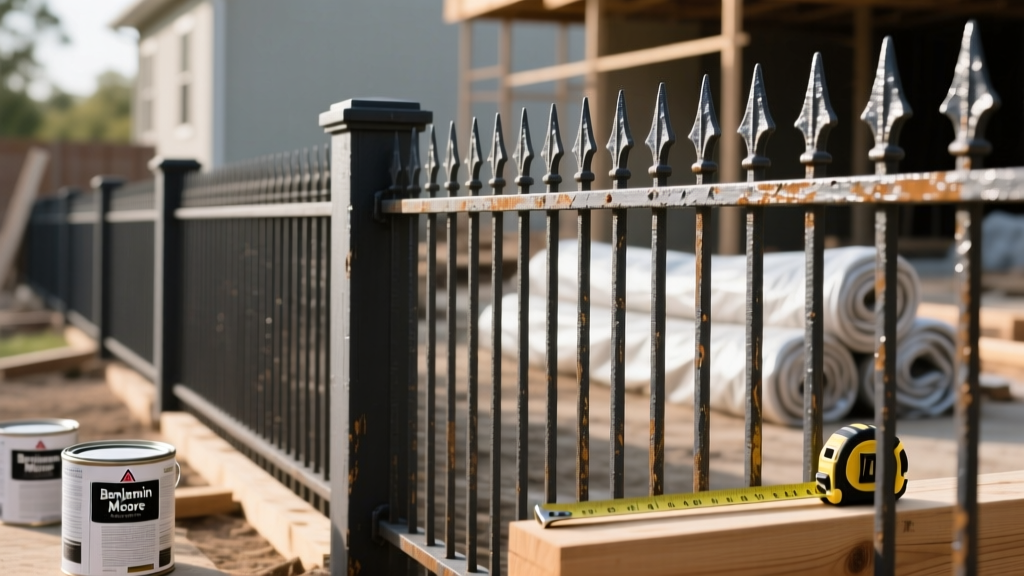
The Architecture of HC-171: Why Wrought Iron Dominates Fence Design
Benjamin Moore’s Wrought Iron (HC-171) is not actually a metal; it is one of the most sought-after dark charcoal paint colors in the brand’s Historic Collection. With a Light Reflectance Value (LRV) of just 8.16, it absorbs significant light, providing a heavy, grounding contrast that mimics the look of forged iron. In 2026, HC-171 remains the top specification for contractors refinishing wood, composite, and true metal fences to achieve a modern, high-end perimeter aesthetic.
However, estimating the cost and material requirements for this specific color requires precision. Dark pigments require higher volumes of colorant, which can slightly alter the sheen and drying time of acrylic latex formulations. Furthermore, because HC-171 absorbs heat, applying it to vinyl or thin-gauge aluminum fences without proper heat-reflective primers can lead to catastrophic substrate warping. This guide provides a rigorous, math-driven framework for calculating your exact material needs and budgeting for a professional-grade finish.
Step-by-Step Fence Paint Quantity Calculator
To avoid the dreaded mid-project color batch mismatch—a common issue when ordering custom-tinted dark colors like HC-171—you must calculate your total square footage with a built-in waste factor. According to industry standards cited by the American Fence Association, accurate material estimation is the primary defense against project overruns.
1. Calculate Net Square Footage
Measure the total linear length of your fence and multiply it by the height. If your fence has varying heights (e.g., a 6-foot privacy section stepping down to a 4-foot picket section), break the fence into distinct rectangular zones and calculate them separately.
- Zone A (Privacy): 50 linear ft × 6 ft = 300 sq ft
- Zone B (Picket): 30 linear ft × 4 ft = 120 sq ft
2. Adjust for Substrate Porosity and Design
A solid privacy fence requires paint for both sides, plus the edges of the pickets. A spaced picket fence has significant negative space that must be deducted.
Total Gallons = [ (Solid Area × 2 sides) + (Picket Area × 0.60) ] ÷ Coverage Rate × Waste Factor
3. Apply the 2026 Coverage & Waste Multipliers
Benjamin Moore’s premium exterior lines typically cover 350 to 400 square feet per gallon on smooth, primed surfaces. However, rough-sawn cedar or weathered wood will drop coverage to 250 square feet per gallon. When using an HVLP (High Volume Low Pressure) airless sprayer, you must add a 15% to 20% waste factor for overspray and wind loss. If rolling and brushing, add a 10% waste factor.
2026 Product Line & Cost Comparison Matrix
When selecting from Benjamin Moore's exterior lineup, the choice between Aura, Regal Select, and Super Spec HP dictates both your budget and the longevity of the HC-171 finish. Dark colors are prone to chalking and UV fading; therefore, investing in 100% acrylic or advanced alkyd resins is non-negotiable.
| Product Line | 2026 Avg. Cost / Gallon | Best Use Case | Dry Time (Recoat) | UV & Fade Resistance |
|---|---|---|---|---|
| Aura Exterior (Matte/Satin) | $102 - $110 | Wood & Fiber Cement (Premium Finish) | 1 Hour | Exceptional (ColorLock Tech) |
| Regal Select Exterior | $82 - $88 | Wood & Masonry (Standard Budget) | 4 Hours | Very Good |
| Super Spec HP DTM | $95 - $105 | True Wrought Iron, Steel, Aluminum | 2-4 Hours | Excellent (Alkyd/Acrylic hybrid) |
Note: For HC-171, a Matte or Low-Lustre sheen is highly recommended. High-gloss finishes on dark colors highlight every substrate imperfection, roller stipple, and brush mark, whereas matte hides surface flaws and mimics the natural patina of aged iron.
Substrate Matrix: Primer Requirements & Hidden Costs
The topcoat is only as durable as the primer beneath it. HC-171 requires a high-hiding base to prevent the underlying wood grain or rust from bleeding through the dark charcoal pigment. Budgeting for the correct primer system is where most DIY estimators fail.
Wood Fences (Cedar, Redwood, Pine)
Wood tannins will bleed through dark paints, creating brownish halos. You must use a stain-blocking primer.
- Primer: Fresh Start High-Hiding All Purpose Primer (046) or an oil-based alkyd primer for heavy cedar bleed.
- Primer Cost: ~$65/gallon.
- Prep Cost: Power washing and mildewcide treatment ($0.15 - $0.25 per sq ft).
True Metal Fences (Wrought Iron, Steel)
If refinishing an existing rusted iron fence, standard latex primers will flash-rust and fail.
- Primer: Corotech Direct-to-Rust Alkyd Enamel or a zinc-rich epoxy primer.
- Primer Cost: ~$85/gallon.
- Prep Cost: Wire wheel grinding, sandblasting, or chemical rust conversion ($1.50 - $3.00 per sq ft).
Vinyl & PVC Fences (Warning)
Painting vinyl with an LRV of 8.16 is highly risky. Dark colors absorb solar radiation, causing the PVC to exceed its thermal distortion threshold (typically around 140°F to 160°F), leading to permanent warping and buckling. If you must paint vinyl with Wrought Iron, you are required to use specialized vinyl-safe heat-reflective pigment bases, which often cannot achieve the exact HC-171 depth without voiding the manufacturer's warranty.
Labor Estimates & Professional Application Variables
If you are hiring a licensed painting contractor, labor will constitute 70% to 85% of your total project cost. Based on 2026 regional averages, professional fence painting labor ranges from $2.50 to $4.50 per square foot (measuring one side only).
Expert FAQ: Troubleshooting HC-171 on Fences
Why does my Wrought Iron paint look chalky after one summer?
Chalking is a chemical breakdown of the binder caused by UV exposure. If you used a flat builder-grade paint, the high pigment load required for HC-171 compromised the acrylic resin matrix. To fix this, power wash the chalky residue, apply a penetrating acrylic masonry/wood sealer, and topcoat with Aura Exterior, which utilizes proprietary ColorLock technology to bind pigments tightly and resist UV degradation.
Can I use an airless sprayer for Wrought Iron on a picket fence?
Yes, but you must "back-roll" or back-brush. Spraying forces paint into the gaps, but back-brushing ensures the paint wraps around the edges of the pickets and pushes the coating into the wood grain. Without back-brushing, the edges of your pickets will suffer from edge-pull and premature peeling within 18 months.
How many coats of HC-171 are actually required?
Over a properly tinted gray primer, two coats of Aura Exterior will achieve full hide and uniform sheen. If you attempt to paint HC-171 directly over a white primer or bare wood, you will need three to four coats, negating any cost savings from skipping the primer. Always have your paint supplier tint the primer to a mid-tone gray base to bridge the gap to the near-black topcoat.
For further reading on exterior coating durability and application standards, consult the testing parameters outlined in the Consumer Reports Exterior Paint Buying Guide, which consistently ranks high-adhesion acrylics as the superior choice for high-contrast, low-LRV exterior applications.