Liquid Fence Deer and Rabbit Repellent: Durability and Lifespan Analysis
Analyze the durability, weather resistance, and long-term lifespan of Liquid Fence deer and rabbit repellent compared to physical fencing barriers.
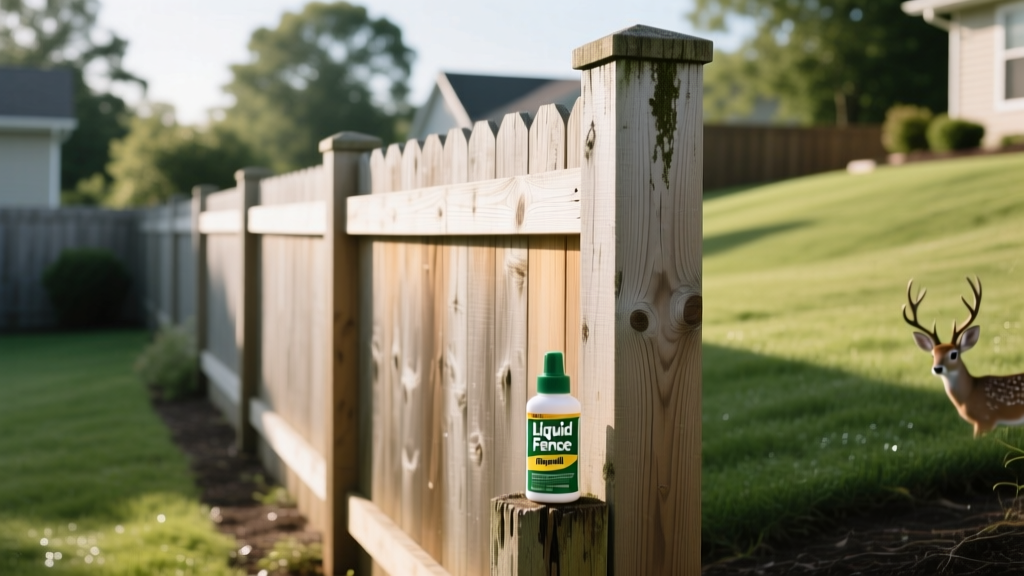
The Biochemistry of Invisible Perimeters
When evaluating perimeter defense for landscaping, physical barriers like woven wire or polypropylene netting are measured in years. Chemical barriers, specifically Liquid Fence deer and rabbit repellent, must be measured in weeks and environmental degradation cycles. Unlike structural fencing materials that fail via rot, rust, or UV embrittlement, liquid repellents fail via hydrolysis, photolysis, and olfactory habituation.
Liquid Fence operates primarily on a 5.0% concentration of putrescent whole egg solids, supplemented by garlic oil and capsaicin. The sulfurous compounds released by the decaying egg proteins mimic the scent of predator digestion, triggering an instinctual avoidance response in cervids and lagomorphs. Understanding the lifespan of this 'invisible fence' requires analyzing how these volatile organic compounds (VOCs) break down under real-world environmental stress.
Active Ingredient Degradation Rates
The functional lifespan of a single application is dictated by the volatility of its sulfur compounds. Under optimal conditions (60°F to 75°F, low humidity, and zero precipitation), the putrescent egg solids maintain a detectable olfactory threshold for 28 to 35 days. However, UV radiation rapidly breaks down the molecular bonds of the garlic and capsaicin derivatives, reducing their secondary deterrent efficacy by approximately 40% after 21 days of direct sun exposure.
Environmental Durability: Rainfall and Temperature Thresholds
The most critical failure mode for liquid repellents is hydro-wash. While Liquid Fence formulations include proprietary sticker-spreaders (typically latex or rosin-based polymers) to bind the active ingredients to leaf cuticles, they are not impervious to kinetic water impact.
- Light Rain (<0.25 inches): Negligible degradation. Sticker agents hold the egg solids in place.
- Moderate Rain (0.25 to 0.75 inches): 20% to 30% reduction in surface concentration. Reapplication window shortens by 7 days.
- Heavy Rain (>1.0 inch) or Overhead Irrigation: Complete mechanical wash-off of the capsaicin and garlic oils, leaving only trace egg solids. Immediate reapplication is required to maintain the perimeter.
Temperature also dictates application durability. Applying Liquid Fence when ambient temperatures exceed 85°F causes the liquid carrier to flash-evaporate before the sticker-agents can properly bond to the plant stomata, resulting in a 50% reduction in adherence. Conversely, applications made below 35°F fail to cure, leaving the solution vulnerable to frost-heave flaking.
5-Year Lifespan and Cost Matrix: Chemical vs. Physical Fencing
To contextualize the durability of Liquid Fence, we must compare its long-term operational lifespan and cumulative cost against physical fencing materials designed for the exact same purpose: excluding deer and rabbits from a 500-linear-foot perimeter.
| Perimeter Solution | Functional Lifespan | Initial Material Cost (500 ft) | 5-Year Cumulative Cost | Maintenance Burden |
|---|---|---|---|---|
| Liquid Fence (1 Gal Concentrate) | 21-35 days per application | $85.00 | $650.00 - $850.00 | High (12-16 sprays/year) |
| 7.5ft Polypropylene Deer Netting | 5 to 7 years | $450.00 (w/ posts) | $450.00 | Low (annual tension checks) |
| 8ft Woven Wire Field Fence | 15 to 20 years | $1,800.00 (w/ T-posts) | $1,800.00 | Minimal (rust inspection) |
| 6ft Wooden Privacy Fence | 12 to 15 years | $4,500.00 | $5,100.00 (w/ staining) | Moderate (sealing every 3 yrs) |
As demonstrated by the matrix, Liquid Fence is economically viable only as a short-term or seasonal intervention. Over a 5-year horizon, the recurring cost of chemical reapplication surpasses the initial capital expenditure of polypropylene netting. According to Rutgers University agricultural extension data, chemical repellents are best reserved for properties where physical fencing violates HOA covenants, municipal setback codes, or where preserving unobstructed sightlines is a primary landscape design requirement.
Strategic Application Protocols for Maximum Longevity
Extending the functional lifespan of a Liquid Fence application from 21 days to the maximum 35 days requires strict adherence to application parameters that physical fencing materials do not demand.
- Surface Preparation: Apply only to dry foliage. Moisture on the leaf cuticle prior to spraying dilutes the latex sticker-agent, preventing polymer cross-linking and resulting in premature wash-off.
- Optimal Temperature Window: Restrict applications to early morning hours when temperatures are between 45°F and 75°F. This allows the 5 to 6-hour curing window to complete before peak afternoon UV radiation and thermal updrafts occur.
- Canopy Penetration: Deer browse from the top down; rabbits browse from the bottom up. A durable chemical fence requires a dual-tier application: a coarse mist to the upper canopy (up to 6 feet) for cervids, and a targeted drench to the lower 18 inches of stems and basal leaves for lagomorphs.
- Surfactant Augmentation: In high-humidity environments or regions with frequent light drizzle, adding a non-ionic surfactant (at a rate of 1 teaspoon per gallon) to the Liquid Fence mixture can increase the rainfastness threshold by up to 40%, extending the reapplication interval by 7 to 10 days.
Edge Cases: Winter Browsing and Olfactory Habituation
The most severe limitation of chemical repellent lifespan is biological, not environmental. Penn State Extension notes that during late winter (January through March), when natural forage is buried under snow or entirely depleted, the survival instinct of white-tailed deer overrides their olfactory aversion to putrescent egg solids.
When caloric deficits become severe, deer will consume treated arborvitae and yew despite the repellent. In these high-pressure winter scenarios, the 'lifespan' of the chemical fence effectively drops to zero. Physical barriers (minimum 8 feet in height) remain the only durable solution for winter exclusion in northern hardiness zones (Zones 3-5).
Furthermore, rabbits exhibit a higher rate of olfactory habituation than deer. If the exact same Liquid Fence formulation is used continuously for more than three consecutive months without a rotational break, local rabbit populations may adapt to the garlic and capsaicin scent profile, treating the treated zone as a safe foraging area. To maintain the long-term psychological durability of the chemical fence, professionals must rotate between egg-solid-based repellents and blood-meal-based repellents (e.g., Plantskydd) every 90 days.
Expert Verdict: Integrating Repellents into Perimeter Defense
Liquid Fence deer and rabbit repellent should not be classified as a permanent fencing material, but rather as a high-maintenance, temporary biological barrier. Its durability is entirely contingent on strict environmental conditions and rigorous reapplication schedules. For high-value landscape installations where physical netting or wrought iron is prohibited, Liquid Fence provides a highly effective, albeit operationally expensive, invisible perimeter. For long-term, low-maintenance exclusion, capital should be redirected toward physical barriers like 7.5-foot polypropylene deer netting or 8-foot woven wire, reserving chemical repellents strictly for seasonal transplant protection or interior garden bed defense.