Deer Fencing Material Taxonomy: A Property Protection Selection Guide
Compare polypropylene, woven wire, and electric deer fencing materials. Expert specs, costs, and installation frameworks to protect your landscape.
The Biomechanics of Deer Intrusion: Why Standard Fences Fail
Selecting the right deer fencing requires understanding the physical capabilities and behavioral patterns of Cervidae species. White-tailed deer can clear an 8-foot vertical barrier from a standstill and leap up to 15 feet horizontally. However, their depth perception is relatively poor, and they are highly reluctant to jump into enclosed spaces where they cannot see a clear landing zone. According to Penn State Extension, effective exclusion relies not just on absolute height, but on visual barriers, structural rigidity, and eliminating ground-level crawl gaps.
Standard 4-foot residential privacy fences or lightweight agricultural netting will fail under moderate deer pressure. A successful deer fencing system must address three vectors: vertical jumping, horizontal pushing/rubbing (especially by bucks during the autumn rut), and sub-fence digging. Below is a comprehensive taxonomy of the primary materials used in modern deer exclusion, detailing their structural specifications, failure modes, and ideal applications.
Material Taxonomy: The Four Primary Deer Fencing Systems
1. Polypropylene (Plastic) Extruded Mesh
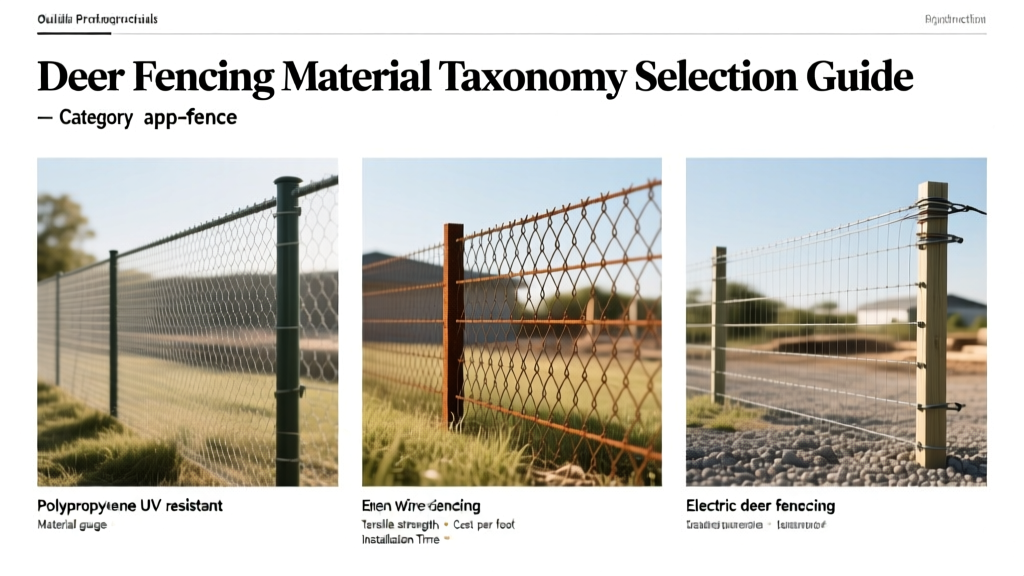
Polypropylene deer fencing is the most common choice for residential gardens and orchards due to its low visual impact and cost-effectiveness. Modern extruded poly mesh is UV-stabilized with carbon black to prevent photodegradation.
- Specifications: Standard heights are 7.5 to 8 feet. Mesh openings are typically 1.5" x 1.5" or 2" x 2". Look for a tensile strength rating of 1,200 to 1,400 lbs per square inch.
- Installation: Requires steel or pressure-treated wooden line posts spaced 15 to 20 feet apart. The mesh is attached using heavy-duty UV-resistant zip ties or galvanized hog rings, leaving a 2-inch slack to absorb wind shear and snow load.
- Failure Modes: Susceptible to tearing if deer attempt to push through rather than jump. Bucks rubbing antlers on the mesh can fray the strands. Not recommended for areas with high bear or wild boar populations.
- Cost: $1.50 to $2.50 per linear foot (materials only).
2. Woven and Welded Metal Wire
For commercial agriculture, vineyards, and high-pressure suburban zones, metal wire provides a rigid, physical barrier that resists pushing and rubbing.
- Specifications: High-tensile woven field fence (12.5-gauge or 14.5-gauge wire) is preferred over standard welded wire, which can snap at the welds under pressure. Ensure the wire features a Class 3 zinc coating (galvanization) for a 20+ year rust-resistant lifespan.
- Installation: Line posts must be spaced closer together (10 to 12 feet) due to the material's weight. Tensioning requires a ratchet strainer or come-along winch to achieve a rigid 250 lbs of tension per strand.
- Failure Modes: Improper tensioning leads to sagging, creating a visual cue that encourages deer to attempt a jump. Ground-level rust can occur if the bottom wire is buried in moist soil without a protective PVC sleeve.
- Cost: $3.50 to $6.00 per linear foot.
3. High-Tensile Electric Fencing
Electric fencing operates on psychological exclusion rather than physical barrier. The USDA APHIS Wildlife Services recommends electric systems for large acreage where physical 8-foot fencing is cost-prohibitive.
- Specifications: A 5-to-7-strand configuration using 12.5-gauge high-tensile smooth wire or polytape with interwoven stainless steel filaments. The energizer must deliver a minimum of 0.10 Joules of stored energy, maintaining 4,000 to 5,000 volts on the line.
- The Baiting Technique: Deer do not inherently recognize electric fences. During the first two weeks of installation, wrap aluminum foil squares smeared with peanut butter around the wires at deer-nose height (30 inches). This trains the local herd to associate the fence with a negative shock.
- Cost: $2.00 to $4.00 per linear foot (including energizer amortization).
4. Angled and Cantilevered Systems (The 45-Degree Rule)
When local zoning ordinances restrict fence heights to 6 feet, physical exclusion requires manipulating the deer's jumping geometry. By angling the top 2 feet of a woven wire or poly fence outward at a 45-degree angle away from the protected area, you increase the effective horizontal span. Deer will not jump a 6-foot vertical barrier that extends into a 10-foot horizontal footprint, as it exceeds their spatial comfort zone for landing.
Deer Fencing Material Comparison Matrix
| Material Type | Tensile / Gauge Spec | Expected Lifespan | Material Cost / Lin Ft | Visual Impact | Best Application |
|---|---|---|---|---|---|
| Polypropylene Mesh | 1,400 lb/sq in tensile | 7 - 10 Years | $1.50 - $2.50 | Low (Blends with foliage) | Residential gardens, orchards |
| Woven High-Tensile Wire | 12.5 ga, Class 3 Zinc | 20 - 30 Years | $3.50 - $6.00 | High (Industrial/Agricultural) | Vineyards, commercial farms |
| Electric Polytape | 6 stainless filaments | 10 - 15 Years | $2.00 - $4.00 | Medium | Large acreage, rotational grazing |
| Angled Metal/Poly | Varies by base material | 15 - 20 Years | $4.50 - $7.50 | High (Complex geometry) | Zoning-restricted suburban lots |
Critical Edge Cases: Ground-Level Failures and Aprons
The most common point of failure in deer fencing is not the top; it is the bottom. Deer and accompanying wildlife (like groundhogs or foxes) will exploit any gap larger than 6 inches. To prevent this, install an L-footer apron. Bend the bottom 12 to 24 inches of your wire or poly mesh outward at a 90-degree angle, laying it flat on the ground facing away from the protected area. Pin it securely every 2 feet using 6-inch galvanized landscape staples. Grass will eventually grow through the apron, locking it in place and creating an impenetrable sub-surface barrier.
Post Spacing and Corner Brace Specifications
The structural integrity of any deer fence relies entirely on its corner and gate posts. A 8-foot tall fence acts as a massive sail in high winds and carries significant downward tension from the mesh or wire.
- Corner Posts: Must be a minimum of 6 to 8 inches in diameter (wood) or 2 3/8 inches (schedule 40 steel). Set them 36 to 42 inches deep in a concrete footing. Use an H-brace or diagonal brace assembly to transfer the horizontal tension load into the ground.
- Line Posts: For poly mesh, 2-inch steel T-posts or 4x4 wooden posts spaced 15 feet apart are sufficient. For heavy woven wire, reduce spacing to 10 feet to prevent sagging under snow load.
- Gate Hardware: Deer will push against gate edges. Use heavy-duty 4-inch strap hinges and install a drop-rod latch that penetrates at least 6 inches into the soil to prevent the gate from being lifted or pushed inward.
Selection Framework: Matching Material to Property Topography
Choosing the correct deer fencing material requires evaluating your specific topography and maintenance tolerance. According to research compiled by University of Maryland Extension, uneven terrain drastically alters material effectiveness.
- Flat to Gentle Slopes: Polypropylene mesh is highly efficient here. It is easy to unroll, cut, and tension without specialized tools.
- Steep or Rocky Terrain: Woven wire is difficult to contour to the ground on rocky slopes, leaving crawl gaps. In these scenarios, a multi-strand electric fence is superior, as the wires can be stepped up and down the hillside while maintaining consistent ground clearance.
- High Snow Load Regions: Avoid wide-mesh poly in areas with heavy, wet snow, which can accumulate in the webbing and snap the posts. Use 12.5-gauge woven wire, which sheds snow effectively.
Frequently Asked Questions
Can deer jump a 6-foot fence?
Yes, a white-tailed deer can easily clear a 6-foot vertical fence if they have a clear view of the landing zone. A 6-foot fence is only effective if it is angled outward at 45 degrees, or if dense shrubbery is planted immediately inside the fence line to obscure the landing area and deter the jump.
How do I prevent deer from rubbing their antlers on my fence?
Bucks rub their antlers to shed velvet and mark territory, often destroying poly mesh and bending lightweight steel posts. To prevent this, install rigid wooden or heavy steel T-posts on the outside of the fence line every 10 feet. The deer will rub on the solid posts rather than the flexible mesh. Alternatively, wrap the bottom 4 feet of wooden posts with hardware cloth to protect the wood.
Is deer fencing effective against other wildlife?
An 8-foot woven wire or poly fence with an L-footer apron will exclude deer, coyotes, foxes, and groundhogs. However, it will not stop climbing animals like raccoons or squirrels, nor will it stop digging animals like badgers unless the apron is buried 12 inches deep rather than laid flat on the surface.