Solar Powered Electric Fence Selection Guide & Component Taxonomy
Master solar powered electric fence selection with our component taxonomy, sizing frameworks, wire matrices, and real-world cost breakdowns.
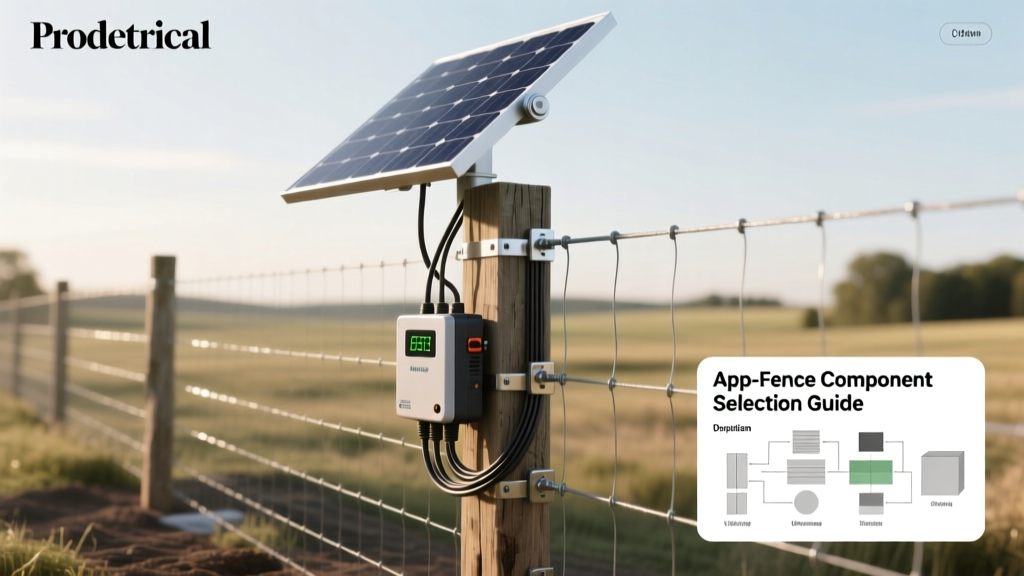
The Anatomy of a Solar Powered Electric Fence
Selecting a solar powered electric fence requires matching energizer output, wire conductivity, and insulator UV-resistance to your specific biological and environmental pressures. Unlike grid-tied systems, solar setups must balance energy generation, battery storage chemistry, and vegetation load to maintain a minimum psychological barrier of 4,000 to 5,000 volts at the furthest point of the perimeter. According to Temple Grandin's livestock handling and fencing guidelines, an animal's first contact with the fence dictates its long-term respect for the barrier, making initial voltage stability critical.
Solar Energizers & Battery Chemistry
The energizer is the brain of the system, converting stored DC power into high-voltage pulses. In 2026, the market has largely bifurcated into two battery chemistries:
- Sealed Lead Acid (SLA): Found in budget models. SLA batteries degrade rapidly when deeply discharged and lose up to 50% of their cranking capacity in freezing temperatures. Expect a 3-to-4-year lifespan.
- Lithium Iron Phosphate (LiFePO4): The premium standard. LiFePO4 batteries tolerate deep discharge cycles, maintain voltage stability in sub-zero weather, and offer a 10-year operational lifespan. They also charge 30% faster under low-light winter conditions.
Conductive Wire Taxonomy & Selection Matrix
The wire acts as the delivery mechanism for the electrical pulse. Material selection dictates both the visual barrier for the animal and the electrical resistance over distance. High-tensile steel is mandatory for perimeters exceeding one mile, while synthetic options serve best for temporary rotational grazing or small predator enclosures.
| Material Type | Specifications | Resistance (Ohms/Mile) | Best Application | Lifespan |
|---|---|---|---|---|
| High-Tensile Steel | 12.5-gauge, Class 3 Galvanized | 0.11 Ω/mile | Permanent perimeter, large livestock | 20-30 years |
| Polytape | 1.5-inch width, 9 stainless strands | 200+ Ω/mile | Equine, visual barrier, rotational | 5-7 years |
| Polywire | 6mm diameter, 6 stainless strands | 350+ Ω/mile | Short-term strip grazing, sheep | 2-3 years |
| Aluminum Wire | 14-gauge, pure aluminum | 0.08 Ω/mile | Highly corrosive coastal soils | 10-15 years |
Post and Insulator Selection Framework
Insulators prevent the electrical pulse from grounding out on the fence posts. Material degradation from UV radiation is the primary failure point in solar fence maintenance.
Insulator Materials
- UV-Stabilized Polycarbonate: The industry standard. Flexible enough to absorb impact from large animals without shattering, with a 10-year UV warranty.
- Porcelain: Electrically superior and permanent, but prone to shattering if struck by a falling branch or kicked by a horse. Best for high-tensile wire on rigid wood corners.
- Nylon: Avoid for permanent installations. Standard nylon becomes brittle and cracks after 2 to 3 seasons of direct sun exposure.
Line Post Taxonomy
For solar perimeters, post spacing dictates the structural integrity of the wire tension. Use fiberglass step-in posts (54-inch height) spaced 12 to 16 feet apart for polywire/polytape applications. For high-tensile wire, drive 1.25-inch galvanized steel T-posts every 16 to 20 feet, utilizing heavy-duty T-post insulators with a 4-inch standoff to prevent animal rubbing from grounding the wire.
Sizing Framework & Real-World 2026 Models
Matching the energizer to the perimeter length and biological threat is non-negotiable. The Gallagher Fencing Knowledge Center emphasizes that undersized energizers lead to animals testing and ultimately breaking through the fence during drought conditions when forage on the opposite side is more appealing.
Market Leaders & Specifications
- Gallagher S400: 0.4 Joules output. Ideal for 1-2 acre hobby farms or temporary predator netting. Features an integrated LiFePO4 battery and a built-in fault finder. ($380 - $420)
- Parmak Magnum Solar-Pak (DF-SP-LI): 1.0 Joule output. The workhorse for 10-25 acre rotational pastures. Known for its massive solar panel array that overcompensates for Pacific Northwest winter cloud cover. ($310 - $350)
- Zareba 15-Mile Solar: 0.15 Joules. Strictly for small garden protection or poultry enclosures under 2 miles of wire. ($120 - $150)
Cost Breakdown: 5-Acre Perimeter Setup
Below is an itemized material cost estimate for a standard 5-acre square perimeter (approximately 2,640 linear feet / 0.5 miles) using high-tensile wire and premium solar components in 2026.
| Component | Quantity | Unit Cost | Total Cost |
|---|---|---|---|
| 1.0 Joule Solar Energizer (LiFePO4) | 1 | $330.00 | $330.00 |
| 12.5ga High-Tensile Wire (4,000 ft spool) | 3 | $85.00 | $255.00 |
| Steel T-Posts (7 ft, driven 2 ft deep) | 140 | $7.50 | $1,050.00 |
| Heavy-Duty T-Post Insulators | 420 (3 per post) | $0.45 | $189.00 |
| Wooden Corner Posts & Bracing Hardware | 4 corners | $65.00 | $260.00 |
| Grounding Rods (10 ft, copper-clad) | 3 | $35.00 | $105.00 |
| Estimated Material Total (Excluding Labor & Gate Hardware) | $2,189.00 | ||
Troubleshooting: 3 Edge Cases That Kill Solar Systems
Even premium solar powered electric fences fail if site-specific edge cases are ignored. The USDA NRCS Conservation Practice Standards for fencing (Code 382) outline strict grounding and clearance requirements that most DIY installers overlook.
1. The Dry Soil Grounding Failure
Standard electric fences rely on soil moisture to complete the circuit back to the energizer's ground rods. In arid, sandy, or rocky soils, or during severe droughts, the animal receives a weak shock because the ground return path is broken. The Fix: Implement a ground-wire return system. Run alternating hot and ground wires on the fence itself. Connect the ground wires directly to the energizer's ground terminal, bypassing the soil entirely. The animal must touch both a hot and a ground wire simultaneously to complete the circuit, guaranteeing a full shock regardless of soil moisture.
2. Vegetation Load and Pulse Collapse
Every blade of wet grass touching the hot wire acts as a resistor, bleeding voltage. A 1.0 Joule energizer can be completely collapsed by 50 yards of dense, wet fescue. The Fix: Maintain a 6-inch vegetation-free strip beneath the bottom wire using targeted herbicide or mechanical trimming. Alternatively, upgrade to a "weed burner" capable energizer that delivers a longer pulse duration (300 microseconds vs the standard 150 microseconds) to vaporize light vegetation contact.
3. Winter Solar Deprivation
In northern latitudes, the winter sun sits low on the horizon, and snow accumulation can obscure panels. The Fix: Mount the solar panel at an angle equal to your latitude plus 15 degrees to optimize for the low winter sun. Furthermore, clear a 10-foot radius around the energizer to prevent snowdrifts from burying the panel, and ensure the panel faces true south, not magnetic south.
"85% of all electric fence failures are not caused by the energizer or the wire, but by inadequate grounding. You must drive a minimum of three 10-foot copper-clad ground rods, spaced 10 feet apart, in a permanently shaded, moisture-retaining area of the property."
By systematically selecting LiFePO4 battery architectures, matching wire resistance to perimeter distance, and engineering site-specific grounding solutions, your solar powered electric fence will operate as a reliable, zero-maintenance psychological barrier for decades.