Polymer vs. Flexible Rail Horse Fence: A Brand & Product Line Deep-Dive
Compare top horse fence brands like Centaur, RAMM, and Buckley. Deep-dive into polymer vs. flexible rail systems, costs, and safety specs.
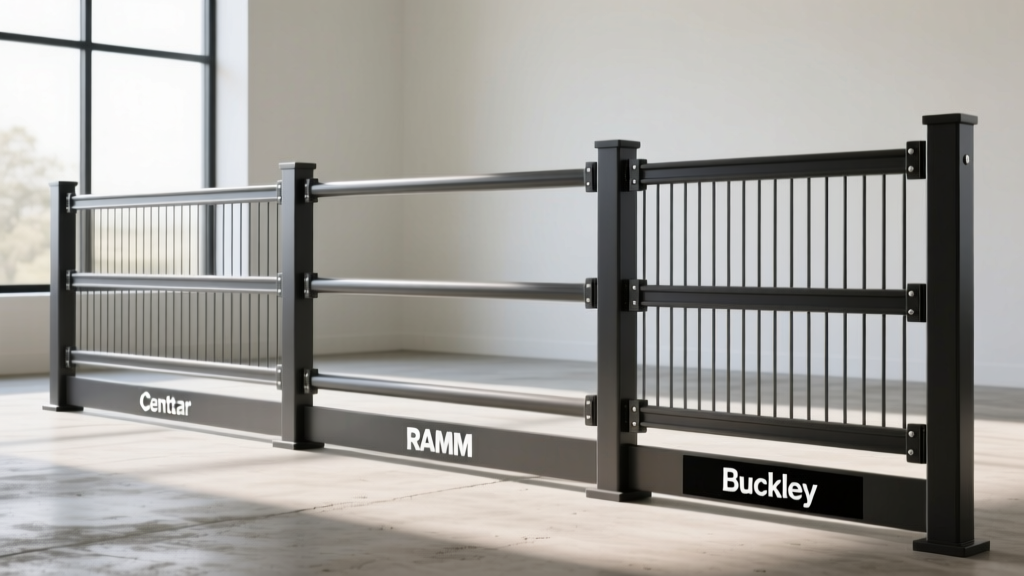
The Material Science of Equine Containment
Traditional wood fencing rots, splinters, and requires constant painting, while rigid PVC becomes brittle and shatters into hazardous shards upon high-impact collisions. For modern equine facilities, the industry standard has shifted toward flexible rail and high-density polyethylene (HDPE) polymer systems. These materials absorb kinetic energy, preventing severe lacerations and blunt force trauma when a 1,200-pound animal panics and strikes the perimeter.
However, not all synthetic fencing is engineered equally. A deep-dive into the market leaders—Centaur, RAMM Fence, and Buckley—reveals distinct material compositions, tensioning requirements, and long-term failure modes that dictate both safety and lifetime cost. According to guidelines published by the University of Minnesota Extension, selecting a horse fence requires balancing visibility, structural give, and maintenance intervals. Below, we deconstruct the flagship product lines of the top three manufacturers to help you engineer the optimal perimeter.
Centaur Fencing: The Flexible Rail Pioneer
Centaur revolutionized the industry by embedding high-tensile steel cables inside a polymer coating. Their system relies on mechanical tension rather than material rigidity to maintain a clean, level aesthetic.
Flagship Product Lines
- Centaur 5 (5-inch Rail): The flagship model features three 12.5-gauge high-tensile galvanized steel wires encased in a UV-stabilized polymer coating. It offers a break strength exceeding 2,000 lbs per rail.
- Centaur 3 (3-inch Rail): Utilizes two tension wires. Best suited for smaller paddocks or as a secondary deterrent rail at the top of a wire-mesh fence.
- Hot-Rail: Features a bare, 12.5-gauge stainless steel wire on the interior face of the polymer, allowing the fence to serve as both a physical and psychological (electric) barrier without separate offset insulators.
Cost & Maintenance Profile
Material costs for the Centaur 5 system average $1.85 to $2.30 per linear foot (rails only). The primary maintenance requirement is an annual tension check. Because the polymer coating expands and contracts with temperature fluctuations, rails installed in peak summer will sag in the winter, requiring a half-turn on the ratchet tensioners every 12 to 18 months.
RAMM Fence: Heavy-Duty HDPE & ProFlex Systems
Unlike Centaur’s wire-reinforced approach, RAMM Fence relies on the structural memory and thickness of extruded HDPE. HDPE is fundamentally different from PVC; it does not shatter under impact but rather dents and rebounds.
Flagship Product Lines
- ProFlex (5-inch and 3-inch): A continuous polymer rail with no internal wires. It relies on a thicker wall extrusion (typically 0.080-inch wall thickness) and specialized slide-in tensioning brackets at the corners.
- HDPE Polymer Board: Designed to mimic the look of traditional 1x6 wood boards. These are rigid but feature a slight flex profile. They slot into routed posts and are locked in place with hidden stainless steel set screws.
Cost & Maintenance Profile
RAMM’s ProFlex system runs $2.20 to $2.80 per linear foot. The HDPE board systems are more expensive, averaging $3.50 to $4.20 per linear foot. The major advantage of RAMM’s wire-free systems is the elimination of "cable creep." However, HDPE is susceptible to thermal expansion. A 100-foot run of ProFlex can expand up to 4 inches in direct summer sunlight. RAMM mitigates this with their patented sliding bracket hardware, which allows the rail to move slightly within the corner post without buckling the line.
Buckley Steel & Vinyl: The Premium Hybrid Approach
Buckley Fence takes a completely different engineering route, abandoning flexible tensioning entirely in favor of structural rigidity and zero-maintenance aesthetics. Their system is the gold standard for high-end breeding farms and show facilities where budget is secondary to perfection.
The Buckley System Architecture
Buckley utilizes 2-3/8-inch or 2-7/8-inch galvanized steel pipe posts that are powder-coated and then sleeved in a thick vinyl extrusion. The rails are heavy-duty HDPE with internal aluminum inserts for rigidity. The rails slot through pre-routed holes in the vinyl sleeves and are secured with stainless steel pins.
Cost & Maintenance Profile
Buckley is a premium investment. Expect to pay $7.50 to $11.00 per linear foot for the complete system (posts, sleeves, and rails). The trade-off is absolute zero tensioning maintenance. Once installed, the fence requires nothing more than occasional washing with a pressure washer.
Head-to-Head Comparison Matrix
| Brand / System | Core Material | Break Strength | Avg. Cost / LF | Maintenance Level |
|---|---|---|---|---|
| Centaur 5 | Polymer + 3x Steel Wire | 2,000+ lbs | $1.85 - $2.30 | Moderate (Annual tensioning) |
| RAMM ProFlex | Extruded HDPE | 800 - 1,000 lbs | $2.20 - $2.80 | Low (Hardware checks) |
| RAMM HDPE Board | Rigid HDPE | Rigid (High Impact) | $3.50 - $4.20 | Very Low |
| Buckley Steel/Vinyl | Steel Pipe + HDPE Rail | Structural (Yield >3,000 lbs) | $7.50 - $11.00 | None (Wash only) |
Installation Failure Modes & Edge Cases
Even the most expensive polymer rail will fail catastrophically if the structural foundation is compromised. The eXtension Equine Network emphasizes that corner post engineering is the single most critical factor in synthetic fence longevity.
1. Corner Post Frost Heave
Flexible rail systems like Centaur exert continuous inward pull on corner posts. If a corner post is set in dirt or shallow concrete above the local frost line, winter freeze-thaw cycles will push the post upward (heave). Even a half-inch of vertical lift on a corner post will permanently destroy the tension of a 1,000-foot run of fencing, resulting in severe sagging. Correction: Corner posts must be 6x6 pressure-treated Southern Yellow Pine or 5-inch steel pipe, set a minimum of 36 to 48 inches deep (depending on your USDA hardiness zone) in a 12-inch diameter concrete collar.
2. Thermal Snap in Rigid HDPE
When installing RAMM or Buckley HDPE boards, contractors often make the mistake of tightly pinning the rails at both ends on a cold morning. When summer temperatures hit 95°F, the HDPE expands. Without an expansion gap or sliding bracket, the rail will bow outward or snap the vinyl post routing. Always leave a 1/4-inch expansion gap at the blind end of the rail slot.
3. Line Post Spacing Errors
Wood fencing allows for 10-to-12-foot post spacing. Flexible polymer rail requires stricter spacing to prevent "bellying" (where the rail sags between posts under the weight of snow or a leaning horse). Centaur and RAMM flexible rails require line posts spaced exactly 12 feet apart (maximum 16 feet in low-wind, low-snow regions). Rigid HDPE boards require 8-foot spacing to prevent wind-load snapping.
Decision Framework: Matching the Brand to Your Pasture Profile
Selecting the right system requires an honest assessment of your property's topography, your horses' behavior, and your long-term labor capacity.
- Choose Centaur if: You are fencing large, rolling acreage with uneven terrain. The flexible nature of the wire-core rail allows it to follow the contour of the ground beautifully without requiring stepped panels. It is also the most cost-effective for perimeters exceeding 5,000 linear feet.
- Choose RAMM ProFlex if: You want the safety of a flexible system but despise the idea of annual mechanical tensioning. The HDPE memory and sliding brackets handle the thermal expansion for you, making it ideal for busy commercial boarding facilities where maintenance staff is stretched thin.
- Choose Buckley if: You are fencing high-value show horses, stallion paddocks, or the front entrance of a premier breeding farm. The rigid steel posts deter stallions from leaning and fighting over the fence line, while the flawless vinyl aesthetic maximizes property value without demanding weekend repairs.
"The cheapest horse fence is the one you only have to install once. Saving $1.50 per linear foot on materials will cost you ten times that amount in veterinary bills if a shattered PVC rail or a sagging, untensioned wire causes a catastrophic injury."
Ultimately, investing in engineered polymer or flexible rail systems transitions your perimeter from a constant maintenance liability into a permanent, safe asset. By matching the specific tensile properties and hardware requirements of Centaur, RAMM, or Buckley to your exact pasture profile, you ensure decades of secure, visually pristine equine containment.