Privacy Fence Cost vs Lifespan: Calculating True Material ROI
Analyze privacy fence cost against material lifespan. Compare true ROI, maintenance expenses, and durability of wood, vinyl, composite, and aluminum.
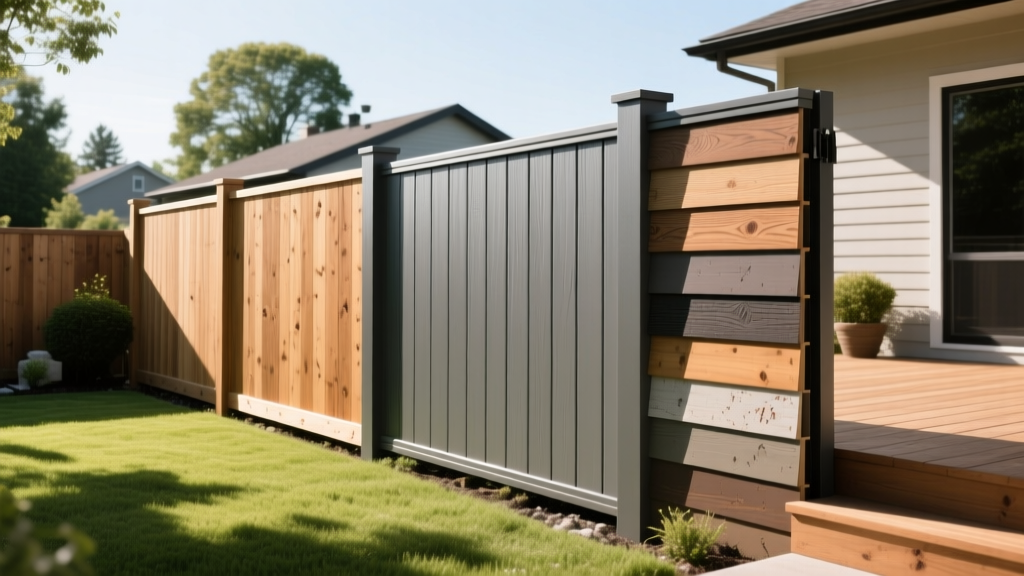
The Hidden Math Behind Privacy Fence Cost
When evaluating privacy fence cost, most homeowners fixate on the initial per-linear-foot estimate. However, a $3,000 wood fence that requires replacement in 12 years is fundamentally more expensive than a $6,000 composite fence that lasts three decades without structural maintenance. Analyzing the true return on investment (ROI) requires calculating the Total Cost of Ownership (TCO), which factors in material degradation, regional climate stressors, and mandatory upkeep.
The True Cost Formula
Total Cost of Ownership (TCO) = Initial Installation + (Annual Maintenance Cost x Lifespan) + Replacement/Repair Costs. By applying this formula, the cheapest upfront privacy fence cost often reveals itself as the most expensive long-term liability.
Material Lifespan vs. Initial Privacy Fence Cost
The table below breaks down the financial reality of the five most common privacy fencing materials. The 30-Year TCO assumes standard installation, typical regional weathering, and mandatory maintenance schedules.
| Material | Initial Cost (per lin. ft.) | Expected Lifespan | 30-Year TCO (per lin. ft.) |
|---|---|---|---|
| Pressure-Treated Pine | $25 - $35 | 12 - 15 Years | $85 - $110 |
| Western Red Cedar | $35 - $50 | 18 - 22 Years | $75 - $100 |
| Cellular Vinyl (PVC) | $40 - $65 | 30+ Years | $45 - $75 |
| Capped Wood-Plastic Composite | $55 - $85 | 30+ Years | $60 - $90 |
| Powder-Coated Aluminum | $65 - $95 | 50+ Years | $65 - $95 |
Durability Deep Dive: How Each Material Fails
To accurately forecast the privacy fence cost over time, you must understand the specific failure modes of each material. According to data compiled by the American Fence Association, premature fence failure is rarely caused by the main panels; it almost always originates at the structural joints, post bases, or fastener points.
Pressure-Treated Pine and Cedar
Wood fences fail primarily due to moisture wicking and fungal decay. For structural posts, you must specify lumber treated to the American Wood Protection Association UC4A standard (ground contact). Using UC3B (above-ground) lumber for posts buried in soil guarantees rot within 5 to 7 years. Cedar offers natural tannins that resist insects, but it still requires end-grain sealing on all cut pickets to prevent capillary action from drawing groundwater up into the board.
Cellular Vinyl (PVC)
Modern vinyl privacy fences utilize a co-extrusion process, layering a high concentration of titanium dioxide (TiO2) over a recycled PVC core to prevent UV chalking. The primary failure mode is thermal expansion. A 100-foot run of dark-colored vinyl can expand up to 4 inches during peak summer heat. If installers fail to leave 1/4-inch gap tolerances at rail ends, the panels will buckle and snap at the bracket connections.
Capped Wood-Plastic Composite
Early-generation uncapped composites suffered from severe moisture absorption and mold growth. Today's capped composites feature a polymer shell that completely encapsulates the wood-flour core. While highly resistant to rot, the polymer cap can suffer from micro-scratching and UV fading if abrasive cleaners are used. When calculating privacy fence cost for composites, factor in the premium for fully capped profiles rather than half-capped alternatives.
Aluminum and Steel Privacy Panels
Metal privacy screens require rigorous coating standards. Steel panels must be hot-dipped galvanized and finished with an Architectural Aluminum Manufacturers Association (AAMA) 2604 compliant powder coat to survive salt-air environments. Aluminum naturally resists rust but is highly susceptible to galvanic corrosion. If a contractor uses standard galvanized steel screws to mount aluminum panels, a chemical reaction will rapidly corrode the aluminum around the fastener hole. Always mandate stainless steel or polymer-coated fasteners for aluminum installations.
Environmental Stressors and Regional Lifespan Adjustments
The baseline lifespan figures above assume a temperate climate. Regional extremes drastically alter the privacy fence cost ROI:
- High UV Zones (Southwest): Unprotected wood grays and splinters within 3 years. Dark vinyl can warp under intense, sustained heat. Light-colored composites and aluminum offer the best ROI here.
- High Moisture Zones (Southeast): Constant humidity and heavy rainfall accelerate wood rot and promote mildew on uncapped composites. Cellular vinyl and aluminum are virtually impervious to these conditions.
- Freeze-Thaw Cycles (Northeast/Midwest): The ground heaving during spring thaws can push concrete footings upward, racking the fence frame. Metal and flexible vinyl systems handle this ground movement better than rigid wood assemblies.
Decision Matrix: Matching Budget to Lifespan Expectations
Use this framework to align your initial privacy fence cost budget with your property timeline:
- Short-Term Ownership (Under 7 years): Optimize for lowest initial privacy fence cost. Pressure-treated pine is the clear winner. You will not recoup the premium of composite or aluminum in a short-term real estate flip.
- Medium-Term Ownership (10-15 years): Western Red Cedar or standard cellular vinyl provides the best balance. Cedar offers premium aesthetics for resale, while vinyl eliminates the bi-annual staining requirement.
- Forever Home (20+ years): Invest in capped wood-plastic composite or powder-coated aluminum. The higher initial privacy fence cost is entirely offset by zero replacement costs and minimal maintenance over three decades.
Maintenance Schedules That Protect Your Investment
Even the most durable materials require specific upkeep to reach their maximum lifespan. Adhere to these schedules to protect your capital:
- Wood: Apply a penetrating, oil-based semi-transparent sealer every 2 to 3 years. Avoid film-forming finishes like polyurethane, which peel and require costly sanding to remove.
- Vinyl: Power wash annually with a 1,500 PSI maximum setting and a 40-degree wide fan tip to remove organic matter that can cause surface mildew.
- Composite: Clean bi-annually with a composite-specific, non-abrasive cleaner. Never use a pressure washer closer than 12 inches to the surface to avoid etching the polymer cap.
- Metal: Inspect fastener points and bottom rails annually. Touch up any coating micro-fractures immediately with a manufacturer-approved cold-galvanizing compound to prevent localized rust blooms.