Navigating Types of Fencing: A Material Taxonomy for Buyers
Compare the main types of fencing with our material taxonomy. Discover costs, lifespans, and structural limits to choose the right boundary solution.
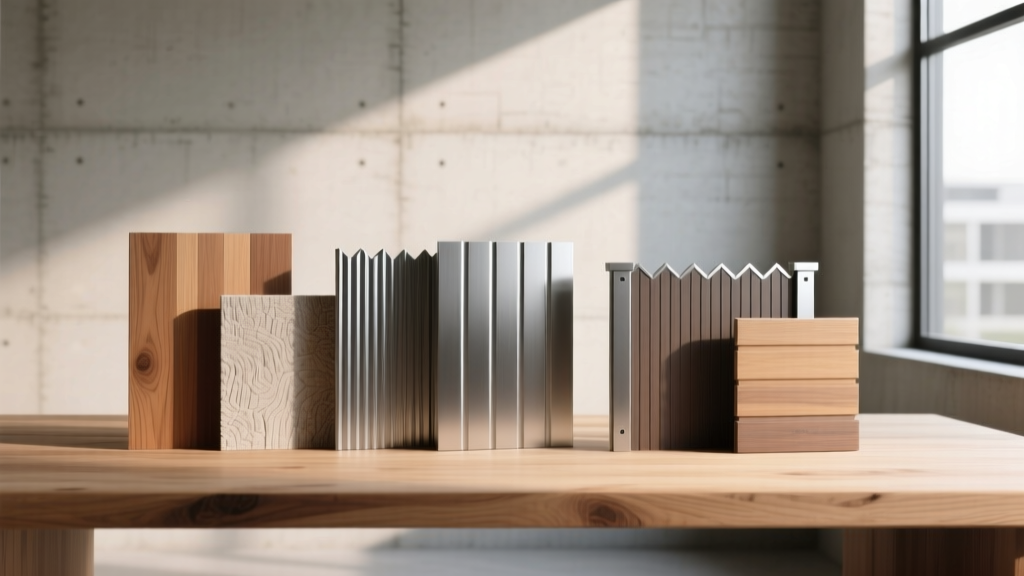
The Fencing Material Taxonomy: Beyond Basic Categories
Selecting from the various types of fencing requires moving beyond superficial aesthetics to evaluate the chemical and structural composition of the materials. The boundary fencing market is broadly divided into three primary material classes: cellulosic organics, polymeric synthetics, and metallic alloys. Understanding the exact manufacturing specifications and degradation thresholds of each class is the only way to ensure a 20-year return on investment.
Cellulosic & Organic Boundaries
Wood remains a dominant choice, but performance varies wildly by species and treatment. Western Red Cedar (Select Tight Knot or STK grade) relies on natural tannins and thujaplicins for rot resistance, making it ideal for above-ground rails and pickets. However, for posts set in soil, you must specify Pressure-Treated Southern Yellow Pine that meets the American Wood Protection Association (AWPA) UC4A standard for ground contact. According to the USDA Forest Products Laboratory, incised cedar does not hold pressure treatment well; therefore, never use untreated cedar for subterranean post applications.
Polymeric & Synthetic Extrusions
When evaluating vinyl and composite fencing, the critical metric is UV stabilization. High-quality PVC fencing must be co-extruded with a cap layer containing 8% to 10% titanium dioxide (TiO2) to prevent chalking and photodegradation. Furthermore, the ASTM F668 standard dictates that structural PVC fencing profiles must maintain a minimum wall thickness of 0.160 inches. Anything thinner will suffer from lateral bowing and joint failure under thermal expansion cycles. Cellular composites (HDPE blended with wood fibers) offer superior rigidity but require specialized hidden fastener systems to accommodate their higher thermal expansion rates.
Ferrous & Non-Ferrous Alloys
Ornamental aluminum fencing should be extruded from 6061-T6 or 6063-T5 aerospace-grade alloys. To prevent oxidation in coastal or high-humidity environments, the powder-coat finish must meet AAMA 2604 specifications for exterior durability. For high-security or heavy-duty applications, galvanized steel is required. Ensure the steel features a G90 zinc coating (0.90 oz per square foot) to prevent red rust, as standard G60 coatings will fail within a decade in wet climates.
Environmental Stress & Material Performance Matrix
Site conditions dictate material longevity. The following matrix maps specific environmental stressors to optimal and suboptimal material choices.
| Climate / Soil Condition | Primary Threat | Optimal Material Selection | Material to Avoid |
|---|---|---|---|
| Coastal / Salt Spray | Chloride-induced corrosion | Marine-grade aluminum (6061-T6), PVC | Wrought iron, untreated steel, chain link |
| Expansive Clay Soils | Seasonal soil swelling / post uplift | Steel posts with helical piers, vinyl | Wood posts in concrete collars |
| High Wind / Hurricane Zones | Lateral shear and sail-effect | Semi-private aluminum, spaced wood | Solid 6ft vinyl, solid composite |
| Heavy Shade / Damp | Fungal decay and moss accumulation | Galvanized steel, cellular composite | Untreated spruce, pine, fir (SPF) |
Lifecycle Cost Analysis (LCCA) by Material Class
Initial installation costs often obscure long-term financial liabilities. The table below outlines the true 20-year cost of ownership for standard 6-foot privacy and ornamental boundaries in current markets.
| Material Class | Initial Installed Cost (per LF) | 20-Year Maintenance Cost | Expected Lifespan |
|---|---|---|---|
| Pressure-Treated Pine | $22 - $32 | $8 - $12 (staining/sealing every 3 yrs) | 15 - 20 years |
| Western Red Cedar (STK) | $35 - $55 | $4 - $6 (clear sealer every 5 yrs) | 20 - 25 years |
| Extruded PVC (Vinyl) | $40 - $65 | $0.50 (occasional power washing) | 30 - 50 years |
| Ornamental Aluminum | $45 - $70 | $0 (virtually maintenance-free) | 50+ years |
| Wood-Plastic Composite | $55 - $85 | $1 (mildew cleaning) | 25 - 30 years |
A common installation error promoted by inexperienced contractors is encasing wooden fence posts in a continuous concrete collar that extends above grade. This creates a moisture trap where water pools against the wood-concrete interface, accelerating fungal rot. The American Fence Association recommends setting posts in compacted gravel, or using a concrete footing that stops 2 inches below grade, backfilled with soil to allow water to drain away from the wood end-grain.
Structural Failure Modes & Engineering Edge Cases
Understanding how different types of fencing fail under physical stress is crucial for engineering a durable boundary. Most failures are not caused by material degradation, but by improper load calculations during installation.
Wind Load and Porosity Calculations
A 6-foot solid privacy fence acts as a massive sail. In a 90 mph wind event, a solid fence generates approximately 22 pounds per square foot (psf) of lateral pressure. An 8-foot horizontal panel section will therefore experience over 1,000 pounds of lateral shear force at the post base.
Actionable Fix: If building in high-wind corridors, abandon solid panels. Utilize a shadowbox (board-on-board) design or spaced picket designs that achieve 40% to 50% porosity. This reduces wind load by half while still providing visual privacy. For solid vinyl, mandate 4x4 posts reinforced with internal galvanized steel pipe inserts set a minimum of 36 inches deep.
Frost Heave and Post Anchoring
In USDA Plant Hardiness Zones 5 and 6, the winter frost line penetrates 36 to 48 inches into the soil. If fence posts are set shallower than this threshold, the freezing soil expands and grips the post, pushing it upward (frost heave). When the soil thaws, the post rarely settles back to its original plumb position, resulting in a wavy, structurally compromised fence line.
Actionable Fix: Always dig post holes 6 inches below the local frost line. Pour a bell-bottom footing (flaring the concrete at the base of the hole) or use sonotubes that widen at the bottom. This creates an anchor that the frost line cannot physically lift.
Regulatory and HOA Compliance Constraints
Before finalizing a material selection, cross-reference local zoning ordinances and Homeowner Association (HOA) architectural guidelines. Many municipalities enforce strict 'good neighbor' policies, requiring the finished side of the fence to face outward.
'When installing masonry or heavy composite fencing near property lines, verify local setback requirements. Many jurisdictions require a 1-to-2 foot setback for non-transparent structural boundaries to maintain utility easement access and prevent encroachment disputes.'Furthermore, corner lots often fall under 'visibility triangle' ordinances, restricting fence height to 3 feet or mandating 50%+ open porosity (like aluminum or spaced wood) within 25 feet of the street intersection to preserve driver sightlines. Always pull a topographical survey and verify utility lines via 811 before breaking ground for post-setting.