Wildlife Fencing Cost Per Kilometer: A Maintenance Playbook
Analyze wildlife fencing cost per kilometer and master our maintenance playbook to extend the lifespan of high-tensile and woven wire barriers.
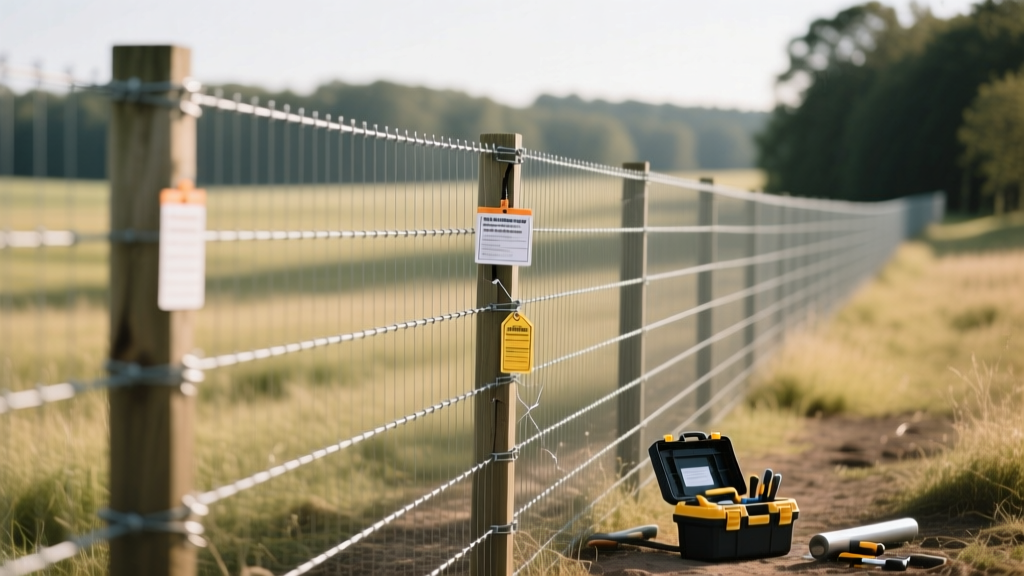
The True Economics of Wildlife Exclusion Barriers
Installing a perimeter wildlife exclusion barrier is a major capital expenditure for agricultural operations, vineyards, and commercial properties. However, calculating the initial wildlife fencing cost per kilometer only tells half the financial story. Without a rigorous, scheduled maintenance playbook, environmental stressors, vegetation overgrowth, and animal pressure will degrade the structural integrity of the fence, leading to premature failure and costly total replacements. This guide bridges the gap between initial capital outlay and long-term lifecycle management, providing exact maintenance protocols to protect your investment.
Breaking Down the Wildlife Fencing Cost Per Kilometer (2026 Baselines)
Before establishing a maintenance routine, it is critical to understand the baseline material and labor costs you are working to protect. Pricing fluctuates based on terrain, soil conditions, and the specific wildlife threat (e.g., deer exclusion vs. wild boar containment). Below are the current average costs for professional installation on moderately level terrain.
| Fencing Type | Height / Spec | Material Cost (per km) | Installed Cost (per km) | Expected Lifespan |
|---|---|---|---|---|
| High-Tensile Woven Wire (Fixed Knot) | 2.0m (80" / 12.5 ga) | $8,500 - $11,200 | $14,000 - $19,500 | 30 - 40 Years |
| Woven Wire with Barbed Outrigger | 1.8m + 2-strand top | $7,200 - $9,800 | $12,500 - $16,000 | 20 - 30 Years |
| High-Density Polyethylene (HDPE) Deer Net | 2.4m (8' / 1" mesh) | $4,100 - $6,300 | $8,500 - $12,000 | 10 - 15 Years |
| Electric Polywire Offset (Add-on) | Offset 0.5m | $1,200 - $1,800 | $2,500 - $3,800 | 5 - 8 Years |
When evaluating the wildlife fencing cost per kilometer, always specify Class 3 galvanization (minimum 0.80 oz/sq ft of zinc) for woven wire. Class 1 wire is cheaper upfront but will rust through at the knot intersections within 7 to 10 years in high-humidity environments, effectively doubling your long-term cost per kilometer due to early replacement.
The 4-Season Maintenance & Cleaning Playbook
To maximize the lifespan of high-tensile and woven wire barriers, facility managers and landowners must implement a seasonal maintenance schedule. This playbook focuses on tension management, vegetation clearing, and structural reinforcement.
Spring: Tension Calibration and H-Brace Inspection
Winter freeze-thaw cycles cause soil heave, which can loosen corner posts and drop wire tension. High-tensile wire relies on extreme tension to maintain its structural memory and resist animal impact.
- Tension Testing: Use a digital fence tension gauge (e.g., Gripple or Poultry Wire Tension Meter). High-tensile 12.5-gauge wire should read between 150 lbs and 200 lbs of tension. If it drops below 120 lbs, use inline Gripple tensioners to ratchet the wire back to spec.
- H-Brace Diagnostics: Inspect all corner and gate H-braces. The diagonal brace wire (typically 9-gauge high-tensile) must be tight enough to 'ping' like a guitar string. If the wooden corner post shows a lean greater than 2 degrees, drive a secondary steel anchor post behind it and bind them together with galvanized U-bolts.
Summer: Vegetation Management and Corrosion Prevention
Overgrown vegetation is the silent killer of wildlife fencing. Vines and heavy brush trap moisture against the galvanized coating, accelerating zinc degradation. Furthermore, tall grass contacting electric offset wires will cause 'weed loading,' draining the energizer's voltage and rendering the psychological barrier useless.
Maintain a strict 1-meter (3-foot) clear zone on both sides of the fence line. Use mechanical brush cutters or string trimmers. Warning: Avoid applying broad-spectrum herbicides like glyphosate directly onto the bottom wire runs. The acidic nature of concentrated herbicide residues can react with the zinc coating, leading to localized micro-corrosion at the ground line.
Autumn: Ground-Line Scouring and Rodent Guard Checks
Before the ground freezes, inspect the bottom 30 centimeters of the fence. This is the highest-stress zone for wild boars, badgers, and foxes attempting to excavate under the barrier.
- Apron Verification: If your design includes an outward-facing ground apron (buried or pinned L-footer), ensure soil erosion has not exposed the wire. Pin down any lifted sections using 300mm galvanized ground staples driven at a 45-degree angle.
- Debris Clearing: Remove accumulated leaf litter and windblown debris from fence corners. Decaying organic matter holds moisture and creates micro-climates that rust the bottom horizontal wires.
Winter: Snow Load and Ice Mitigation
In regions with heavy snowfall, the weight of ice and compacted snow can push the bottom wires upward, creating gaps for deer to crawl under or causing the wire to snap at the knots.
- Snow Trenching: Use a snowblower or tractor-mounted blade to clear a 2-meter swath along the fence line before snow depths exceed 40 cm.
- Ice Removal: Never strike ice-covered high-tensile wire with a hammer or heavy tool. The sudden shock load on frozen, brittle steel can cause catastrophic snapping. Allow natural thawing or use warm water for localized ice buildup on gate latches.
Troubleshooting Matrix: Structural Failures and Animal Breaches
When a breach occurs, identifying the root cause prevents recurring failures. Use this diagnostic matrix to address common wildlife fencing failures.
| Symptom / Breach Type | Probable Root Cause | Corrective Action & Material Spec |
|---|---|---|
| Bottom wire lifted; soil tunneling present | Insufficient ground pinning; sandy/loose soil composition. | Install a 60cm wide heavy-duty welded wire apron, pinned every 30cm with 10-gauge landscape staples. |
| Mid-section wires stretched and bowed | Line post spacing too wide for the specific wire gauge; deer impact. | Reduce line post spacing from 5m to 3m. Add T-posts with heavy-duty wire clips to reinforce the mid-span. |
| Corner post pulled inward; top wire sagging | Undersized H-brace; diagonal brace wire slipped off the post. | Retrofit with a 10-inch diameter treated wood corner post. Use a 5/16" eye bolt for the brace wire anchor instead of wrapping around the wood. |
| Wire snapped cleanly at the knot | Hydrogen embrittlement or severe zinc depletion (rust jacking). | Cut out the damaged section. Splice using a Gripple Mid-Joiner (Model #4 for 12.5ga wire). Do not knot high-tensile wire by hand. |
Electric Offset Wire Upkeep: Maintaining the Psychological Barrier
Many high-value installations pair physical woven wire with an electric offset wire to deter animals from challenging the physical barrier. According to wildlife management guidelines from the Internet Center for Wildlife Damage Management, a physical fence paired with an electric offset reduces deer pressure and physical damage by up to 85%. However, this requires strict electrical maintenance.
- Voltage Thresholds: Test the offset wire weekly using a digital voltmeter. You must maintain a minimum of 4,000 volts for deer exclusion, and at least 6,000 volts if wild boars or bears are present in the region.
- Energizer Sizing: Ensure your fence energizer is rated for at least 3 times the actual physical length of the fence to account for vegetation 'weed loading' and power loss over distance. For a 5-kilometer fence, use an energizer rated for a minimum of 15 kilometers (approx. 3.0 to 4.0 stored joules).
- Grounding Rod Maintenance: The grounding system is where 90% of electric fence failures occur. Inspect the copper-clad steel ground rods. In dry summer months, pour 20 liters of water mixed with 2 kg of rock salt around the ground rod cluster to lower soil resistance and ensure the circuit completes effectively when an animal touches the wire.
Lifecycle Cost Analysis: The ROI of Preventative Upkeep
Adhering to the USDA NRCS Conservation Practice Standards for fencing maintenance ensures that the infrastructure meets federal and state agricultural guidelines, which is often required to maintain cost-share grants.
Consider a 10-kilometer high-tensile woven wire installation. At an average installed wildlife fencing cost per kilometer of $16,000, the total capital outlay is $160,000. If neglected, the fence will suffer critical structural failures by year 12, requiring a $90,000 partial rebuild. By investing $1,200 annually per kilometer in scheduled maintenance (tensioning, vegetation control, and H-brace reinforcement), the total 20-year maintenance cost is $24,000. This extends the functional life of the fence to 35+ years, effectively cutting the annualized cost of the barrier by 42% and preventing devastating crop or property losses from wildlife incursions.
Ultimately, the wildlife fencing cost per kilometer is not a static number on an invoice; it is a dynamic metric that fluctuates based on your operational discipline. Implement these playbooks, document your seasonal inspections, and your exclusion barrier will perform flawlessly for decades.