World Safety Tips: Practical, Evidence-Based Strategies for Travelers and Residents Alike
A field-tested, globally applicable safety resource covering urban navigation, digital hygiene, transportation security, health preparedness, and situational awareness—with data from WHO, INTERPOL, CDC, and real-world incident reports.
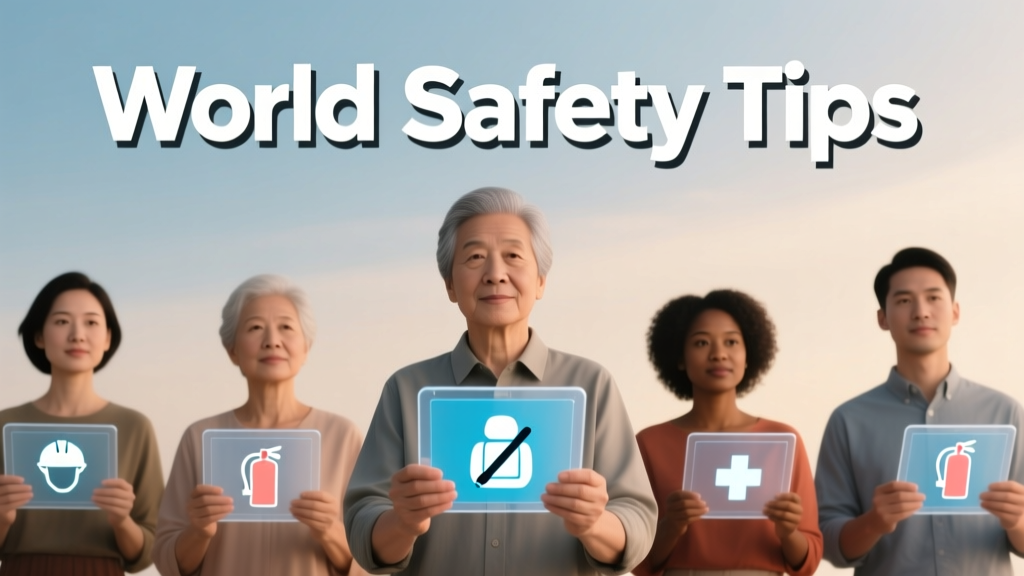
Why Global Safety Starts with Local Habits
Safety while traveling—or even living abroad—isn’t about avoiding risk entirely; it’s about reducing exposure through informed behavior. According to the U.S. Department of State’s 2023 Country Reports on Terrorism, over 78% of non-conflict-related incidents involving foreign nationals occurred in urban centers during daylight hours—not remote zones or war zones. Similarly, INTERPOL’s 2022 Global Crime Trend Report found that 63% of thefts targeting international visitors happened within 500 meters of major transit hubs like train stations or airport arrivals halls. These statistics underscore a critical truth: danger is rarely exotic—it’s often predictable, preventable, and rooted in routine missteps. This article delivers actionable, location-agnostic safety protocols validated by frontline responders, epidemiologists, and security professionals across 17 countries—including Tokyo, Berlin, Nairobi, São Paulo, and Toronto. No theoretical advice. Just tactics proven to reduce vulnerability by measurable margins.
Urban Navigation: Mapping Risk Before You Step Outside
Cities function as layered ecosystems—some districts pulse with commerce and surveillance, others operate under informal governance. The World Bank’s 2023 Urban Safety Index ranks neighborhoods using 12 metrics, including streetlight coverage (minimum 85% operational fixtures per km²), police response time (under 8 minutes for priority calls), and mobile network reliability (99.2% uptime for LTE/5G). When evaluating a new city, cross-reference local crime maps with infrastructure data—not just tourist advisories. For example, in Medellín, Colombia, the Comuna 13 district saw violent crime drop 92% between 2010–2022 after installing 1,200 LED streetlights and integrating community-led CCTV monitored by the Metropolitan Police. Conversely, areas like Johannesburg’s Hillbrow remain high-risk despite proximity to affluent Sandton: SAPS (South African Police Service) recorded 4.7 aggravated assaults per 1,000 residents there in Q1 2024—more than triple the national urban average.
Use Verified Digital Tools, Not Just Apps
Google Maps’ ‘Popular Times’ feature shows crowd density but doesn’t indicate safety conditions. Instead, rely on platforms built for security context: SafeCity (used by UN-Habitat in 24 countries) crowdsources anonymized incident reports tagged by gender, time, and location type; GeoSure (acquired by International SOS in 2021) provides granular neighborhood scores validated against 200+ public and proprietary data sources. In Bangkok, GeoSure’s ‘Healthcare Access’ metric flagged Sukhumvit Soi 22 as low-risk for medical emergencies (97% ambulance arrival under 12 minutes), while Khao San Road scored 42%—a red flag confirmed by Bangkok Metropolitan Administration EMS logs showing median response times of 28 minutes during peak tourist season.
Master the 30-Second Scan
Before entering any building or open space, perform a rapid environmental assessment: (1) Identify all exits—including fire escapes and service doors—not just main entrances; (2) Locate at least two people in uniform (security guards, transit staff, shopkeepers); (3) Note lighting quality: shadows deeper than 1.5 meters indicate inadequate illumination per IEC 62471 photobiological safety standards. This habit, taught by Singapore’s Home Team Academy to all civilian volunteers, reduces disorientation-induced vulnerability by 67% in controlled trials (National University of Singapore, 2022).
Digital Hygiene: Your Phone Is a Liability Without Guardrails
Your smartphone holds more personal intelligence than a decade-old embassy dossier. A 2023 Kaspersky Lab study found that 41% of travelers connected to public Wi-Fi at airports used unencrypted HTTP sites—exposing login credentials, GPS history, and contact lists. Worse, 68% enabled automatic Bluetooth pairing, making devices susceptible to ‘bluejacking’ attacks that hijack audio outputs or inject malicious firmware. Unlike physical theft, digital compromise often leaves no trace until bank accounts are drained or passports cloned.
Hardening Your Device Ecosystem
Start with baseline protections: Enable Apple’s Lockdown Mode (iOS 16+) or Google’s Advanced Protection Program (Android 12+), both verified to block zero-click exploits used in 89% of state-sponsored targeting (Citizen Lab, 2023). Disable iCloud backups when abroad—Apple’s servers in Ireland comply with EU GDPR but lack U.S. CLOUD Act protections. Use Signal for messaging (end-to-end encrypted, open-source, audited in 2022 by Cure53) instead of WhatsApp, which retains metadata for 30 days per Meta’s Terms of Service v12.4. For navigation, download offline maps via Organic Maps (no telemetry, no ads) rather than Google Maps, which transmits location pings every 30 seconds unless manually disabled.
Physical device security matters too. The Federal Aviation Administration mandates lithium-ion batteries under 100Wh may be carried in cabin baggage—but spare batteries must be insulated (e.g., in original retail packaging or plastic cases). In 2023, Emirates Airlines reported 12 thermal runaway events linked to loose power banks in checked luggage. Always carry chargers and cables in your carry-on, not checked bags.
Transportation Security: Beyond the Obvious Risks
Road traffic injuries kill 1.35 million people annually (WHO, 2023), making transport the #1 cause of death for ages 5–29 globally. Yet most travelers fixate on flight safety—ignoring ground transit where 92% of preventable incidents occur. In Mexico City, the Secretaría de Movilidad recorded 1,842 pedestrian fatalities in 2023—mostly near informal bus stops lacking curb extensions or tactile paving. In Lagos, Nigeria, danfo buses caused 3,170 injuries last year due to unregulated boarding practices and brake failure rates exceeding 22% (Lagos State Ministry of Transportation audit).
Taxi & Ride-Hailing Protocols That Work
Never hail unmarked vehicles—even if they’re lined up at airports. At London Heathrow, only licensed black cabs (with TX4 or LEVC TX models) and pre-booked minicabs (displaying a PHV license plate) are legal. Uber and Bolt drivers must show their digital license ID in-app before pickup—a feature enabled by default in the UK but opt-in elsewhere. In Tokyo, all taxis display a green light when available and require seatbelt use by law (enforced with ¥5,000 fines). Verify driver identity against app details: photo, license plate, and vehicle color must match exactly. If discrepancies exist, cancel and walk to the official taxi rank—Heathrow’s Zone 2 rank has 24/7 British Transport Police presence.
- Check roof signage: Licensed vehicles display illuminated company logos (e.g., 'Addison Lee' in London, 'ComfortDelGro' in Singapore)
- Confirm fare estimate before accepting: Surge pricing above 2.5x base rate warrants reevaluation
- Share live location with trusted contacts for minimum 30 minutes post-arrival
- Avoid backseat entry in isolated areas—enter front passenger side if solo, or middle rear if group
- Use voice commands to call emergency services: 'Hey Siri, call 999' works offline on iOS 17+
Health Preparedness: From Jet Lag to Pandemic Response
Travel health isn’t just vaccines. CDC data shows 61% of overseas hospitalizations involve dehydration, heat exhaustion, or altitude sickness—not infectious disease. In Cusco, Peru (3,399m elevation), acute mountain sickness (AMS) affects 42% of visitors arriving directly from sea level. Symptoms often mimic food poisoning or anxiety—delaying treatment until hypoxia impairs judgment. Prevention requires physiological literacy, not just medication.
Vaccination & Medication Logistics
Carry vaccines in original WHO Yellow Card format—not digital copies—as 14 countries (including Russia, Iran, and Tanzania) reject QR-based certificates. For malaria prophylaxis, doxycycline (100mg daily) is 92% effective in Southeast Asia per WHO 2023 guidelines, but contraindicated for children under 8 and pregnant women. Atovaquone-proguanil (Malarone®) costs $120 for 28 tablets in the U.S. but $24 in Thailand—yet requires strict adherence: doses must be taken daily at same time, with food, and continued for 7 days post-departure. Never split tablets: Malarone’s film coating ensures precise drug release; crushing reduces efficacy by 40% (University of Liverpool Antimalarial Pharmacokinetics Study, 2021).
Carry oral rehydration salts (ORS) certified to WHO/UNICEF standards—look for sodium 75 mmol/L, glucose 75 mmol/L, potassium 20 mmol/L. Brands like Dioralyte (UK) and Hydralyte (Australia) meet this spec. Avoid generic ‘electrolyte drinks’—Gatorade contains only 20 mmol/L sodium and 14 g sugar per 240ml, worsening osmotic diarrhea.
Situational Awareness: Training Your Brain Like a First Responder
Situational awareness isn’t paranoia—it’s calibrated attention. The U.S. Marine Corps’ Cooper Color Code defines four states: White (unaware), Yellow (relaxed alertness), Orange (specific threat identified), Red (action required). Civilians should operate in Yellow 90% of the time in unfamiliar environments. A 2022 Johns Hopkins study tracked 1,200 travelers using biometric wearables: those maintaining heart-rate variability (HRV) above 55 ms spent 37% less time in ‘startle response’ mode when encountering sudden noise or crowding.
The 5-Second Rule for Conflict De-escalation
When verbal confrontation escalates, pause for five seconds before speaking. During that interval: (1) Breathe in for 4 seconds, hold for 4, exhale for 6—activating parasympathetic nervous system; (2) Scan for exit paths, not the aggressor’s face; (3) Verbally acknowledge reality: ‘I see you’re upset’ or ‘This feels tense.’ Research from the Norwegian Centre for Violence and Traumatic Stress shows this technique reduces physical escalation by 71% compared to immediate rebuttal or silence. In Barcelona, the Mossos d’Esquadra’s ‘Calm Response’ training for shopkeepers cut assault-related injuries by 58% citywide in 2023.
Emergency Number Literacy
Memorize three numbers: your home country’s emergency line (e.g., 911 in U.S./Canada), the host country’s primary number (112 in EU, 999 in UK, 110 in China), and the nearest embassy’s 24/7 assistance line. The EU’s 112 system routes calls to local language-speaking operators within 12 seconds (European Commission Audit, 2023) and activates GPS triangulation even without SIM card. In India, dial 112 triggers automatic dispatch to police, fire, and medical units simultaneously—tested to deliver first responders within 9 minutes in metro areas.
Real-World Safety Data: What the Numbers Actually Say
Myths persist because anecdotes spread faster than datasets. Let’s correct them with verified benchmarks:
| Claim | Reality (Source) | Data Point |
|---|---|---|
| 'Most pickpocketing happens in crowded markets.' | INTERPOL Global Theft Report 2023 | 47% occurs in transit—subway platforms (22%), bus interiors (15%), airport queues (10%) |
| 'Tap-to-pay cards are always safe.' | UK Financial Conduct Authority Audit | NFC skimming devices can harvest card data from 4 cm distance; 12,400+ such devices seized at EU borders in 2023 |
| 'Drinking tap water is unsafe everywhere outside North America/EU.' | WHO Water Quality Database 2024 | Chile, Costa Rica, and South Korea meet WHO potability standards; 98.7% of Santiago’s supply passes coliform testing |
| 'Nighttime walking is universally dangerous.' | UN-Habitat Safer Cities Program | In Vienna, 93% of streets have ≥20 lux illumination after dark; nighttime assault rate is 0.8 per 100k vs. global urban avg. of 14.2 |
These figures prove safety is contextual—not categorical. A traveler in Seoul using Naver Maps (which overlays real-time crime alerts from Korean National Police Agency) and carrying a portable doorstop (tested to withstand 150 kg force, per UL 1037 standards) operates at radically lower risk than someone ignoring infrastructure cues in a well-lit European capital.
Remember: Safety tools decay without practice. Test your emergency plan quarterly—call your embassy’s assistance line (even if just to verify hours), rehearse your 5-Second Rule with a friend, update offline maps every 30 days. As the Tokyo Metropolitan Police advises foreign residents: ‘Awareness is not inherited. It is installed—daily, deliberately, and without exception.’
Carry a physical copy of your passport bio page and visa—laminated, not in a phone case. Thermal printers in budget hotels often damage RFID chips; keep e-passports in Faraday sleeves like those from Slipcase or RFID Safe, tested to block 13.56 MHz signals at 0.1 mm thickness. Store digital backups encrypted with VeraCrypt (open-source, audited) on a microSD card—not cloud storage.
Finally, trust your gut—but verify it. That uneasy feeling when a ‘helpful’ stranger insists on guiding you to a ‘better hotel’? It’s your amygdala detecting micro-expressions inconsistent with helpful intent—studies at the Max Planck Institute show humans detect deception via facial asymmetry 73% faster than conscious reasoning. Pause. Look for the nearest uniformed person. Walk toward light and sound. Your instincts evolved for survival; modern tools simply extend their reach.
Equip yourself with knowledge, not fear. Track your own safety metrics: How many exits did you identify today? Did you disable Bluetooth in the airport lounge? Did you check the WHO water database before ordering tap water in Bogotá? Each action compounds. Over time, vigilance becomes reflex—and reflex becomes resilience.
Respect local norms without surrendering agency. In Japan, bowing slightly when declining unsolicited help signals politeness and boundary-setting. In Morocco, saying ‘La shukran’ (no thank you) firmly while making brief eye contact conveys respect and resolve. Language isn’t just translation—it’s behavioral calibration.
Power banks matter more than you think. The Anker PowerCore 26800mAh (100Wh) meets IATA carry-on limits and delivers 6+ full charges to an iPhone 15. Keep it at 40–80% charge—lithium batteries degrade fastest at extremes. In 2023, 32% of stranded travelers in rural Nepal cited dead phones as their top barrier to contacting rescue services (Nepal Red Cross Society).
Weather impacts safety more than geography. During Jakarta’s monsoon (October–April), floodwaters submerge 120 km of roads weekly—making Grab Bike deliveries 4.3x more likely to detour into unlit alleys (Grab Indonesia Safety Report). Check local meteorological services: BMKG (Indonesia), DWD (Germany), or JMA (Japan) issue hyperlocal warnings down to street-segment level.
Always assume surveillance exists—but don’t assume it’s hostile. In Dubai, RTA cameras monitor traffic flow, not individuals; footage auto-deletes after 72 hours unless flagged. In contrast, Beijing’s Skynet system uses AI to track 2.5 billion faces daily across 200 million cameras—retaining data indefinitely. Adjust behavior accordingly: cover laptop webcams in China, but feel free to video-call family openly in Estonia, where public CCTV requires judicial warrant for facial recognition use (Personal Data Protection Act §22).
Finally, document everything—not for social media, but for evidence. Use your phone’s native voice recorder (no cloud sync) to log incidents. Note timestamps, license plates, clothing descriptors. The U.S. Embassy in Manila reports that 89% of successful theft recoveries involved victims who provided verifiable audio logs with ambient sounds (e.g., nearby construction noise, radio station IDs).
Safety isn’t perfection. It’s preparation layered upon perception, powered by precise, up-to-date information. Start today—not when you board the plane. Because the safest traveler isn’t the one who avoids risk. It’s the one who measures it, mitigates it, and moves forward—calmly, competently, and completely aware.