Bathroom Flooring Ideas: A Durability & Lifespan Guide
Evaluate durable bathroom flooring ideas with our lifespan analysis. Compare porcelain, SPC vinyl, and stone based on moisture resistance and failure modes.
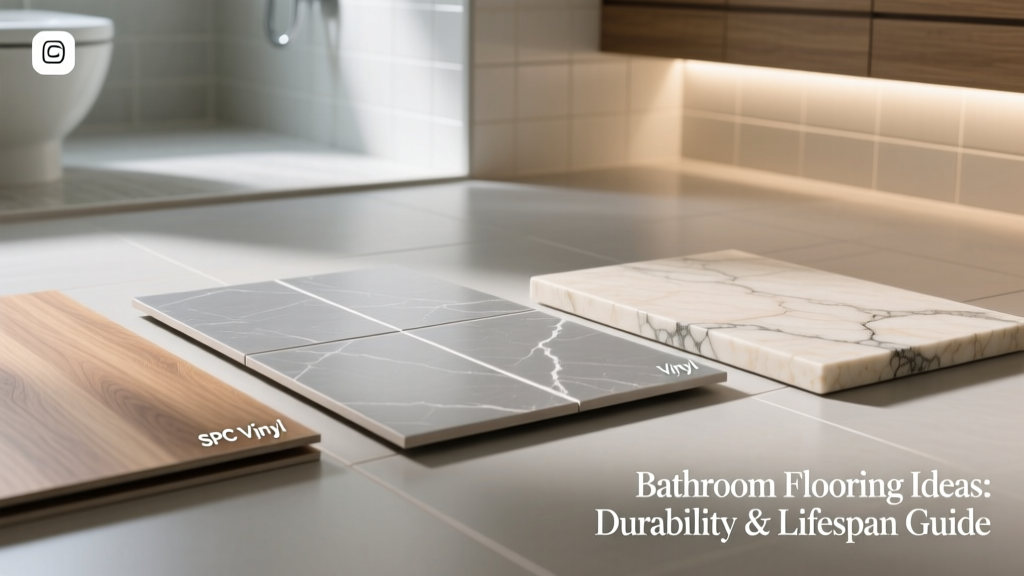
The Moisture Matrix: Why Bathroom Floors Fail
When evaluating bathroom flooring ideas, aesthetics often overshadow the harsh environmental realities of the space. Bathrooms are subjected to extreme thermal cycling, standing water, high ambient humidity, and chemical exposure from cleaning agents and personal care products. A floor that fails in a living room is an inconvenience; a floor that fails in a bathroom causes catastrophic subfloor rot and mold proliferation.
According to the Environmental Protection Agency (EPA) moisture guidelines, indoor relative humidity in wet areas frequently spikes above 70% during showers, creating condensation on cooler floor surfaces. Therefore, durability in a bathroom is not just about surface scratch resistance—it is about dimensional stability and moisture impermeability. The primary failure modes for bathroom floors include hydrostatic pressure from below, water intrusion through degraded grout joints, and thermal shock from radiant heating systems.
Material Lifespan & Degradation Timelines
Not all materials age equally in high-moisture environments. Below is a comparative analysis of the most common bathroom flooring materials, focusing on their expected functional lifespan and specific degradation triggers.
| Material | Expected Lifespan | Water Absorption Rate | Primary Failure Mode |
|---|---|---|---|
| Porcelain Tile | 50+ Years | < 0.5% (ASTM C373) | Grout degradation; substrate deflection |
| SPC Rigid Core Vinyl | 15–20 Years | 0% (Impervious) | Wear layer delamination; seam separation |
| Natural Stone (Marble/Slate) | 30–50 Years | 0.5% – 3.0% (Variable) | Chemical etching; efflorescence; staining |
| Ceramic Tile (Non-Porcelain) | 20–30 Years | > 3.0% | Glaze crazing; moisture expansion cracking |
| Engineered Wood | 10–15 Years | High (Hygroscopic) | Cupping; edge swelling; mold underneath |
Porcelain Tile: The 50-Year Standard
Porcelain remains the undisputed champion of bathroom durability, provided it is installed correctly. To qualify as true porcelain, the tile must meet the ASTM C373 standard, demonstrating a water absorption rate of 0.5% or less. This vitrification process makes the tile body practically impervious to water.
Expert Specification: For bathroom floors, specify a Porcelain Enamel Institute (PEI) rating of III or higher to withstand foot traffic and dropped grooming tools. Furthermore, opt for rectified porcelain tiles. Rectification mechanically grinds the edges to exact 90-degree angles, allowing for narrow 1/16-inch grout joints. Narrower joints mean less cementitious grout, which is the actual weak link in any tile assembly.
SPC Rigid Core Vinyl: The 15-Year Contender
Stone Plastic Composite (SPC) luxury vinyl has revolutionized wet-area flooring. Unlike older flexible LVT, SPC features a dense limestone-PVC core that is 100% waterproof and dimensionally stable. However, consumers frequently confuse total plank thickness with durability.
A 6.5mm thick SPC plank is useless if it has a 6-mil wear layer. For a primary bathroom, the Resilient Floor Covering Institute (RFCI) recommends a minimum 20-mil (0.5mm) urethane-coated wear layer to resist scratching from bathroom mats, dropped cosmetics, and pet claws. Anything less will show micro-scratches and dull within three years.
Natural Stone: High Maintenance, Variable Lifespan
While marble and travertine offer unmatched luxury, they are geologically incompatible with modern bathroom chemistry. Marble is calcium carbonate, which reacts violently to acidic substances. Toothpaste, hair dye, and vinegar-based cleaners will permanently etch the surface, leaving dull spots that cannot be cleaned away—only mechanically polished out.
If stone is non-negotiable, select honed (matte) finishes rather than polished. Honed surfaces mask minor etching and provide better slip resistance when wet (look for a Dynamic Coefficient of Friction, or DCOF, of 0.42 or higher). Stone requires an impregnating sealer (like a siloxane-based penetrant) reapplied every 12 to 18 months to prevent water and oil stains.
Hidden Costs: Waterproofing and Grout Chemistry
The most durable surface material will fail if the underlying assembly is compromised. The Tile Council of North America (TCNA) Handbook mandates specific waterproofing protocols for wet areas that go far beyond simply laying tile on cement board.
- Uncoupling Membranes: Products like Schluter-DITRA or WediBuilding Systems separate the tile from the wood subfloor. Wood expands and contracts with humidity; tile does not. Without an uncoupling membrane, this differential movement will shear the thin-set mortar bond, causing tiles to tent or pop loose.
- Epoxy vs. Cementitious Grout: Standard cementitious grout is porous and will harbor mold and absorb soapy water, eventually degrading. Upgrading to a high-performance epoxy grout (e.g., Laticrete SpectraLOCK PRO or Mapei Kerapoxy) adds roughly $1.50 to $2.50 per square foot in material costs but renders the grout joints completely impervious to water and chemicals, effectively matching the lifespan of the porcelain tile itself.
Decision Framework: Matching Flooring to Bathroom Usage
Do not apply a one-size-fits-all approach to bathroom flooring ideas. Match the material's durability profile to the specific usage patterns of the room.
1. The High-Traffic Kids' Bathroom
Recommendation: Matte-finish SPC Rigid Core Vinyl or small-format porcelain mosaic.
Rationale: Kids' bathrooms endure the most abuse: standing water, dropped heavy toys, and aggressive scrubbing. SPC vinyl provides a warmer, softer surface underfoot and is completely impervious to puddles. If using tile, small mosaics (2x2 inch) provide superior slip resistance due to the high density of grout lines, and their smaller size conforms better to subfloor imperfections without cracking.
2. The Primary Ensuite (Adults Only)
Recommendation: Large-format rectified porcelain (e.g., 24x48 inch) with epoxy grout.
Rationale: Aesthetics and seamless integration with curbless showers take priority. Large-format tiles minimize grout lines, creating a sleek, easy-to-clean surface. Ensure the subfloor is reinforced to meet the L/360 deflection standard required for large-format tile to prevent lippage and corner cracking.
3. The Powder Room (Half Bath)
Recommendation: Engineered hardwood or high-end patterned ceramic.
Rationale: Without a shower or tub, the ambient moisture and standing water risks drop by 90%. Engineered hardwood (with a plywood core, not MDF) can safely be used here, offering visual continuity with the rest of the home's flooring. Apply a high-quality aluminum oxide finish to protect against occasional water splashes from the sink.
Installation Tolerances That Dictate Longevity
Even the most expensive porcelain will crack if the structural tolerances are ignored. The industry standard for floor joist deflection under tile is L/360 (meaning the floor cannot deflect more than 1/360th of the span length under a 300 lb load). For natural stone, the requirement is twice as strict: L/720.
If your existing subfloor fails this test, you must either sister the floor joists from below or install an additional layer of 3/8-inch exterior-grade plywood over the existing subfloor before applying your waterproofing membrane. Skipping this structural verification is the leading cause of cracked tile in residential bathrooms.
Frequently Asked Questions
Can I install radiant floor heating under bathroom vinyl?
Generally, no. Most SPC and LVP manufacturers explicitly void their warranties if installed over radiant heating systems. The heat can cause the PVC core to expand excessively, leading to seam separation and telegraphing of the heating wires through the wear layer. Stick to porcelain or natural stone for heated bathroom floors.
Is polished porcelain slippery when wet?
Yes. Polished porcelain has microscopic pores opened during the polishing process, which become highly slick when water acts as a lubricant. Always specify 'honed', 'matte', or 'structured' finishes for bathroom floors, and verify the manufacturer's DCOF (Dynamic Coefficient of Friction) rating is 0.42 or higher for wet conditions.
How do I prevent water from wicking under the bathroom door?
Install a waterproof threshold or saddle at the bathroom doorway. Furthermore, ensure the bathroom floor is sloped slightly (1/4 inch per foot) toward the floor drain or shower pan, and apply a continuous bead of 100% silicone sealant where the flooring meets the door casing to prevent capillary action from drawing water into the adjacent hallway subfloor.