Luxury Vinyl Plank Flooring Performance Ratings Explained
Master luxury vinyl plank flooring performance ratings. Learn how to decode wear layers, AC ratings, and ASTM specs to choose the right LVP.
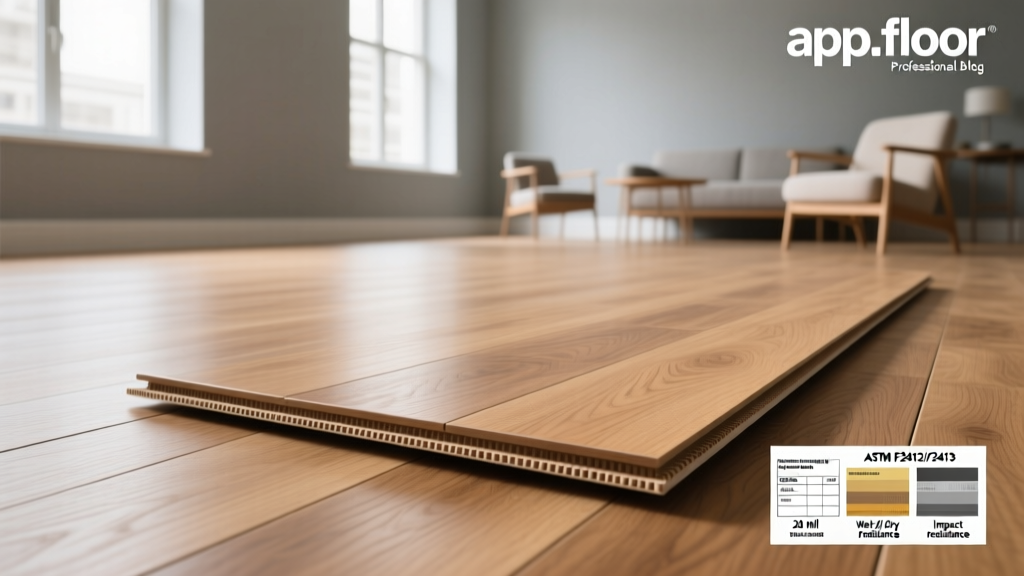
The Anatomy of LVP: Beyond the Aesthetics
Selecting luxury vinyl plank flooring requires looking past the high-definition printed wood grain and evaluating the structural engineering beneath the surface. The performance of LVP is dictated by a multi-layered construction that must resist abrasion, moisture, and heavy point loads. According to the Resilient Floor Covering Institute (RFCI), modern LVP consists of four primary strata: a clear polyurethane wear layer, a printed decorative vinyl film, a rigid or flexible core, and an attached acoustic underlayment pad. Understanding how manufacturers test and rate these layers is the only way to predict how the floor will perform over a 15- to 25-year lifespan.
Decoding the Wear Layer: Mil vs. Millimeter
The wear layer is the transparent top coating that protects the printed design film from scratches, stains, and UV fading. It is typically composed of pure polyurethane (PU), sometimes infused with ceramic beads or aluminum oxide for enhanced scratch resistance. The most critical mistake buyers make is confusing the wear layer thickness with the total plank thickness.
Many imported or budget LVP products advertise a "5mm wear layer." This is physically impossible and a deceptive marketing tactic. They are referring to the 5mm total plank thickness. Wear layers are measured in mils (one-thousandth of an inch). A standard heavy-duty commercial wear layer is 20 mils, which equates to roughly 0.5 millimeters. Always verify the spec sheet lists the wear layer in mils.
Wear Layer Thickness Specification Guide
| Wear Layer (Mils) | Metric Equivalent | Recommended Application | Expected Lifespan |
|---|---|---|---|
| 6 to 8 mil | 0.15 - 0.20 mm | Light residential (bedrooms, low traffic) | 5 - 10 years |
| 12 mil | 0.30 mm | Standard residential (living rooms, kitchens) | 10 - 15 years |
| 20 mil | 0.50 mm | Heavy residential / Light commercial | 15 - 20 years |
| 28+ mil | 0.70+ mm | Heavy commercial (retail, restaurants) | 20+ years |
Abrasion Class (AC) Ratings: The True Durability Metric
While mil thickness indicates the physical volume of the wear layer, the Abrasion Class (AC) rating measures how that layer actually performs under friction. Based on the EN 13329 standard, the AC rating is determined by the Taber Abrasion Test, which uses a rotating machine with abrasive wheels to wear down the surface until the design layer is breached.
- AC1 (Moderate Residential): Suitable only for guest rooms or closets. Rarely found in quality modern LVP.
- AC2 (General Residential): Adequate for living rooms and dining rooms. Not recommended for kitchens or main hallways.
- AC3 (Heavy Residential): The minimum acceptable standard for whole-home installations, including kitchens, hallways, and entryways.
- AC4 (General Commercial): Ideal for high-traffic homes with large dogs, or light commercial spaces like boutique retail and offices.
- AC5 (Heavy Commercial): Engineered for department stores, busy restaurants, and public lobbies. Overkill for most homes but guarantees maximum scratch resistance.
Expert Insight: An AC4 rating with a 20-mil ceramic-bead-infused urethane layer will outperform a standard 22-mil pure urethane layer in scratch resistance. Always prioritize the AC rating and chemical composition over raw mil thickness alone.
Dimensional Stability and Core Composition
Dimensional stability refers to the flooring's ability to maintain its original dimensions when exposed to temperature fluctuations and moisture. This is governed by the core layer. According to the World Floor Covering Association (WFCA), the shift from flexible LVP to rigid core LVP has revolutionized dimensional stability.
Core Material Comparison Matrix
| Core Type | Composition | Density (kg/m³) | Indentation Resistance | Acoustic Performance |
|---|---|---|---|---|
| SPC (Stone Polymer Composite) | Limestone powder + PVC + Stabilizers | 1,900 - 2,100 | Excellent (High point-load tolerance) | Poor (Requires thick attached pad) |
| WPC (Wood Polymer Composite) | Wood flour + PVC + Foaming agents | 1,000 - 1,400 | Fair (Prone to heavy appliance denting) | Excellent (Foamed core absorbs sound) |
| Flexible (Traditional LVP) | Solid PVC + Plasticizers | 1,300 - 1,500 | Poor (Telegraphs subfloor imperfections) | Fair |
Critical ASTM Standards for LVP Specifications
When reviewing manufacturer cut sheets, look for compliance with specific ASTM International testing standards. These independent laboratory tests verify the claims made by the manufacturer.
- ASTM F2199 (Dimensional Stability): This test measures the linear shrinkage or expansion of the plank when subjected to extreme heat and cold. The maximum allowable change is 0.25%. If a product exceeds this, you will experience gapping in winter and buckling in summer.
- ASTM F1914 (Short-Term Residual Indentation): Measures how well the floor recovers from point loads (like high heels or furniture legs). SPC cores typically recover 100% from static loads up to 250 psi, whereas WPC may show permanent deformation.
- ASTM E648 (Critical Radiant Flux): The standard test for fire safety in commercial corridors. Ensure the LVP meets a minimum Class I rating (≥ 0.45 W/cm²) if installing in multi-family dwellings or commercial egress paths.
Slip Resistance and Indoor Air Quality
Performance isn't just about durability; it encompasses safety and environmental health. For wet areas like bathrooms, mudrooms, and commercial kitchens, check the Dynamic Coefficient of Friction (DCOF). The ANSI A326.3 standard requires a DCOF of 0.42 or higher for wet surfaces. Look for LVP with a micro-beveled edge and an embossed-in-register (EIR) texture, which provides superior grip compared to smooth, wire-brushed finishes.
Regarding indoor air quality, vinyl flooring can off-gas volatile organic compounds (VOCs) and plasticizers. To ensure safe indoor environments, verify that the product holds a GREENGUARD Gold or FloorScore certification. These third-party validations ensure the flooring meets strict limits on formaldehyde and VOC emissions, aligning with EPA Indoor Air Quality Guidelines.
The Ultimate LVP Spec Sheet Checklist
Before signing a purchase order, ensure the manufacturer's specification sheet explicitly lists the following data points:
- Wear Layer: Minimum 20 mil (0.5mm) with ceramic bead or aluminum oxide additive.
- AC Rating: AC4 or higher.
- Core Type: SPC for heavy furniture/kitchens; WPC for bedrooms/living areas requiring sound dampening.
- Total Thickness: Minimum 5mm (including attached pad) to ensure locking mechanism integrity.
- Dimensional Stability: Certified passing ASTM F2199 (≤ 0.25% linear change).
- Certifications: FloorScore or GREENGUARD Gold for VOC compliance.
By shifting your evaluation criteria from visual appeal to verifiable engineering specifications, you eliminate the risk of premature wear, seam separation, and indentation failure. True luxury in vinyl plank flooring is defined by its ability to perform flawlessly under the stress of daily life.