Carpet Bug Damage: Extermination and Replacement Cost Guide
Calculate the true cost of carpet bug infestations. Explore 2026 extermination pricing, padding replacement formulas, and bug-resistant flooring options.
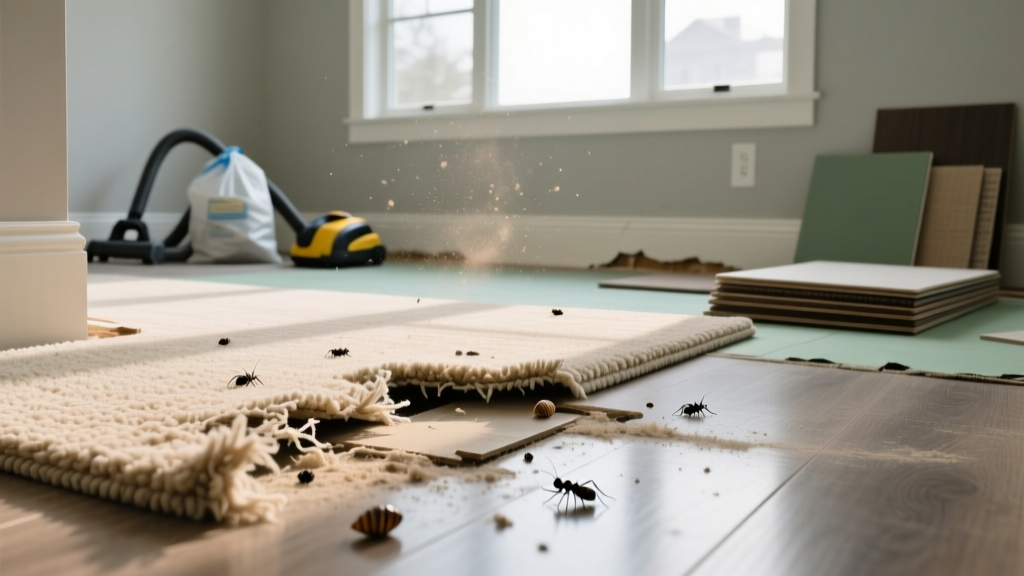
Identifying the True Financial Impact of Carpet Bugs
When homeowners discover a carpet bug infestation, the immediate concern is often the visible damage to the carpet surface. However, the financial reality of remediating these pests extends far beyond simple extermination. Carpet bugs—primarily the larvae of the varied carpet beetle (Anthrenus verbasci), furniture carpet beetle, and black carpet beetle—feed on keratin, a protein found in natural fibers like wool, silk, and animal hair blends. According to the University of Minnesota Extension, these larvae can cause irreversible structural damage to natural fiber flooring and the underlying padding if left untreated for even a single season.
Accurately estimating the cost of a carpet bug remediation project requires a dual-pronged calculator approach: factoring in the biological eradication costs and the physical flooring replacement costs. In 2026, with labor rates for specialized pest control and flooring installation continuing to rise, a localized infestation in a standard 12x15 foot bedroom can easily escalate from a $200 chemical treatment into a $2,500 full-room flooring replacement if the underlying padding has been compromised.
Carpet beetle larvae instinctively seek dark, undisturbed areas to pupate. If you find bugs on the surface of your carpet, they are almost certainly thriving in the carpet pad below. Replacing the face fiber without replacing the padding guarantees a recurring infestation within 60 to 90 days.
Extermination Cost Calculator: Treatment Options
Before calculating flooring replacement, the active infestation must be eradicated. The cost of treatment varies drastically based on the severity of the infestation and the chosen methodology. The Environmental Protection Agency (EPA) recommends integrated pest management (IPM) strategies, which often combine chemical and non-chemical approaches for long-term efficacy.
| Treatment Method | Estimated Cost (2026) | Efficacy & Notes |
|---|---|---|
| Targeted Chemical Spray (Bifenthrin/Deltamethrin) | $0.15 - $0.35 / sq. ft. | High efficacy for localized surface larvae. Requires 2-3 applications spaced 14 days apart. |
| Whole-Room Insect Growth Regulator (IGR) Fogging | $250 - $450 / room | Disrupts the breeding cycle. Must be combined with deep steam cleaning to remove dead larvae and eggs. |
| Thermal Remediation (Whole-Home Heat) | $1.50 - $3.00 / sq. ft. | Raises ambient room temp to 135°F for 90+ minutes. 100% kill rate for all life stages without chemicals. |
| Fumigation (Severe/Whole-House) | $2,500 - $6,000+ | Reserved for extreme structural infestations where bugs have migrated into subflooring and walls. |
Calculating Replacement Costs: The Hidden Variables
Once the exterminator has cleared the space, the flooring replacement phase begins. Estimating this phase requires more than just multiplying the room's length by its width. You must account for material waste, disposal fees for bio-contaminated materials, and the mandatory replacement of the underlayment.
The 12% Waste and Damage Rule
Standard carpet installation calculators apply a 10% waste factor for cutting and seaming. However, when removing bug-damaged carpet, installers often discover that the tack strips along the perimeter have been compromised by moisture from pest treatments or larval nesting. Factor in a 12% to 15% overage for material waste and the potential need to replace perimeter tack strips ($1.50 to $2.50 per linear foot).
Disposal of Bio-Contaminated Carpet
Carpet and padding removed due to a severe pest infestation cannot always be recycled through standard municipal flooring programs. Many local waste management facilities classify heavily infested padding as bio-contaminated waste, requiring specialized disposal. Budget an additional $75 to $150 per room for specialized haul-away and landfill tipping fees.
Material Selection: Bug-Resistant Flooring Costs
If you are replacing natural fiber carpet, you have a critical decision to make: reinstall treated natural fibers or switch to synthetic, bug-resistant alternatives. Carpet bugs cannot digest synthetic polymers, making nylon and polyester inherently immune to larval feeding.
-
Solution-Dyed Nylon (Type 6,6): $4.50 - $8.50 per sq. ft.
The gold standard for pest resistance. The tight weave of a 50 oz. to 60 oz. face weight nylon prevents larvae from penetrating to the padding. Highly durable and completely indigestible to carpet beetles. -
PET Polyester: $2.50 - $5.00 per sq. ft.
A budget-friendly synthetic option. While bugs cannot eat polyester, lower-quality polyester carpets have looser weaves, allowing larvae to travel through the fibers to reach organic debris (skin cells, pet hair) trapped in the pad. -
Permethrin-Treated Wool: $9.00 - $16.00 per sq. ft.
If you demand the luxury of natural wool, you must specify factory-treated mothproof and beetle-resistant wool. The permethrin treatment is bonded to the fiber and remains effective through multiple professional steam cleanings.
Step-by-Step Estimation Formula
Use this precise formula to calculate your total out-of-pocket cost for a carpet bug remediation and replacement project. This framework assumes a standard rectangular room and a mid-grade synthetic replacement.
- Calculate Base Square Footage: Length (ft) × Width (ft) = Base Area.
- Apply Waste Factor: Base Area × 1.12 = Total Carpet & Pad Square Footage Needed.
- Calculate Linear Perimeter: (Length + Width) × 2 = Total Linear Feet (for tack strip estimation).
- Material Costs: (Total Sq. Ft. × Carpet Price) + (Total Sq. Ft. × Pad Price).
- Labor & Disposal Costs: (Total Sq. Ft. × $2.50 Installation Labor) + (Total Sq. Ft. × $0.75 Tear-Out Labor) + $125 Disposal Fee.
- Add Extermination Baseline: Add the quoted cost from your licensed pest control professional.
"The most common financial mistake homeowners make during a carpet bug remediation is attempting to salvage the underlayment. A standard 8-pound rebond pad costs less than $0.60 per square foot. Risking a $4,000 carpet installation to save $100 on padding is a mathematical error that almost always results in a secondary infestation." — Industry Standard Flooring Remediation Guidelines, 2026
Expert FAQ on Carpet Bug Remediation
Can I just steam clean the carpet to kill the bugs and avoid replacement?
Steam cleaning reaches temperatures of 200°F to 250°F at the wand, which will kill larvae on contact. However, the heat dissipates rapidly before reaching the deep layers of the carpet pad where the majority of the pupae reside. Steam cleaning is an excellent preparatory step before chemical treatment, but it is rarely sufficient as a standalone cure for an established infestation.
Do carpet bugs eat synthetic carpets like nylon or polyester?
No. Carpet beetle larvae lack the enzymes required to break down synthetic polymers. However, they will still crawl through synthetic carpets to reach organic food sources trapped beneath them, such as spilled food, pet hair, and human skin cells. Regular vacuuming with a HEPA-filter machine is required to starve them of these secondary food sources.
How long must I wait after extermination before installing new carpet?
You should wait a minimum of 14 to 21 days after the final chemical treatment before installing new flooring. This waiting period allows the residual insecticide to break down to safe levels for human contact and ensures that any remaining eggs have hatched and been eliminated by the residual chemical barrier. If you opt for thermal heat treatment, you can install the new carpet immediately after the room cools to ambient temperature.