Carpet Kitchen Rugs: Durability, Lifespan, and Fiber Analysis
Analyze the true lifespan of carpet kitchen rugs. Compare nylon, polypropylene, and PET fibers, backing failures, and maintenance for culinary spaces.
The Reality of Carpet in Culinary Zones
Standard wall-to-wall carpeting is fundamentally incompatible with the modern kitchen. However, the category of "carpet kitchen rugs"—specifically low-pile, flatweave, or modular carpet tiles designed for culinary spaces—fills a critical gap between the hardness of tile and the comfort of anti-fatigue mats. When evaluating these rugs for 2026 kitchen designs, durability is not determined by pile height or aesthetic weave, but by polymer chemistry, backing permeability, and resistance to specific kitchen contaminants like animal fats, acidic sauces, and prolonged standing compression.
According to the Carpet and Rug Institute, the lifespan of a textile floor covering in a high-moisture, high-traffic environment is reduced by up to 40% if the incorrect fiber or backing is selected. This analysis breaks down the exact material science behind carpet kitchen rugs, providing a framework to predict longevity and prevent catastrophic subfloor damage.
Fiber Composition: The Primary Lifespan Determinant
The fiber extrusion process dictates how a kitchen rug will handle the unique chemical and physical abuses of a cooking environment. There are three dominant synthetic fibers used in kitchen-rated carpet rugs, each with distinct failure modes.
Solution-Dyed Polypropylene (Olefin)
Polypropylene is inherently hydrophobic, meaning it absorbs 0% of its weight in water. This makes it virtually immune to water-based kitchen spills like coffee, wine, or boiling water. Because the color is added to the liquid polymer before extrusion (solution-dyed), it cannot be bleached out by harsh kitchen cleaners. However, polypropylene is oleophilic (oil-attracting). Airborne grease from frying pans and dropped cooking oils will bind to the fiber. If not cleaned with a specialized degreaser, the rug will develop permanent dark, sticky traffic lanes within 18 months. Additionally, polypropylene has a low melting point (approximately 320°F); dragging heavy kitchen island stools across the surface will cause permanent friction burns.
Nylon 6,6 vs. Standard Nylon 6
Nylon 6,6 is the gold standard for high-traffic resilience. Its tighter molecular carbon bonds allow the fiber to bounce back from the prolonged compression of standing at a kitchen sink or island. While highly durable, standard nylon is susceptible to acidic kitchen spills (tomato sauce, vinegar, citrus). If the topical stain guard is compromised, acidic liquids will permanently strip the dye. For kitchen use, you must specify solution-dyed Nylon 6,6. When properly maintained, a solution-dyed Nylon 6,6 kitchen rug will outlast polypropylene by a factor of two, maintaining its structural integrity for up to a decade.
PET (Polyester) and the Crush Factor
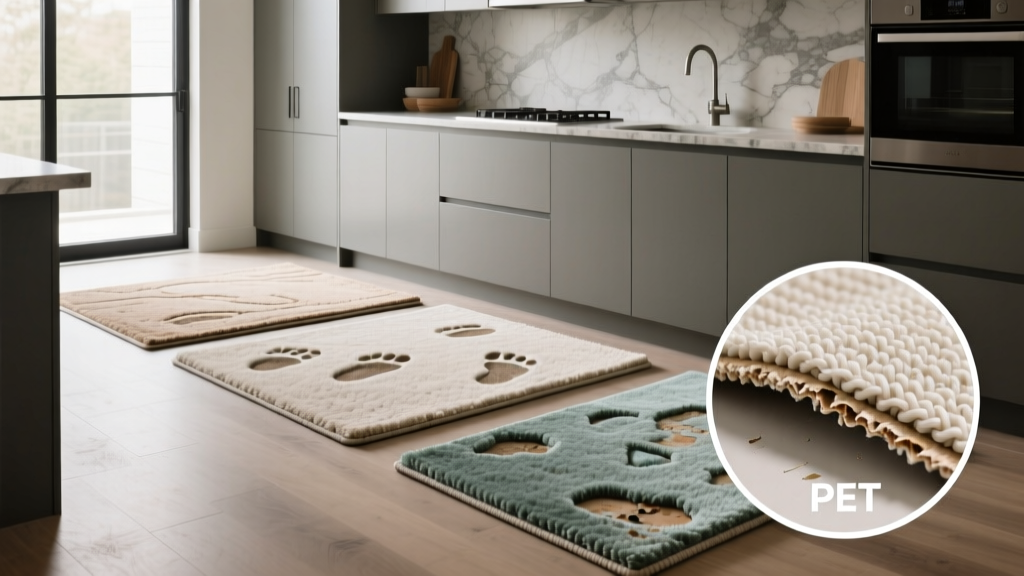
PET, often marketed as eco-friendly recycled polyester, offers excellent initial stain resistance and vibrant color clarity. However, PET lacks the molecular memory of nylon. In a kitchen environment where users stand in a fixed 2x3 foot area at the sink or prep station daily, PET fibers will permanently crush, mat, and lose their structural loft within 12 to 18 months. PET is strictly recommended only for low-traffic kitchen transition zones, never for primary prep areas.
Fiber Durability & Lifespan Matrix
| Fiber Type | Water Absorption | Resilience (Crush Resistance) | Stain Resistance | Estimated Kitchen Lifespan | Primary Failure Mode |
|---|---|---|---|---|---|
| Solution-Dyed Polypropylene | 0% (Hydrophobic) | Low to Medium | Excellent (Water-based), Poor (Oil) | 3 - 5 Years | Oil attraction, friction burns from furniture |
| Solution-Dyed Nylon 6,6 | ~4% | Excellent | Excellent (All categories) | 6 - 10 Years | Edge fraying, gradual pile loss |
| PET (Polyester) | ~0.5% | Poor | Good (Water-based) | 1.5 - 3 Years | Permanent matting in standing zones |
Backing Failures: The Hidden Lifespan Killer
The most common reason carpet kitchen rugs are discarded is not pile degradation, but backing failure. The kitchen floor experiences frequent micro-spills, condensation from dropped ice, and high ambient humidity. If a rug backing traps this moisture against the subfloor, it creates a localized microclimate.
If your kitchen features Luxury Vinyl Plank (LVP) or sheet vinyl, never use a carpet kitchen rug with a solid rubber, latex, or PVC backing. These materials contain plasticizers that, when trapped against vinyl under kitchen heat and pressure, will chemically react and cause permanent yellow staining on the vinyl floor below. Always select rugs with breathable, woven polypropylene backings or open-cell foam.
The National Wood Flooring Association strictly warns against non-breathable rug backings on hardwood floors. Trapped moisture alters the wood's equilibrium moisture content (EMC), leading to localized cupping, crowning, and eventual black mold growth beneath the rug. For kitchens with hardwood, opt for modular carpet tiles (such as those using non-adhesive, gripper-dot backings) that can be easily lifted to allow the subfloor to breathe and dry.
Traffic and Abrasion: Expected Lifespan by Zone
A kitchen is not a uniform traffic environment. To maximize the lifespan of your carpet kitchen rugs, deploy specific materials based on the micro-zone:
- The Sink/Dishwasher Zone (Drop Zone): High water exposure, dropped glass/knives. Requires high-density, low-pile polypropylene for immediate moisture shedding and easy extraction. Expected lifespan: 3 years.
- The Island/Prep Zone (Compression Zone): Prolonged standing, heavy stool abrasion. Requires solution-dyed Nylon 6,6 with a minimum 20-ounce face weight to resist crushing. Expected lifespan: 7+ years.
- The Stove/Range Zone (Heat & Grease Zone): Airborne lipids, high heat. Avoid all textiles here if possible; if a rug is required for anti-fatigue, use a specialized commercial-grade nitrile-rubber backed nylon that can withstand high-temperature degreasing.
Maintenance Protocols to Maximize Rug Longevity
Improper cleaning accelerates the death of kitchen textiles. Follow these exact protocols to preserve the fiber chemistry:
- pH-Balanced Extraction: Never use high-alkaline carpet shampoos (pH > 9) on nylon kitchen rugs. Alkaline residues strip the acid-dye resist treatments, leaving the rug vulnerable to permanent staining from future acidic spills. Use neutral pH (7.0) enzymatic cleaners for organic food spills.
- The Grease Protocol: For polypropylene rugs, standard water-based spot cleaners will fail against cooking grease. You must use a specialized citrus-based solvent or a commercial oleophilic degreaser, followed by a hot water extraction to remove the solvent residue.
- Moisture Management: As noted in EPA guidelines on indoor air quality, damp textiles in high-humidity rooms can harbor microbial growth. After any liquid spill or wet cleaning, use a wet-vac to extract moisture, and elevate the rug corners to allow cross-ventilation until the backing is completely dry to the touch.
- Rotation Schedule: Rotate the rug 180 degrees every 90 days to distribute the compression wear from standing at the sink or island evenly across the textile face.
When to Replace: End-of-Life Indicators
Do not wait for the rug to look visibly destroyed. Replace your carpet kitchen rug immediately if you observe any of the following end-of-life indicators:
- Delamination: If the primary backing separates from the secondary backing (often felt when the rug develops un-flattable bubbles or wrinkles), the structural adhesive has failed due to kitchen moisture.
- Lingering Butyric Odors: If the rug smells sour even after extraction, it indicates that spoiled dairy or meat juices have penetrated the backing and are harboring anaerobic bacteria. This cannot be reversed with surface cleaning.
- Permanent Matting: If the pile in the primary standing zone remains compressed 24 hours after vacuuming and grooming, the fiber's molecular memory has failed, and the rug will now trap soil at an accelerated rate.
Selecting the correct carpet kitchen rug requires ignoring residential marketing and focusing on commercial-grade textile specifications. By matching the fiber chemistry to your specific kitchen hazards and ensuring subfloor-safe backings, you can secure a durable, comfortable culinary space that survives the realities of daily cooking.