Decoding Performance Ratings for Different Types of Carpet
Understand performance ratings for all types of carpet. Learn how face weight, density, and PAR scores dictate durability and lifespan.
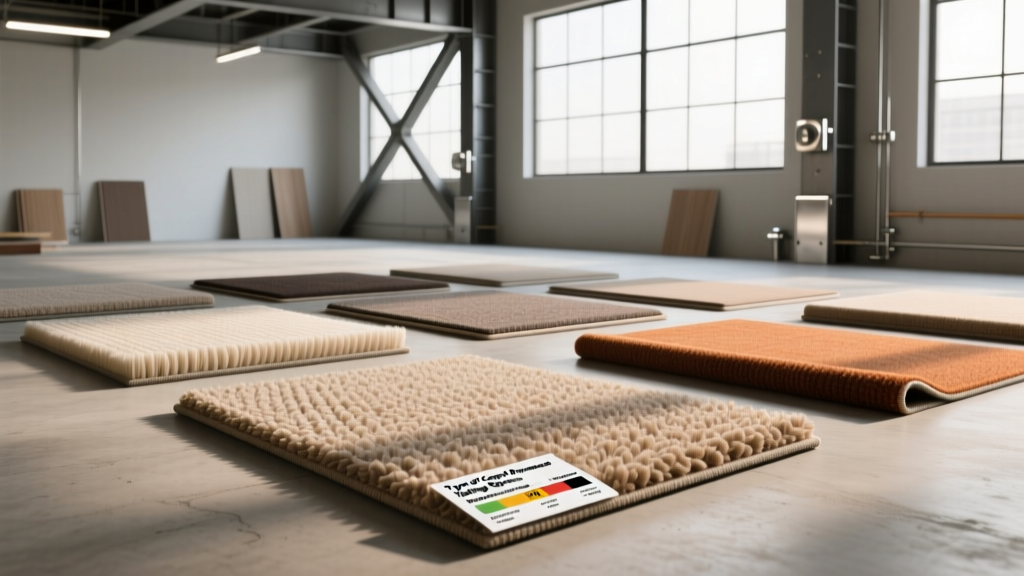
The Hidden Language of Carpet Specifications
Most consumers buy carpet based on the 'touch test'—assuming a thick, plush feel equates to longevity. This is a costly mistake. When evaluating different types of carpet, the tactile experience is often engineered with low-density, tall yarns that will crush, mat, and show traffic lanes within 18 months. True durability is not found in how soft the fibers feel under your bare feet, but rather hidden in the manufacturer’s specification sheet.
To make an informed purchase, you must look past marketing terms like 'luxury plush' or 'super soft' and focus on standardized performance metrics. According to the Carpet and Rug Institute (CRI), understanding the interplay between fiber chemistry, pile density, and twist levels is the only reliable way to predict how a carpet will perform over a decade of foot traffic.
- Face Weight: The amount of fiber per square yard (measured in ounces). Heavier is not always better if density is low.
- Density: How closely packed the yarns are. This is the single most important factor for crush resistance.
- Twist Level: The number of times the yarn is twisted per inch (TPI). Higher twist equals better memory and resilience.
Breaking Down Fiber Types and Their Performance Profiles
The raw material of the carpet fiber dictates its inherent stain resistance, resilience (ability to bounce back from compression), and fade resistance. Here is how the primary fiber types perform under rigorous testing conditions.
Nylon 6,6 vs. Nylon 6
Nylon accounts for over 60% of the residential carpet market, but not all nylon is created equal. Nylon 6,6 (used in premium lines like Antron and Stainmaster) features a tighter molecular structure than standard Nylon 6. This tighter bond makes Nylon 6,6 significantly more resistant to permanent crushing and abrasive wear. While both require topical stain-resist treatments (which can degrade after repeated hot-water extractions), Nylon 6,6 will maintain its structural integrity and appearance retention far longer in high-traffic corridors.
Polyester (PET) and Triexta
Polyester (PET) is inherently hydrophobic, meaning it repels water-based stains without needing chemical treatments. However, PET has poor resilience; it lacks the 'memory' of nylon and will permanently crush in high-traffic zones. It is best reserved for low-traffic bedrooms. Triexta (polytrimethylene terephthalate, or PTT), popularized by Mohawk’s SmartStrand, bridges this gap. It offers the inherent, permanent stain resistance of polyester but with a spring-like molecular structure that provides resilience rivaling nylon.
Wool and Olefin (Polypropylene)
Wool is the premium natural fiber, offering excellent soil-hiding capabilities and natural flame retardancy, but it is highly susceptible to protein-based stains and moth damage. Olefin is incredibly stain and fade-resistant, making it the undisputed champion for outdoor carpets and basements, but it has a low melting point and attracts oil-based soils, making it a poor choice for kitchens or dining areas.
Decoding the PAR Rating System
The Performance Appearance Rating (PAR) is an industry-standard grading system based on ASTM testing protocols. Independent laboratories subject carpet samples to controlled foot traffic using a mechanical stroller, then grade the carpet's appearance retention on a scale from 1.0 to 5.0. When comparing types of carpet, the PAR score is your most objective benchmark for expected lifespan.
| PAR Score | Performance Classification | Ideal Application | Expected Lifespan |
|---|---|---|---|
| 2.0 - 2.5 | Light Traffic | Guest rooms, formal dining | 3 - 5 Years |
| 3.0 - 3.5 | Normal Traffic | Master bedrooms, home offices | 5 - 8 Years |
| 4.0 - 4.5 | Heavy Traffic | Living rooms, hallways, stairs | 8 - 12 Years |
| 5.0 | Extra Heavy / Commercial | Mudrooms, entryways, retail | 12 - 15+ Years |
Critical Specs: Face Weight, Density, and Twist Level
While fiber type provides the baseline, the physical construction of the carpet dictates its real-world survival. You must evaluate these three specifications in tandem.
The Density Formula
Density is calculated using a specific mathematical formula: (Face Weight in ounces × 36) ÷ Pile Height in inches. A 50-ounce carpet with a 0.75-inch pile height yields a density of 2,400. This is considered low density and will crush rapidly. For standard residential use, the World Floor Covering Association recommends a minimum density rating of 3,000. For heavy traffic areas (stairs, main hallways), demand a density rating of 4,500 to 5,000+.
Twist Level (TPI)
Twist level refers to how many times the individual yarn plies are twisted together per inch. A standard Saxony carpet typically features 4 to 5 twists per inch (TPI). A frieze carpet, known for its kinked, highly textured appearance, boasts 7 to 9 TPI. The higher the twist, the stronger the yarn's 'memory.' If you bend a high-TPI yarn, it will snap back to its original shape; a low-TPI yarn will remain bent, leading to permanent matting.
Pile Construction: Cut vs. Loop Performance
The way the yarn is secured to the backing fundamentally alters the carpet's wear characteristics.
- Cut Pile: The loops are sheared off, creating individual tufts. While plush and comfortable, the exposed tips are vulnerable to abrasion and untwisting (blooming). Cut pile requires a higher twist level to maintain its appearance.
- Loop Pile (Berber): The yarn remains in continuous, uncut loops. This construction distributes weight across the curve of the loop rather than the tip of the yarn, making it exceptionally resistant to crushing and tracking. However, loop piles are highly susceptible to snagging from pet claws or sharp furniture edges.
- Cut-and-Loop: A hybrid that uses varying heights of cut and looped yarns to create sculpted patterns. This is excellent for hiding soil and footprints, though the cut pile sections will still show wear before the looped sections.
The Padding Trap: Where Specifications Fail
Many retailers push ultra-plush, 1/2-inch memory foam pads as a premium upgrade. However, most carpet manufacturers explicitly state in their warranties that padding must not exceed 7/16 of an inch in thickness. A pad that is too thick allows the carpet backing to flex excessively when walked on, causing the latex adhesive to crack and the tufts to shed (delamination).
For optimal performance across almost all types of carpet, specify a 7/16-inch, 8-pound rebond polyurethane pad. Rebond pad provides the necessary firm foundation to support the carpet's density while offering adequate shock absorption. If you are installing a low-profile commercial carpet or a tight loop Berber, downgrade to a 1/4-inch, 10-pound felt or rubber pad to prevent flexing.
How to Read a Carpet Spec Sheet Like a Pro
Before signing a contract or making a final selection, locate the manufacturer's specification tag (usually found on the back of the sample or in the retailer's catalog). Verify the following data points:
- Fiber Content: Ensure it explicitly states 'Nylon 6,6' or 'Triexta' rather than a vague '100% Synthetic' or 'Continuous Filament' (which often indicates lower-grade Nylon 6 or Olefin).
- Pile Density: Calculate it yourself if only face weight and pile height are listed. Reject anything below 3,000 for main living areas.
- Stain Warranty Terms: Read the fine print. Many topical stain warranties require professional hot-water extraction every 12 to 18 months using CRI-approved equipment to remain valid.
- Tuft Bind: Look for a tuft bind rating of 3.0 lbs or higher (per ASTM D2261). This indicates the strength of the latex holding the yarn in the backing; low tuft bind leads to premature shedding and zipper runs.
By ignoring the deceptive softness of the showroom sample and focusing strictly on these engineered specifications, you will select a carpet that maintains its structural integrity and visual appeal for well over a decade.