Carpet Powder Cleaning Playbook: Step-by-Step Maintenance Guide
Master carpet powder deep cleaning with this step-by-step playbook. Learn application rates, dwell times, and troubleshooting for residue-free floors.
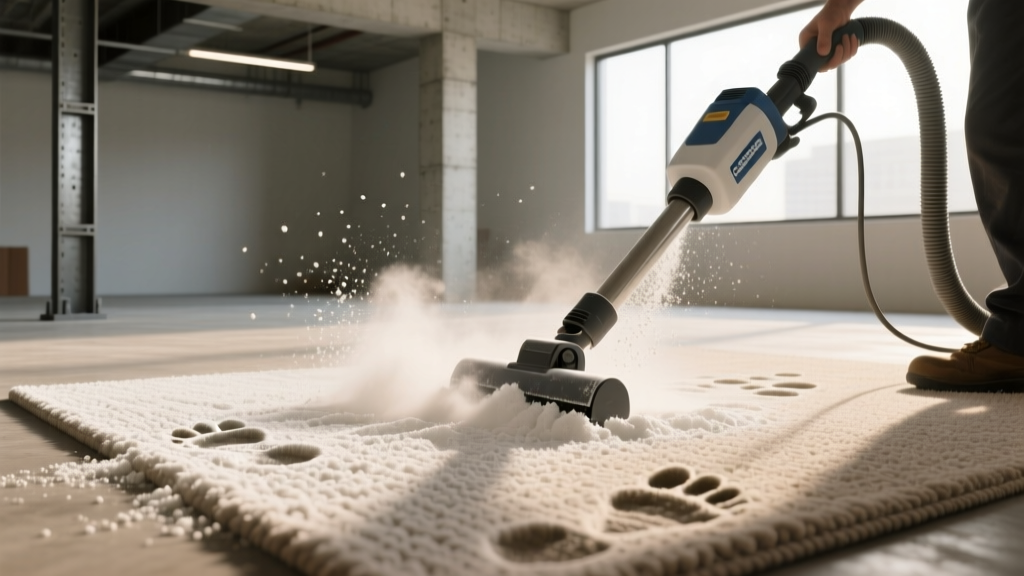
The Mechanics of Dry Carpet Powder Extraction
Carpet powder cleaning, formally known in the restoration industry as dry compound extraction or encapsulation, relies on controlled moisture and capillary action rather than saturation. Unlike hot water extraction (steam cleaning), which injects gallons of water per minute into the carpet pad, dry powder methods utilize micro-sponges or crystallizing polymers. These compounds are lightly dampened with a water-detergent-solvent blend. When agitated into the carpet pile, capillary action draws suspended soils, oils, and particulates out of the carpet fibers and into the powder medium. Once the moisture evaporates, the powder—now holding the trapped soil—is removed via high-filtration vacuuming.
According to the Carpet and Rug Institute (CRI), low-moisture cleaning methods are highly recommended for commercial settings and delicate residential fibers because they eliminate the risk of mold growth, delamination, and prolonged drying times associated with over-wetting. By maintaining a moisture content below 5% during the cleaning process, carpet powder playbooks protect the latex adhesives binding the primary and secondary carpet backings.
Carpet Powder Formulations: Selecting the Right Compound
Not all carpet powders are engineered for the same failure modes. Selecting the incorrect formulation for your specific carpet fiber (e.g., using a high-alkaline cellulose powder on acid-dyed wool) can result in permanent fiber damage or rapid resoiling. Below is a technical breakdown of the three primary powder categories available in 2026.
| Powder Type | Active Chemistry | Best Use Case | Dwell Time | Residue Risk |
|---|---|---|---|---|
| Absorbent Compound | Cellulose micro-sponges with mild anionic surfactants | Heavy traffic lanes, olefin, and nylon commercial carpets | 15–30 Minutes | Low (if vacuumed properly) |
| Encapsulation Polymer | Acrylic copolymers that crystallize upon drying | Maintenance cleaning, synthetic residential carpets, pet zones | 20–45 Minutes | Very Low (crystals shatter and vacuum away) |
| Natural/Odor-Neutralizing | Zeolite, baking soda, and cornstarch blends with essential oils | Surface odor mitigation, delicate wool, and silk blends | 2–12 Hours | Moderate (requires intense HEPA extraction) |
The 5-Step Carpet Powder Maintenance Playbook
Executing a flawless dry extraction requires strict adherence to application rates and mechanical agitation. Skipping the pre-vacuum or using an underpowered extraction vacuum are the two most common causes of powder residue buildup.
Step 1: Aggressive Pre-Vacuuming
The Institute of Inspection, Cleaning and Restoration Certification (IICRC) S100 standard mandates that 75% to 80% of dry particulate soil must be removed before any chemical cleaning begins. If you apply carpet powder over a heavily soiled floor, the powder will bind to the macro-dirt rather than the microscopic oils in the fibers.
- Equipment: Use an upright vacuum with a motorized beater bar operating at 6,000+ RPM and a minimum airflow of 100 CFM (Cubic Feet per Minute).
- Technique: Vacuum in a North-South direction, then repeat East-West. This cross-hatching lifts matted fibers and exposes the base of the pile.
Step 2: Precision Application
Over-application is the primary cause of post-cleaning residue. The standard application rate for commercial-grade absorbent compounds and encapsulation powders is 1 pound per 100 square feet (approximately 0.16 ounces per square foot).
- Use a calibrated drop spreader or a specialized rotary brush machine with a built-in powder hopper to ensure an even, micro-thin distribution.
- Never dump powder directly from the container onto the floor; this creates localized saturation zones that will mat the carpet and resist extraction.
Step 3: Mechanical Agitation
Carpet powder requires mechanical energy to drive the micro-sponges or polymers deep into the pile and around the circumference of each fiber.
- Machine: A Counter-Rotating Brush (CRB) machine is mandatory for cut-pile carpets over 3/8-inch thick. The opposing brushes generate a vertical lifting action that opens the pile.
- Settings: Set the CRB to 300–500 RPM. Agitate for 3 to 5 minutes per 100 square foot section, ensuring the brushes reach the primary backing without tearing the latex.
Step 4: Controlled Dwell Time
Allow the powder to dwell until the moisture carrier evaporates. For encapsulation polymers, this typically takes 20 to 45 minutes depending on ambient humidity. The powder will transition from a slightly damp, clumpy texture to a dry, free-flowing dust. Attempting to vacuum before the polymer crystallizes will smear the soil back into the carpet.
Step 5: High-Filtration Extraction
The final vacuuming phase removes the soil-laden powder. The Environmental Protection Agency (EPA) emphasizes the importance of high-efficiency filtration during this stage to prevent fine particulate matter from being exhausted back into the indoor air environment.
- Equipment: Use a CRI Seal of Approval (SOA) certified vacuum equipped with a true HEPA filter and a dual-motor system (one for suction, one for the brush roll).
- Technique: Make two slow, overlapping passes. The first pass extracts 85% of the compound; the second pass lifts the remaining micro-particulates from the base of the tufts.
Troubleshooting Common Powder Cleaning Failures
Even with precise execution, environmental variables and carpet construction can introduce complications. Use this decision matrix to diagnose and resolve post-cleaning anomalies.
Failure Mode: White, Chalky Residue on Fibers
Cause: Over-application of powder, insufficient agitation (powder trapped at the base), or vacuuming before the compound fully dried.
Fix: Do not apply water. Re-agitate the dry carpet with a stiff-bristled carpet rake or a dry CRB machine to loosen the trapped powder from the primary backing. Immediately follow with two passes of a high-suction HEPA vacuum. Adjust the vacuum's pile-height dial to sit 1/8-inch above the carpet backing to maximize airflow at the base.
Failure Mode: Rapid Resoiling (Carpet turns brown in 2 weeks)
Cause: The powder formulation contained high-alkaline surfactants that were not fully extracted, leaving a sticky, hygroscopic residue that attracts airborne dirt and ambient moisture.
Fix: Perform a corrective rinse using an acidic neutralizer (pH 3.5 to 4.5) via a light misting spray, followed by immediate dry bonnet buffing or hot water extraction to strip the alkaline buildup. For future maintenance, switch exclusively to an acrylic encapsulation polymer, which leaves zero sticky residue upon crystallization.
Cost Analysis: Powder Maintenance vs. Hot Water Extraction
Facility managers and homeowners must weigh the upfront chemical costs against the long-term lifecycle benefits of the carpet. While hot water extraction (HWE) provides a deeper restorative clean for severely neglected floors, carpet powder offers superior ROI for routine maintenance programs.
| Metric | Carpet Powder (DIY / In-House) | Carpet Powder (Professional Service) | Hot Water Extraction (Professional) |
|---|---|---|---|
| Average Cost per Sq. Ft. | $0.04 – $0.08 | $0.15 – $0.25 | $0.30 – $0.55 |
| Drying Time | 30 – 60 Minutes | 30 – 60 Minutes | 8 – 24 Hours |
| Recommended Frequency | Monthly / Bi-Monthly | Quarterly | Annually / Bi-Annually |
| Equipment Capital Cost | $400 – $1,200 (CRB Machine) | N/A | N/A |
Strategic Recommendation: For optimal carpet longevity, implement a hybrid maintenance playbook. Utilize encapsulation carpet powder for high-traffic lanes and monthly interim maintenance to prevent soil abrasion on the fibers. Reserve professional hot water extraction for an annual deep restorative clean to flush the backing and remove deep-set insoluble particulates.
Edge Case Considerations: Wool and Natural Fibers
Natural fibers like wool, sisal, and jute require specialized powder formulations. Wool fibers possess a scaly outer cuticle that easily snags on aggressive counter-rotating brushes. Furthermore, wool is highly sensitive to alkalinity; powders with a pH above 8.0 will strip the natural lanolin, causing the fibers to become brittle, yellow, and prone to shedding.
When maintaining wool carpets, source a pH-neutral (7.0) cellulose powder specifically labeled for natural fibers. Reduce the agitation speed of your brush machine by 30%, and rely on a soft-bristle cylindrical brush rather than stiff synthetic bristles to prevent mechanical felting of the wool pile.