Carpet Seam Tape Guide: Matching Adhesive to Subfloor
Discover which carpet seam tape fits your project. Compare hot melt, cold adhesive, and double-sided tapes for concrete, wood, and high-traffic areas.
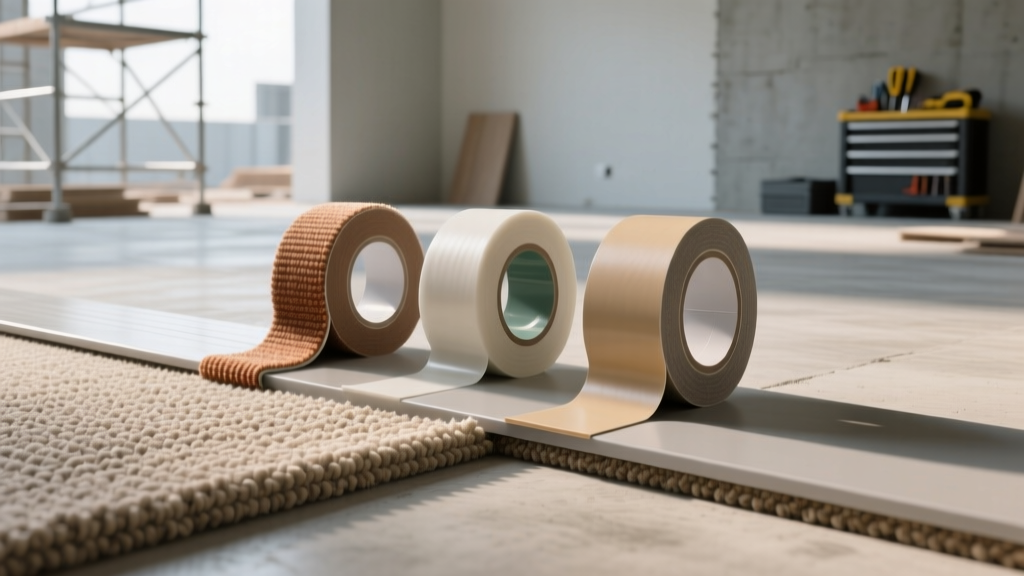
The Science of Carpet Seams: Why Tape Selection Dictates Longevity
A failed carpet seam is the most common and costly callback in flooring installation. When two carpet panels meet, the structural integrity of that joint relies entirely on the correct application of carpet seam tape. However, treating all seam tapes as interchangeable is a critical error. The adhesive chemistry required to bond jute-backed carpet to a plywood subfloor will catastrophically fail if applied to a high-alkaline concrete slab. Matching the tape type to the subfloor environment, traffic load, and carpet backing is the defining factor between a 15-year lifespan and a 6-month failure.
According to the Carpet and Rug Institute (CRI), improper seam construction accounts for over 40% of residential carpeting complaints. This guide deconstructs the specific scenarios where hot melt, cold adhesive, and pressure-sensitive tapes succeed or fail, providing exact parameters for professional and advanced DIY applications.
Scenario Matching Matrix: Hot Melt vs. Cold Adhesive vs. Double-Sided
Selecting the right carpet seam tape requires evaluating three variables: subfloor material, ambient moisture, and carpet backing type. The matrix below outlines the optimal tape selection for common 2026 installation scenarios.
| Tape Type | Best Subfloor | Compatible Backings | Shear Strength | Cure/Setup Time |
|---|---|---|---|---|
| Hot Melt (Thermoplastic) | Wood, OSB, Existing Vinyl | ActionBac, Jute, Woven Poly | Very High (120+ lbs) | 3 to 5 minutes |
| Double-Sided Acrylic | Concrete, Gypsum, Radiant Heat | Low-profile, Foam, Felt | Moderate (60-80 lbs) | Immediate (Pressure) |
| Cold Adhesive (Paste) | High-Moisture Concrete, Stairs | All Backings (Heavy Commercial) | Extreme (150+ lbs) | 24 to 48 hours |
Deep Dive: Hot Melt Seam Tape (Thermoplastic)
Hot melt tape remains the industry standard for residential installations over wooden subfloors. Products like the Roberts 3000-series utilize a thermoplastic adhesive that liquefies under heat and penetrates the secondary backing of the carpet, creating a mechanical and chemical bond upon cooling.
Temperature and Penetration Parameters
The most frequent failure mode with hot melt carpet seam tape is improper iron temperature. The iron must be calibrated between 350°F and 400°F.
- Below 350°F: The adhesive remains viscous, failing to penetrate the secondary backing. This results in 'adhesive starvation' where the tape bonds to the bottom fibers but not the primary latex matrix, leading to gapping.
- Above 420°F: The adhesive scorches, degrading the latex binder. It also risks melting synthetic ActionBac backings, causing the seam to peak (ridge upward) as the material shrinks upon cooling.
Concrete Subfloors: The Alkaline Moisture Threat
When installing over concrete, moisture and alkalinity are the primary enemies of carpet seams. Standard hot melt adhesives are highly susceptible to saponification (chemical breakdown) when exposed to the high pH levels found in damp concrete.
Before selecting a tape, you must verify the subfloor's moisture content using the ASTM F2170 standard for relative humidity (RH) testing via in-situ probes. If the concrete slab reads above 75% RH, hot melt tape is strictly contraindicated.
The Solution: Acrylic Pressure-Sensitive and Epoxy Tapes
For slabs testing between 75% and 85% RH, transition to a high-tack, double-sided acrylic carpet seam tape (such as XFasten or Roberts Double-Sided). Acrylic adhesives are inherently resistant to alkaline degradation and do not require heat, eliminating the risk of thermal shock to the concrete. For commercial installations over slabs exceeding 85% RH, a two-part epoxy cold adhesive applied to a fiberglass scrim tape is the only viable option, as detailed in Roberts Consolidated technical guidelines for high-moisture commercial environments.
The Missing Link: Seam Sealer Synergy
Carpet seam tape cannot function in isolation. When carpet is cut, the edge fibers are severed from the latex binder. If tape is applied without first sealing the edges, the fibers will pull out of the backing under tension—a phenomenon known as edge ravel.
Apply a continuous bead of latex-based seam sealer (like TRDC) to the cut edge of the carpet backing before positioning it over the tape. The sealer locks the yarns into the primary backing, ensuring that when the power stretcher applies lateral force, the tension is distributed across the tape rather than tearing the carpet edge away from the adhesive.
Troubleshooting Decision Tree: Diagnosing Seam Failures
When a seam fails, the physical symptom reveals the exact error in tape selection or application. Use this framework to diagnose and correct issues:
- Symptom: Seam Peaking (Ridging Upward)
- Cause: Iron temperature exceeded 420°F, melting the synthetic backing, OR the power stretcher was over-tensioned before the adhesive cooled.
- Correction: Lower iron to 375°F. Release stretcher tension immediately after the iron passes, allowing the carpet to relax as the thermoplastic sets.
- Symptom: Gapping (Seam Pulling Apart)
- Cause: Edge ravel due to omitted seam sealer, OR adhesive starvation from moving the iron too quickly (less than 1 foot per 10 seconds).
- Correction: Always apply latex seam sealer. Maintain a slow, deliberate iron pace to ensure full adhesive liquefaction and penetration.
- Symptom: Adhesive Crystallization/Powdering
- Cause: Alkaline degradation of hot melt adhesive on an untreated concrete slab.
- Correction: Peel back the carpet, scrape the degraded adhesive, and re-seam using a moisture-cured urethane or double-sided acrylic tape designed for masonry.
Cost & Yield Expectations for 2026 Projects
Budgeting for seam materials requires understanding yield rates. A standard 12x15 foot room typically requires one 15-foot seam. Below are the current material costs and coverage expectations:
- Hot Melt Tape (150 ft roll): $45 - $65. Yields approximately 10 standard room seams. Cost per seam: ~$5.00.
- Double-Sided Acrylic Tape (50 yd roll): $35 - $50. Yields approximately 10 standard room seams. Cost per seam: ~$4.00.
- Latex Seam Sealer (10.5 oz tube): $10 - $14. Yields approximately 40 linear feet. Cost per seam: ~$3.50.
While cold adhesives and specialty acrylic tapes carry a slightly higher upfront material cost, they eliminate the need for a $150+ seaming iron and reduce the risk of thermal damage callbacks, offering superior ROI for contractors managing diverse subfloor conditions.