Carpet Texture Taxonomy: Selecting the Right Pile for Every Room
Master carpet texture selection with our taxonomy guide. Compare cut, loop, and frieze piles, analyze TPI specs, and choose the right carpet for any room.
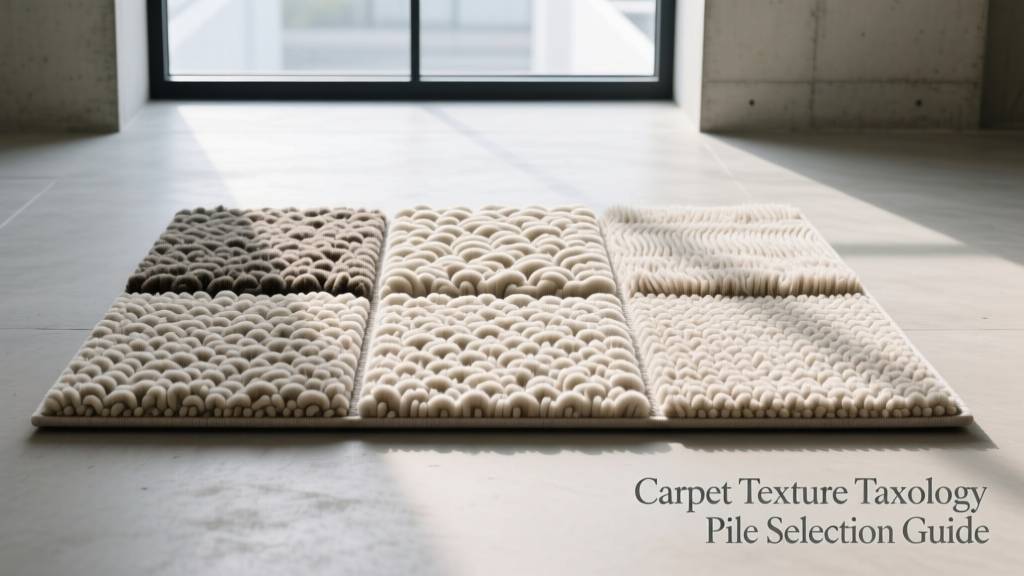
The Structural Geometry of Carpet: Beyond Surface Feel
When consumers discuss carpet texture, they often conflate the tactile sensation of the fiber with the actual structural construction of the pile. In the flooring industry, texture refers specifically to how the yarn is tufted, looped, cut, and twisted into the primary backing. This structural geometry dictates not only the visual profile and underfoot comfort but also the material's resilience, soil-hiding capabilities, and ultimate lifespan. Selecting the correct carpet texture requires moving past subjective preferences and evaluating objective manufacturing specifications tailored to the specific micro-environment of each room.
The Core Taxonomy of Carpet Textures
Modern tufting machines can produce an immense variety of pile constructions, but all residential and commercial carpets fall into three primary taxonomic branches: cut pile, loop pile, and cut-and-loop.
1. Cut Pile Constructions
Cut pile is created when the loops of yarn are sheared at the top, leaving individual strands standing upright. The visual and performance characteristics depend heavily on the angle of the cut and the twist level of the yarn.
- Plush / Saxony: Features a dense, level cut with a low twist (typically 4 to 5 turns per inch). The fibers stand straight up, creating a formal, velvet-like appearance. While luxurious, plush textures are highly susceptible to shading, footprinting, and vacuum marks due to the light reflecting off the uniform fiber tips.
- Frieze / Twist: The workhorse of modern residential cut piles. Frieze utilizes tightly twisted yarns (7 to 9 turns per inch) that are heat-set to curl and kink. This irregular surface scatters light, effectively hiding footprints, dirt, and seams. It is the premier choice for high-traffic corridors and active living spaces.
- Cable: Constructed using thicker, longer yarns with a lower twist. It offers a chunky, highly textured look but is prone to matting and crushing in high-traffic zones, restricting its use to low-traffic bedrooms.
2. Loop Pile Constructions
In loop pile carpets, the yarn is left uncut, forming continuous loops anchored into the backing. This creates a highly durable surface that resists crushing because the structural integrity of the loop is maintained.
- Level Loop: All loops are the exact same height. Often used in commercial settings, level loop textures offer exceptional durability and hide traffic lanes well, though they can feel firm underfoot.
- Berber: A variation of loop pile featuring loops of varying heights or multi-colored yarns. While excellent at hiding soil and stains, traditional Berber textures present a unique vulnerability: pet claws or sharp furniture edges can snag a loop, causing a 'run' similar to a knit sweater.
3. Cut-and-Loop (Patterned)
By combining sheared and uncut yarns in the same tufting sequence, manufacturers create sculpted, geometric patterns. The contrast in light reflection between the cut and looped sections creates visual depth. However, the varying pile heights can lead to uneven wear patterns over time if the cut pile sections are significantly taller than the loop sections.
Decoding the Specifications: Twist, Density, and Face Weight
A carpet's texture will fail prematurely if the underlying metrics are inadequate. Do not rely solely on the visual classification; demand the technical specification sheet from the retailer and evaluate these three critical data points.
| Metric | Definition | Minimum for Standard Residential | Target for High-Traffic / Pets |
|---|---|---|---|
| Twists Per Inch (TPI) | The number of times the yarn bundle is twisted in a one-inch segment. | 4.0 - 5.0 TPI | 6.0 - 9.0 TPI (Frieze) |
| Face Weight | The weight of the pile yarn per square yard, measured in ounces. | 30 - 40 oz/yd² | 40 - 55 oz/yd² |
| Density Rating | How closely packed the yarn tufts are in the backing (calculated via formula). | > 2,000 | > 3,000 |
Room-by-Room Texture Selection Matrix
Matching the carpet texture to the specific mechanical and environmental demands of a room is the cornerstone of material selection. The following framework dictates optimal pairings.
Active Living Rooms & Hallways
Recommended Texture: Frieze or Level Loop.
Rationale: These areas experience multidirectional foot traffic. A tight frieze texture with a minimum 6.5 TPI will spring back from compression, while its chaotic surface reflection masks the inevitable tracking of outdoor soils. Avoid plush or saxony textures here, as they will develop permanent traffic lanes within 18 to 24 months.
Master Bedrooms & Low-Traffic Zones
Recommended Texture: Plush, Saxony, or Cable.
Rationale: Barefoot comfort is the priority. Since these rooms lack abrasive grit and heavy rolling loads, the lower twist and higher pile heights (up to 3/4 inch for cable) provide a luxurious feel without the risk of rapid matting.
Basements & Moisture-Prone Areas
Recommended Texture: Low-Profile Level Loop (Glue-Down).
Rationale: Basements require breathable flooring to prevent mold. A thin, level loop texture installed directly to the concrete with a moisture-curing urethane adhesive eliminates the need for a pad, removing the primary reservoir for trapped moisture and microbial growth.
The Fiber Intersection: How Material Alters Texture
The physical behavior of a carpet texture is inextricably linked to the polymer chemistry of the fiber used to create it. A frieze texture made from PET polyester will perform vastly differently than the exact same frieze texture made from Nylon 6,6.
"Texture provides the geometry, but fiber provides the memory. A high-twist frieze relies on the molecular resilience of the polymer to return to its original shape after compression."
- Nylon 6,6: The undisputed leader for cut pile textures. Its tight molecular structure gives it exceptional 'memory,' allowing tightly twisted frieze yarns to bounce back from heavy furniture indentation. Always specify solution-dyed nylon for maximum stain and UV resistance.
- PET Polyester: Offers superior stain resistance and a softer hand than nylon, making it excellent for plush and saxony textures in low-traffic bedrooms. However, polyester lacks the resilient memory of nylon; a polyester frieze will eventually experience permanent crushing in high-traffic zones.
- Triexta (PTT): A newer polymer class that bridges the gap. It offers the softness of polyester with a molecular spring-like structure that rivals nylon in resilience, making it an excellent choice for Berber and cut-and-loop textures in homes with large pets.
Installation Gotchas: The Padding Mismatch
The most common point of failure in carpet texture selection occurs not with the carpet itself, but with the underlying cushion. Retailers frequently upsell a 50 oz premium plush carpet but pair it with a low-grade, high-thickness rebond pad to cut costs.
For premium textures, specify a high-density slab rubber or felt pad with a maximum thickness of 3/8 inch and a minimum density of 8 pounds per cubic foot. This provides a firm foundation that allows the carpet texture to absorb impact and recover, rather than bottoming out against the subfloor. Furthermore, ensure all selected materials carry the Carpet and Rug Institute's Green Label Plus certification to guarantee low volatile organic compound (VOC) emissions, protecting your indoor air quality as outlined by EPA guidelines on indoor air quality.
Summary Decision Flow
- Identify Traffic Load: High traffic mandates Frieze or Level Loop; low traffic permits Plush or Cable.
- Verify Specs: Demand a TPI of 6+ for cut piles and a density rating over 3,000 for active zones.
- Match Fiber to Texture: Use Nylon 6,6 for high-twist textures requiring memory; use Polyester for plush textures requiring softness.
- Specify the Pad: Cap thickness at 3/8" and demand 8 lb density to protect the carpet backing.