Waterproof Flooring Options Bathroom Remodels: Material Guide
Compare top waterproof flooring options for bathroom remodels. Expert analysis of tile, LVP, and sheet vinyl costs, slip resistance, and installation specs.
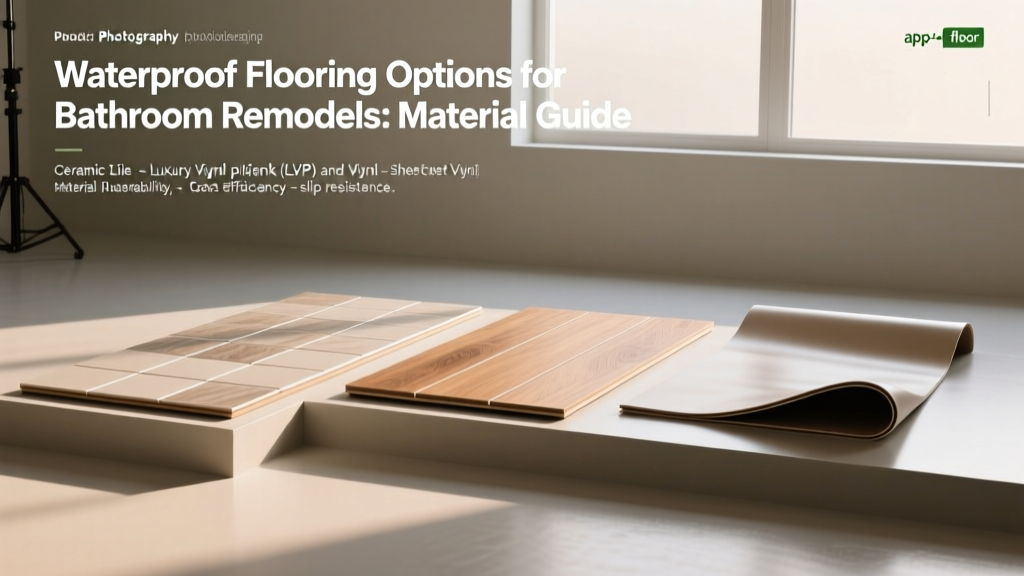
The Moisture Matrix: Evaluating Bathroom Flooring Performance
Homeowners researching flooring options bathroom upgrades often face conflicting advice regarding water resistance, slip safety, and long-term durability. A bathroom is not a single environment; it is a series of micro-climates ranging from the high-splash zone around the vanity to the standing-water perimeter of a curbless shower. Selecting the correct material requires moving beyond marketing terms like "water-resistant" and examining the physical properties of the flooring core, the locking mechanisms, and the subfloor interaction.
This guide evaluates the top three viable bathroom flooring categories—porcelain tile, rigid core luxury vinyl, and fiberglass-backed sheet vinyl—breaking down their technical specifications, failure modes, and true installed costs for 2026 remodels.
Porcelain and Ceramic Tile: The Benchmark for Wet Zones
Porcelain tile remains the undisputed standard for full bathrooms and wet rooms. However, not all ceramic tiles are suitable for bathroom floors. To qualify as porcelain, the tile must meet the ASTM C373 standard, demonstrating a water absorption rate of 0.5% or less. Standard ceramic tiles, which can absorb up to 3% of their weight in water, are prone to cracking in freeze-thaw cycles and harboring mold in damp environments.
Slip Resistance and the DCOF Standard
The most critical safety metric for bathroom tile is the Dynamic Coefficient of Friction (DCOF). Under ANSI A326.3, flooring intended for level interior spaces expected to be walked on while wet must achieve a DCOF of 0.42 or greater. When specifying tile, avoid high-gloss polished finishes, which can drop to a DCOF of 0.20 when wet. Instead, specify matte, honed, or structured-surface tiles with a micro-texture.
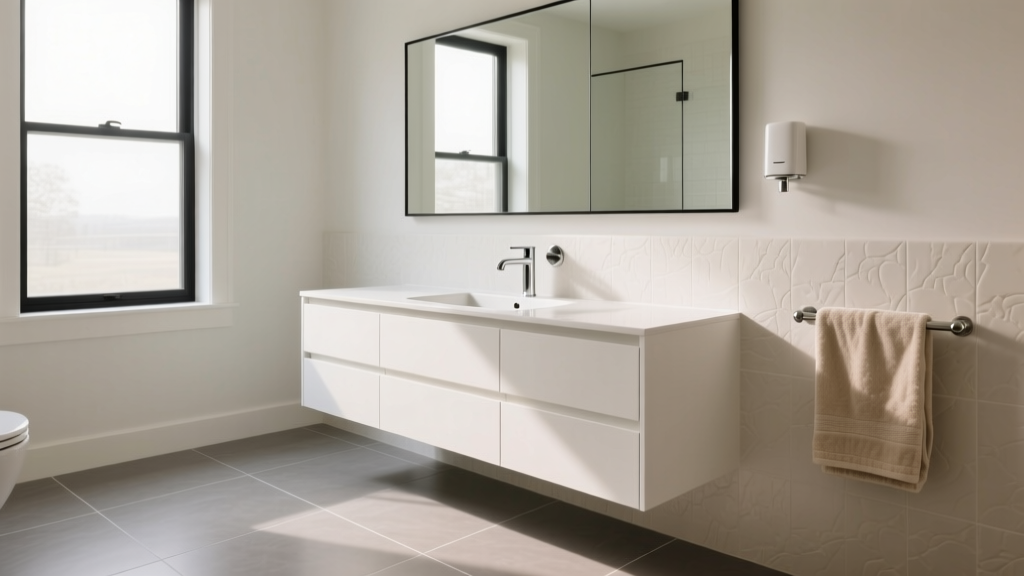
Rigid Core Luxury Vinyl: SPC vs. WPC
Luxury Vinyl Plank (LVP) and Tile (LVT) have captured significant market share due to their warmth underfoot and lower installation costs. For bathrooms, you must exclusively specify rigid core products: either Stone Polymer Composite (SPC) or Wood Polymer Composite (WPC).
- SPC (Stone Polymer Composite): Made from a limestone powder and PVC blend. It is highly dense, completely impervious to water absorption, and resists denting from heavy vanities. It handles temperature fluctuations better, making it ideal for bathrooms with radiant heating (up to 85°F).
- WPC (Wood Polymer Composite): Contains foaming agents that make it softer and quieter underfoot, but it is more susceptible to thermal expansion and contraction. In a bathroom with significant temperature swings from hot showers, WPC planks can gap at the seams.
The Subfloor Moisture Trap
While the vinyl wear layer is 100% waterproof, the click-lock seams are not. Water from shower splash or overflowing toilets can seep through the micro-gaps and become trapped against the wood subfloor. According to the Environmental Protection Agency (EPA), trapped moisture creates an ideal environment for toxic mold growth beneath the flooring. For high-risk wet zones, professional installers recommend a full-spread moisture-cured adhesive rather than a floating click-lock installation, or welding the seams in commercial settings.
Sheet Vinyl: The Seamless Budget Alternative
Often overlooked in high-end remodels, modern fiberglass-backed sheet vinyl (such as Tarkett’s FiberFloor lines) offers a distinct structural advantage: zero seams. In a standard 5x8 or 5x10 bathroom, a single sheet covers the entire floor, eliminating the primary failure point for water intrusion.
Fiberglass-backed sheet vinyl can be installed using a loose-lay or perimeter-adhesive method over existing, smooth subfloors. It requires a wear layer of at least 12 mil for residential bathrooms to resist scuffing from dropped grooming tools. Material costs are highly competitive, typically ranging from $1.50 to $4.00 per square foot, with installed costs rarely exceeding $6.50 per square foot.
Material Comparison Matrix: Cost, Safety, and Lifespan
| Material | Material Cost / Sq Ft | Installed Cost / Sq Ft | Waterproof Level | DCOF (Slip Safety) | Radiant Heat Compatible |
|---|---|---|---|---|---|
| Porcelain Tile | $4.00 - $12.00 | $12.00 - $22.00 | Surface & Core | 0.42 - 0.65 | Excellent (No Temp Limit) |
| SPC Luxury Vinyl | $3.50 - $7.00 | $7.00 - $12.00 | Surface Only (Seams Vulnerable) | 0.45 - 0.55 | Good (Max 85°F) |
| Fiberglass Sheet Vinyl | $1.50 - $4.00 | $4.00 - $7.50 | Surface & Seams (If Seamless) | 0.40 - 0.50 | Poor (Not Recommended) |
Note: Installed costs reflect national averages for 2026, assuming a standard plywood subfloor in good condition. Subfloor leveling or cement backer board installation will add $2.50 to $4.00 per square foot.
Materials to Categorically Avoid in Wet Zones
- Engineered Hardwood: Even products marketed as "100% waterproof" rely on topical coatings. The click-lock seams and exposed end-grain will wick standing water, causing irreversible cupping and delamination within 48 hours of a leak.
- Laminate: The MDF/HDF core acts like a sponge. Once water breaches the seam, the core swells and permanently compromises the structural integrity of the plank.
- Natural Stone (Marble, Travertine): Highly porous and requires annual penetrating sealers. Furthermore, polished marble drops to a dangerous DCOF of under 0.30 when wet, creating a severe slip hazard.
Final Selection Framework by Bathroom Type
Choose your flooring based on the specific usage profile of the room:
1. The Master En-Suite (High Budget, Radiant Heat)
Specification: Large-format matte porcelain tile (24x48 or larger) installed over an uncoupling membrane (e.g., Schluter-Ditra) with embedded hydronic or electric radiant heating cables. Use a high-performance epoxy or urethane grout to prevent staining and water penetration at the joints.
2. The Kids' Hall Bath (High Abuse, Standing Water)
Specification: SPC Luxury Vinyl Plank with a minimum 20-mil wear layer and a textured embossed-in-register (EIR) finish. Specify a full-spread adhesive installation rather than a floating click-lock system to prevent bathwater from migrating beneath the planks and causing subfloor rot.
3. The Powder Room (Low Moisture, Design-Forward)
Specification: Because powder rooms lack showers and tubs, the strict waterproofing requirements relax. This is the only bathroom environment where you can safely install engineered hardwood or high-end patterned ceramic (non-porcelain) tile, provided a waterproof floor mat is used near the sink vanity to catch splashes.
For further technical guidelines on resilient flooring installation over concrete slabs with high moisture vapor emission rates (MVER), consult the Resilient Floor Covering Institute (RFCI) moisture testing protocols before finalizing your material choice.
Written by
James ThorntonJames Thornton is a construction industry veteran with 25 years of hands-on experience in wood framing, lumber grading, and residential building codes. He started as a framing carpenter in rural Oregon, earned his ICC Residential Building Inspector certification, and eventually became a senior plan reviewer for the City of Portland Bureau of Development Services. James holds a B.S. in Wood Science & Technology from Oregon State University and is a certified lumber grader through the West Coast Lumber Inspection Bureau (WCLIB). He has inspected over 3,000 residential construction sites and authored the city's internal guide on advanced framing techniques (2x6 at 24" O.C.). James lives in Bend, OR, where he builds custom timber-frame cabins and competes in lumberjack sports.
More from James Thornton
View all
Insulation
Best Home Insulation Materials: Complete 2026 Guide
Compare top home insulation materials for 2026. Find R-values, installed costs per square foot, and best uses for fiberglass, spray foam, and mineral wool.
Aug 4, 2026

Sustainable Building
Certify Your Green Building Material for LEED and WELL
Step-by-step guide to certifying a green building material for LEED v5 and WELL v2. Master EPDs, HPDs, and VOC limits for 2026 project specifications.
Aug 4, 2026

Stone & Masonry
Veneer Stacked Stone Panels: Interior Design & Style Showcase
Discover how veneer stacked stone panels transform interiors. Explore modern design profiles, material pairings, and technical installation specs.
Aug 4, 2026