Engineered Wood Materials Durability and Lifespan Analysis
Analyze the durability and lifespan of engineered wood materials. Compare core types, wear layers, and failure modes to maximize your flooring investment.
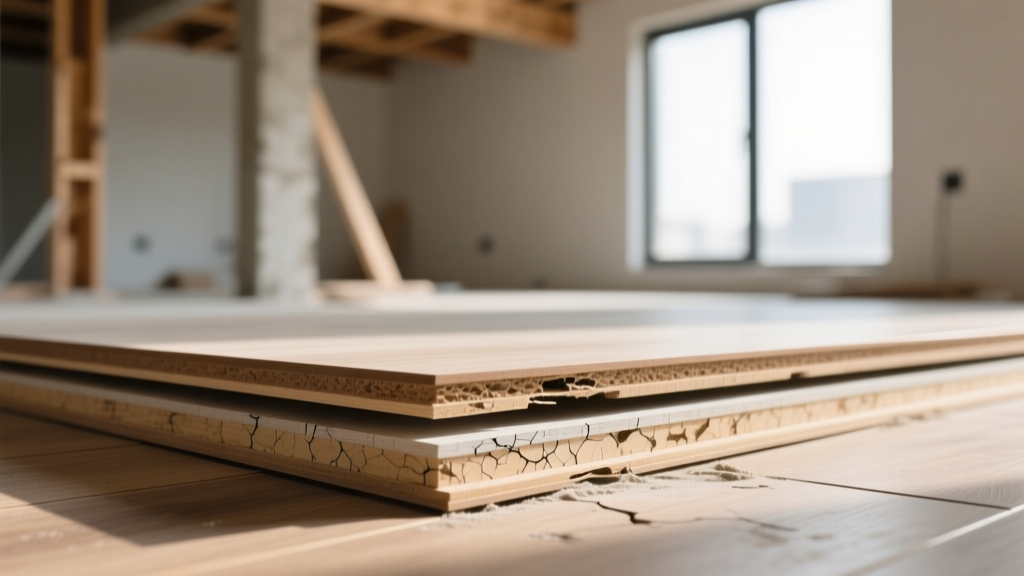
The Anatomy of Engineered Wood Durability
The longevity of engineered wood materials is not determined by a single metric, but by the structural synergy between the top lamella (wear layer), the core substrate, and the adhesive bonding them together. Unlike solid hardwood, which relies entirely on the tensile strength of a single piece of timber, engineered wood flooring utilizes cross-grain construction to mitigate dimensional movement. When evaluating durability, installers and architects must look past the surface species and critically assess the millimeters of the wear layer and the composition of the core board.
Core Material Breakdown: Dimensional Stability Matrix
The core of engineered wood materials dictates how the floor reacts to thermal expansion, moisture intrusion, and structural load. According to guidelines published by the APA - The Engineered Wood Association, the cross-lamination of core plies restricts the natural expansion and contraction of wood by up to 90% compared to solid lumber. Below is a durability matrix comparing the three primary core substrates used in modern manufacturing.
| Core Type | Composition | Dimensional Stability | Moisture Tolerance | Best Application |
|---|---|---|---|---|
| Multi-Ply Birch/Oak | 7-9 layers of cross-laminated hardwood veneers | Exceptional (Highest) | Moderate (Requires 35-55% RH) | Radiant heat systems, wide-plank formats (>7") |
| HDF (High-Density Fiberboard) | Compressed wood fibers with synthetic resins | High (Uniform density) | Low (Swells if water penetrates seams) | Floating installations, dry residential spaces |
| Softwood / Fir Plywood | 3-5 layers of softwood pine or fir | Moderate | Moderate | Standard nail-down residential applications |
For high-durability requirements, multi-ply hardwood cores are the undisputed standard. They provide superior screw-holding strength for glued-down installations and resist the telegraphing of subfloor imperfections that can plague thinner HDF cores.
Quantifying Lifespan: Wear Layer Cycles and Janka Hardness
The functional lifespan of engineered wood materials is calculated by multiplying the number of viable refinishing cycles by the expected years between each refinish. A professional floor sanding removes approximately 0.8mm to 1.0mm of material. Therefore, a 4mm wear layer allows for three safe sanding cycles (leaving a 1mm safety buffer above the tongue-and-groove profile). In a standard residential setting where refinishing is required every 20 to 25 years, a 4mm engineered floor yields a 60- to 75-year functional lifespan.
Surface denting resistance is governed by the Janka hardness scale. The National Wood Flooring Association (NWFA) utilizes Janka ratings to help specifiers match wood species to traffic demands.
| Wood Species | Janka Hardness (lbf) | Dent Resistance | Ideal Traffic Zone |
|---|---|---|---|
| Brazilian Cherry (Jatoba) | 2,350 | Superior | Commercial lobbies, high-impact residential |
| Hickory | 1,820 | Excellent | Kitchens, mudrooms, large dog households |
| Hard Maple | 1,450 | Very Good | Living areas, hallways, light commercial |
| White Oak | 1,360 | Good | Whole-home residential, boutique retail |
| Black Walnut | 1,010 | Fair (Prone to denting) | Bedrooms, formal dining, low-traffic zones |
Real-World Failure Modes and Edge Cases
Despite their engineered stability, these floors are subject to specific failure modes when environmental or installation parameters are violated. Understanding these edge cases is critical for preventing premature replacement.
Delamination and Adhesive Degradation
Delamination occurs when the wear layer separates from the core substrate. This is rarely a defect in the wood itself, but rather a failure of the manufacturing adhesive or site-applied glue. If moisture-cured urethane adhesives are used on a concrete subfloor with a moisture vapor emission rate (MVER) exceeding 5 lbs per 1,000 square feet per 24 hours, the alkaline moisture breaks down the adhesive bond. Always mandate a calcium chloride test or relative humidity probe test (ASTM F2170) before specifying glue-down engineered wood.
Differential Cupping
Cupping happens when the bottom of the board absorbs more moisture than the top, causing the edges to rise. In engineered wood materials, this is often triggered by wet-cleaning methods or a damp crawl space. Because the core is cross-laminated, it resists cupping better than solid wood, but prolonged exposure to standing water will overwhelm the structural tension, leading to permanent plastic deformation of the wood fibers.
Environmental Stress and Moisture Tolerances
The durability of engineered wood is inextricably linked to interior climate control. The USDA Forest Products Laboratory notes that wood is hygroscopic, constantly seeking equilibrium moisture content (EMC) with the surrounding air. While engineered construction reduces movement, it does not eliminate it.
"For optimal performance of engineered wood flooring, interior relative humidity must be maintained between 35% and 55% year-round. Failure to integrate whole-home humidification and dehumidification systems will void most manufacturer warranties and accelerate micro-checking in the finish."
— Adapted from NWFA Installation Guidelines
For environments where strict HVAC control is impossible—such as seasonal vacation homes or below-grade basements—specifiers should pivot to engineered wood materials featuring an HDF core with a waterproof edge-seal treatment, or transition to a rigid core SPC (Stone Plastic Composite) hybrid that utilizes a real wood veneer over a completely waterproof mineral core.
Actionable Maintenance and Finish Systems
The factory finish is the primary shield protecting the wear layer. Modern UV-cured aluminum oxide finishes can withstand over 4,000 Taber abrasion cycles, making them highly resistant to surface wear. However, when these finishes eventually fail, the floor cannot be easily spot-repaired. To maximize the lifespan between full sand-and-refinish cycles, implement the following maintenance framework:
- Daily Dry Dusting: Use a microfiber mop. Avoid vacuums with beater bars, which cause micro-scratches in the aluminum oxide coating, leading to premature dulling.
- pH-Neutral Cleaning: Use only hardwood-specific, non-residue cleaners (e.g., Bona Hardwood Floor Cleaner). Avoid vinegar, ammonia, or steam mops, which degrade the finish and force moisture into the board seams.
- Transition to Penetrating Oils: If you are purchasing unfinished engineered wood or planning a future refinish, specify hardwax oils like Rubio Monocoat or Osmo Polyx-Oil. Unlike polyurethanes that sit on top of the wood, hardwax oils penetrate the wood fibers and form a molecular bond. This allows for localized spot-repairs in high-traffic pathways without requiring a full floor sanding, effectively extending the material's lifespan indefinitely.
By meticulously matching the wear layer thickness, core substrate, and Janka hardness to the specific demands of the built environment, architects and homeowners can ensure their engineered wood materials deliver decades of structural integrity and aesthetic performance.