Epoxy Garage Floor Kit Lifespan: Durability & Failure Analysis
Analyze the true lifespan of an epoxy garage floor kit. Discover failure modes, hot tire pickup causes, and realistic durability expectations.
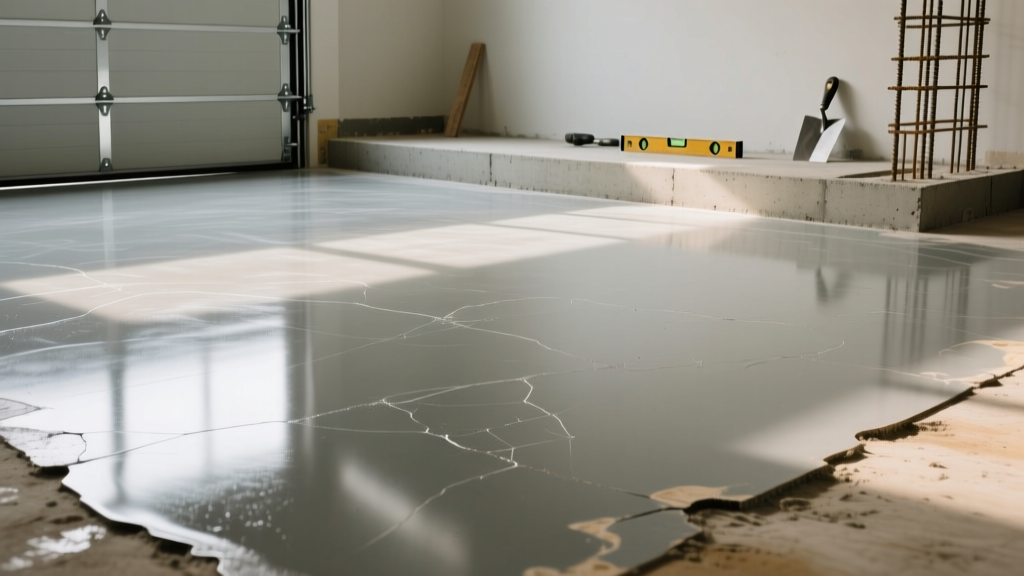
The retail market for garage flooring is saturated with promises of lifetime durability, yet industry data reveals a starkly different reality for DIY applications. When homeowners purchase a standard epoxy garage floor kit from a big-box retailer, they are often unaware of the chemical limitations and preparation thresholds required for long-term adhesion. While professional-grade 100% solid epoxy systems can easily last 15 to 20 years, consumer-grade kits frequently exhibit delamination, yellowing, and wear-through within 18 to 36 months. Understanding the exact chemistry, failure modes, and preparation standards is critical for evaluating the true lifespan of these products.
The Chemistry Deception: What is Actually in Your Kit?
The term 'epoxy' is heavily diluted in the consumer market. True epoxy consists of two parts: a resin and a polyamine hardener that cross-link to form a rigid, highly durable plastic polymer. However, most off-the-shelf products labeled as an epoxy garage floor kit are actually water-based, solvent-based, or hybrid formulations designed for ease of application rather than maximum durability.
Water-Based and Solvent-Based Kits
Consumer kits typically contain 30% to 50% solids by volume, with the remainder being water or solvent carriers. When the carrier evaporates, the resulting Dry Film Thickness (DFT) shrinks dramatically. A kit applied at 30 wet mils may yield a DFT of only 2 to 3 mils. This ultra-thin coating provides minimal impact resistance and is highly susceptible to abrasion from vehicle tires and dropped tools.
Polycuramine and Hybrid Formulations
In recent years, manufacturers have introduced 'polycuramine' and hybrid polyurea-epoxy kits to the retail market. These formulations offer faster cure times, lower VOCs, and greater flexibility than traditional water-based epoxies. While they resist cracking better than rigid epoxies, their thin DFT (typically 3 to 5 mils) still limits their overall lifespan in high-traffic environments compared to multi-coat professional systems.
Realistic Lifespan Expectations & Degradation Timelines
The lifespan of an epoxy garage floor kit is not a single metric; it depends entirely on the chemical composition, the concrete substrate condition, and the vehicular load. The following matrix outlines realistic durability expectations based on 2026 market formulations.
| Kit Formulation Type | Average DFT (Mils) | Expected Lifespan (Light Use) | Expected Lifespan (Heavy Use) | Primary Degradation Mode |
|---|---|---|---|---|
| Water-Based Epoxy (1-Part or 2-Part) | 2 - 3 mils | 1 - 3 Years | 6 - 12 Months | Hot tire pickup, abrasion wear-through |
| Solvent-Based Epoxy | 3 - 5 mils | 3 - 5 Years | 1 - 2 Years | UV yellowing, chemical staining |
| Polycuramine / Hybrid Kits | 4 - 6 mils | 5 - 8 Years | 2 - 4 Years | Micro-scratching, gloss loss |
| 100% Solid Epoxy (Pro-Grade) | 10 - 16 mils | 15 - 20+ Years | 10 - 15 Years | UV ambering (if untopcoated) |
Primary Failure Modes in DIY Epoxy Kits
When an epoxy garage floor kit fails prematurely, it is rarely due to the resin simply 'wearing out.' Catastrophic failure is almost always the result of chemical incompatibility or substrate rejection. According to The Concrete Network, improper surface preparation accounts for over 75% of all epoxy coating failures.
Hot tire pickup occurs when the plasticizers and polymers in warm vehicle tires chemically react with the epoxy coating. As the tire cools, it contracts and physically pulls the uncured or weakly bonded epoxy off the concrete slab. Water-based and low-solids kits are highly vulnerable to this phenomenon because they lack the cross-link density required to resist plasticizer migration. If you park heavy, hot vehicles on a big-box kit, expect delamination within the first winter season.
Moisture Vapor Transmission (MVT)
Concrete is a porous, hygroscopic material that constantly wicks moisture from the soil below. If the Moisture Vapor Transmission (MVT) rate exceeds the vapor permeability threshold of the epoxy kit, hydrostatic pressure builds beneath the coating, causing blistering and delamination. Before applying any epoxy garage floor kit, the slab must be tested per standard moisture testing protocols. The industry maximum MVT limit for standard epoxy adhesion is 3 to 5 lbs per 1,000 square feet per 24 hours. If your slab exceeds this, a consumer kit will fail; a professional moisture-mitigating primer is mandatory.
Surface Preparation: The True Determinant of Longevity
The mechanical bond between the epoxy and the concrete is the sole factor preventing delamination. Most DIY kits include a packet of citric or muriatic acid for 'etching.' Acid etching is highly inconsistent and frequently fails to open the concrete pores adequately.
The EPA and flooring industry standards mandate specific surface profiles for coating adhesion. For an epoxy garage floor kit to achieve its maximum rated lifespan, the concrete must be prepared to a CSP-2 (Concrete Surface Profile) standard.
- Acid Etching (CSP-1): Achieves a very light profile. Acceptable only for thin, water-based sealers. High risk of epoxy delamination under vehicular load.
- Mechanical Grinding (CSP-2 to CSP-3): Uses a planetary grinder with diamond abrasive pads (typically 30 to 40 grit metal bonds). This physically cuts into the laitance layer, exposing fresh, porous aggregate. This is the minimum required preparation for any epoxy kit to reach its stated lifespan.
- Shot Blasting (CSP-3 to CSP-4): Propels steel shot at the concrete. Ideal for 100% solid epoxies and polyureas, but often too aggressive for thin consumer kits, which may telegraph the blast pattern through the thin DFT.
Cost vs. Longevity ROI Analysis
Evaluating an epoxy garage floor kit strictly on upfront material cost is a flawed metric. The true cost must be calculated against the expected service life and the labor required for re-application. Removing failed epoxy requires aggressive diamond grinding, which can cost more than the initial installation.
| System Type | Material Cost (per sq. ft.) | Prep & Labor Cost (per sq. ft.) | Total Cost (per sq. ft.) | Expected Lifespan | Annualized Cost |
|---|---|---|---|---|---|
| Big-Box Water-Based Kit (DIY) | $1.20 - $1.80 | $0.00 (DIY Acid Etch) | $1.20 - $1.80 | 2 Years | $0.60 - $0.90 |
| Retail Polycuramine Kit (DIY) | $2.50 - $3.50 | $0.50 (DIY Grinding Rental) | $3.00 - $4.00 | 5 Years | $0.60 - $0.80 |
| Pro 100% Solid Epoxy + Urethane | $3.50 - $5.00 | $3.00 - $4.50 (Pro Prep) | $6.50 - $9.50 | 15 Years | $0.43 - $0.63 |
The Professional Alternative: When to Skip the Kit
If your concrete slab is older than 10 years, shows signs of spalling, or has existing oil stains that have penetrated deeply into the pores, a consumer epoxy garage floor kit will not adhere properly, regardless of preparation. In these scenarios, the substrate must be scarified and treated with an oil-stain blocker or a high-build 100% solid epoxy primer. Furthermore, if UV stability is a priority (e.g., a garage with large, sun-facing windows), standard epoxies will amber over time. Professional systems mitigate this by applying an aliphatic polyurethane or polyaspartic topcoat, which provides UV stability and scratch resistance that no single-component retail kit can replicate.
Ultimately, an epoxy garage floor kit can serve as a cost-effective, short-to-medium-term cosmetic upgrade if applied over mechanically profiled, dry concrete. However, treating a high-solids professional system and a low-solids retail kit as interchangeable products guarantees premature failure and unnecessary replacement costs.