Epoxy Flooring Durability: Lifespan Analysis and Failure Modes
Analyze epoxy flooring durability, lifespan expectations, and failure modes. Compare 100% solid resins, moisture risks, and lifecycle costs.
The Anatomy of Epoxy Flooring Durability
The durability of epoxy flooring is not a single metric but a composite of chemical formulation, mil thickness, and substrate preparation. At a molecular level, epoxy resins cure through a cross-linking reaction between epoxide resins and polyamine hardeners. The density of this cross-linking dictates the floor's resistance to mechanical abrasion, chemical etching, and thermal shock. While marketing materials often use the term "epoxy" broadly, the actual lifespan of the coating varies drastically based on the carrier solvent—or lack thereof—used in the mixture.
According to the Whole Building Design Guide (WBDG), resinous flooring systems must be specified based on the anticipated mechanical and chemical loads of the environment. A residential garage subjected to passenger vehicle traffic requires fundamentally different structural properties than a food processing facility exposed to daily high-pressure steam washdowns and lactic acid spills.
Resin Formulation Comparison Matrix
| Epoxy Type | Solids Content | Typical Mil Thickness | Expected Lifespan | VOC Profile |
|---|---|---|---|---|
| Water-Based | 40% - 60% | 2 - 5 mils | 2 - 4 years | Low (< 100 g/L) |
| Solvent-Based | 60% - 80% | 4 - 8 mils | 3 - 5 years | High (> 400 g/L) |
| 100% Solid (Bisphenol-A) | 100% | 10 - 20 mils | 10 - 15 years | Zero / Near Zero |
| Novolac Epoxy | 100% | 15 - 30 mils | 8 - 12 years (Harsh Env.) | Zero / Near Zero |
Note: VOC regulations enforced by the U.S. Environmental Protection Agency (EPA) have heavily restricted solvent-based epoxies in commercial applications, making 100% solid formulations the industry standard for durable installations.
Quantifying Lifespan by Environment
Lifespan projections for epoxy flooring must account for the specific wear patterns of the facility. The following data reflects professionally installed, 100% solid epoxy systems with appropriate polyaspartic or urethane topcoats.
- Residential Garages (Passenger Vehicles): 12 to 15 years. Primary wear factors are UV exposure and mild abrasion from standard tires.
- Commercial Warehouses (Forklift Traffic): 5 to 8 years. Steel-banded forklift wheels generate immense point-load shear forces that gradually erode the aggregate broadcast layer.
- Automotive Service Bays: 4 to 6 years. Exposure to brake fluid, transmission fluid, and hot tire pick-up accelerates chemical degradation.
- Food & Beverage Processing: 3 to 5 years. Thermal shock from 180°F washdowns causes micro-cracking in standard epoxies, necessitating specialized Novolac or MMA (methyl methacrylate) systems.
Critical Failure Modes and Diagnostic Fixes
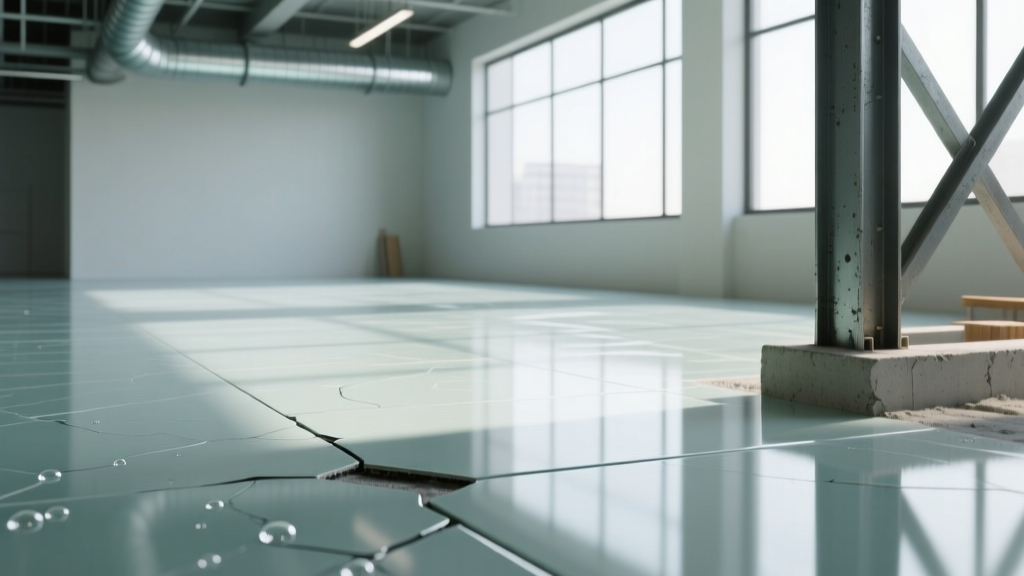
When epoxy flooring fails before its expected lifecycle, the root cause is almost always traceable to substrate preparation or environmental conditions during curing. The American Concrete Institute (ACI) emphasizes that coating adhesion is entirely dependent on the concrete surface profile (CSP).
Failure Mode 1: Moisture Vapor Transmission (MVT) Blistering
Symptom: Dome-shaped blisters appearing 3 to 6 months post-installation, often containing a highly alkaline liquid.
Cause: Hydrostatic pressure pushing moisture vapor through the concrete slab. When vapor meets the impermeable epoxy barrier, it creates osmotic cells that delaminate the coating.
Diagnostic Fix: Perform ASTM F2170 relative humidity testing before installation. If RH exceeds 75%, apply a moisture-mitigating epoxy primer (such as a two-part moisture vapor barrier rated for up to 15 lbs of hydrostatic pressure) before the base coat.
Failure Mode 2: Hot Tire Pick-Up
Symptom: The epoxy coating peels or softens specifically in the tire contact patches after a vehicle is parked.
Cause: Plasticizers in synthetic rubber tires migrate into the epoxy when heated by friction. If the epoxy has a low Glass Transition Temperature (Tg), it softens and bonds to the tire.
Diagnostic Fix: Standard Bisphenol-A epoxies are vulnerable here. Specify a polyaspartic topcoat or a high-Tg novolac epoxy for driveways and high-traffic garage zones to resist plasticizer migration.
Failure Mode 3: Mechanical Delamination
Delamination occurs when the tensile strength of the concrete surface is lower than the adhesive strength of the epoxy. Pull-off adhesion testing (ASTM D7234) should yield a minimum of 200 psi for standard traffic and 300 psi for heavy industrial use. If the concrete is poorly cured or laitance is present, the epoxy will pull the top layer of concrete dust off with it. Diamond grinding to a CSP 2 or CSP 3 profile, or shot blasting for thicker systems, is non-negotiable to expose sound aggregate.
Lifecycle Cost Analysis (LCCA) per Square Foot
Evaluating epoxy flooring purely on initial installation cost is a false economy. The table below breaks down the annualized cost of ownership based on 2026 market rates for professional installation, including diamond grinding, base coat, broadcast aggregate, and topcoat.
| System Configuration | Initial Cost (per sq. ft.) | Expected Lifespan | Annualized Cost |
|---|---|---|---|
| Water-Based DIY Kit (Low Solids) | $1.50 - $2.50 | 2 years | $0.75 - $1.25 |
| 100% Solid Epoxy (No Topcoat) | $4.00 - $6.00 | 8 years | $0.50 - $0.75 |
| 100% Solid + Polyaspartic Topcoat | $6.50 - $9.00 | 15+ years | $0.43 - $0.60 |
| Heavy-Duty Novolac Mortar System | $12.00 - $18.00 | 10 years (Industrial) | $1.20 - $1.80 |
The Polyaspartic Topcoat Multiplier
A critical evolution in epoxy flooring durability is the decoupling of the base coat and the wear layer. While 100% solid epoxy provides unmatched compressive strength and adhesion, it is inherently susceptible to UV degradation (yellowing) and lacks optimal abrasion resistance.
Applying an aliphatic polyaspartic polyurea topcoat over the epoxy base creates a hybrid system. The epoxy acts as a high-build structural primer, while the polyaspartic provides a UV-stable, highly cross-linked wear surface. Polyaspartics boast a Taber abrasion resistance rating (ASTM D4060) that is typically 3 to 4 times superior to standard epoxies, effectively doubling the functional lifespan of the floor in high-traffic corridors.
Actionable Maintenance Protocols for Maximum Longevity
Even the most robust 100% solid epoxy system will degrade prematurely if subjected to improper chemical cleaning agents. To preserve the cross-linked polymer matrix, facility managers and homeowners must adhere to strict maintenance parameters:
- pH-Neutral Cleaning Only: Use cleaners with a pH between 7.0 and 8.0. Highly alkaline degreasers (pH > 10) will saponify the epoxy surface over time, leaving a permanent hazy film.
- Avoid Citrus Solvents: Cleaners containing d-limonene (citrus extract) are highly effective at removing grease but act as aggressive solvents that break down the epoxy's chemical bonds, leading to micro-pitting.
- Mechanical Agitation Limits: When using auto-scrubbers in commercial settings, restrict pad aggressiveness to white or red buffing pads. Black stripping pads will mechanically sheer the topcoat layer.
- Spill Mitigation Timing: While epoxy is chemical resistant, it is not chemical proof. Solvents like acetone, MEK (methyl ethyl ketone), and aircraft paint strippers must be neutralized and wiped within 15 minutes to prevent localized softening and permanent staining.