Floor Chair Mat and Caster Track Cleaning Playbook for Hard Floors
Master the floor chair maintenance playbook. Learn to clean caster tracks, repair scuffs on hardwood and LVP, and select the right chair mat.
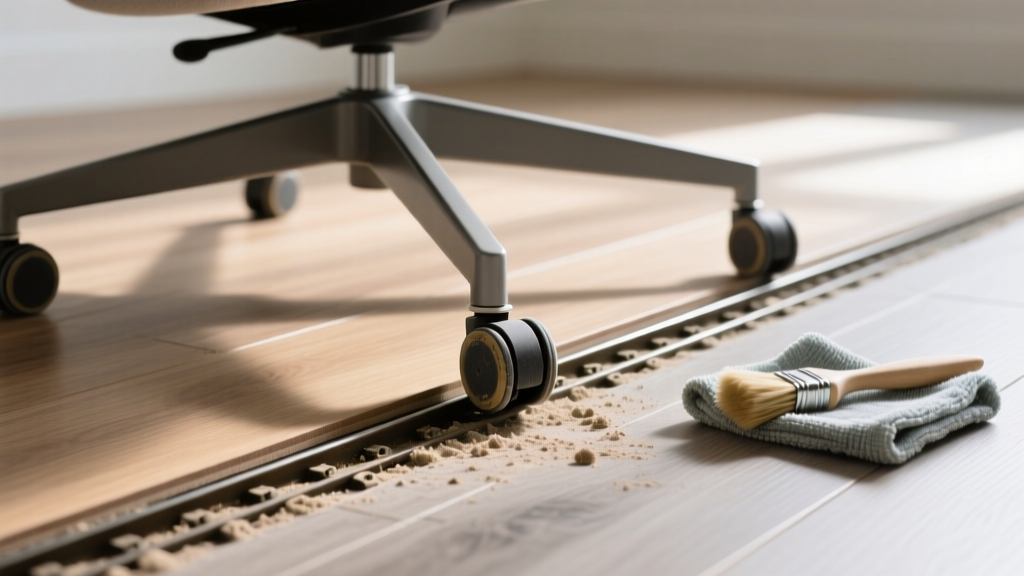
The Biomechanics of Floor Chair Track Damage
The area immediately beneath a rolling floor chair endures the most concentrated mechanical stress in any residential or commercial space. A standard 2-inch nylon caster supporting a 250-pound load exerts approximately 65 PSI (pounds per square inch) on the floor surface. When combined with microscopic silica dust trapped in the caster housing, this creates a sanding effect that degrades polyurethane finishes on hardwood and wears through the wear layer of luxury vinyl plank (LVP) over time.
Maintaining this high-traffic "track" requires a specialized approach. Standard mopping merely pushes abrasive grit into the micro-scratches left by the floor chair. According to the National Wood Flooring Association (NWFA), improper maintenance in rolling chair zones is the leading cause of premature finish failure in home offices. This playbook provides exact protocols for cleaning, repairing, and protecting floors subjected to floor chair traffic.
The 3-Step Weekly Cleaning Playbook for Caster Tracks
To prevent the accumulation of abrasive particulates in the floor chair track, implement this strict weekly protocol. Do not use steam mops or ammonia-based cleaners, as heat and high-pH chemicals will cloud the finish and weaken the structural integrity of LVP and engineered wood.
Step 1: Dry Extraction and Caster Purging
Before introducing moisture, remove loose silica and dust. Use a canister vacuum with a soft-bristle parquet attachment (minimum 150 CFM airflow). Next, flip the floor chair and purge the caster housings. Use a stiff nylon brush and a can of compressed air to dislodge hair and grit trapped inside the wheel axles. If the casters do not spin freely, they are dragging and scuffing the floor.
Step 2: pH-Neutral Damp Mopping
Use a cleaner with a pH between 7.0 and 8.0. Bona Hardwood Floor Cleaner (pH 7.4) or Black Diamond Stoneworks Wood & Laminate Floor Cleaner (pH 7.2) are industry standards. Apply the solution directly to a 300-GSM (grams per square meter) microfiber mop pad—never spray directly onto the floor. The high GSM rating ensures the pad traps particulates rather than smearing them across the chair track.
Step 3: Micro-Abrasion Buffing
For high-gloss hardwood or polished concrete, follow up with a dry, clean microfiber cloth to buff the track. This removes residual moisture that could seep into micro-fissures created by the floor chair and restores the light-reflective properties of the finish.
Never use a steam mop under a floor chair mat or in the immediate caster track. The EPA notes that introducing high-heat vapor (often exceeding 212°F) to confined spaces under plastic mats forces moisture into the subfloor, causing catastrophic cupping in hardwood and delamination in LVP.
Chair Mat Edge and Sub-Mat Maintenance Matrix
Chair mats are essential for distributing the load of a floor chair, but they introduce a secondary maintenance challenge: static-charged dust accumulation at the edges and trapped moisture underneath. Selecting the correct mat material and cleaning protocol is critical.
| Mat Material | Compatible Floors | Sub-Mat Cleaning Protocol | Edge Dust Mitigation |
|---|---|---|---|
| Polycarbonate (Rigid) | Hardwood, Tile, LVP | Lift weekly; vacuum floor; wipe mat underside with 50/50 water and white vinegar. | Apply anti-static spray (e.g., Guardsman) to mat edges monthly. |
| PET (Recycled Plastic) | Hardwood, Laminate | Lift bi-weekly; dry mop only. Avoid liquid cleaners under PET to prevent clouding. | Use a crevice tool vacuum attachment along the perimeter twice weekly. |
| Tempered Glass | All Hard Surfaces | Lift monthly. Heavy weight prevents dust ingress; clean floor with standard pH-neutral mop. | Wipe glass edges with isopropyl alcohol to remove tracked-in oils. |
Repair Protocols for Caster Scuffs and Indentations
When preventative maintenance fails, targeted repair is required to halt further degradation of the floor chair zone.
Hardwood: Fixing Micro-Scratches and Finish Wear
If the floor chair has worn through the polyurethane but not into the raw wood stain, use a product like Rejuvenate Professional High-Gloss Wood Floor Restorer. This fills micro-abrasions with a temporary polymer layer. For deeper scuffs where the wood stain is exposed, apply Minwax Blend-Fil color-matched putty directly into the groove, let it cure for 15 minutes, and buff it flush. If the track is extensively damaged, professional screening and recoating is required. As of 2026, expect to pay between $2.15 and $2.85 per square foot for this service.
Luxury Vinyl Plank (LVP): Removing Scuffs and Heat Indentations
Black scuff marks left by cheap nylon casters on LVP can be removed using a melamine sponge (Magic Eraser) lightly dampened with isopropyl alcohol. Do not scrub aggressively, as melamine is micro-abrasive and will dull the LVP's urethane topcoat. For minor indentations caused by heavy floor chairs resting in one spot, apply gentle heat using a heat gun set to exactly 120°F, keeping the nozzle 6 inches away. The heat softens the PVC core, allowing the vinyl to expand back to its original level.
Stationary Floor Chair (Zaisu) Compression Fixes
Legless "zaisu" style floor chairs are increasingly popular in minimalist and multi-use rooms. Because they lack casters, they distribute weight over a wider base, but they still cause severe compression in carpeted areas. The Carpet and Rug Institute (CRI) recommends the ice cube method for these indentations. Place three to four standard ice cubes directly into the compressed carpet fibers left by the floor chair. Allow them to melt completely (approximately 4 hours), then blot the excess moisture with a dry towel and aggressively brush the fibers upward with a stiff-bristled upholstery brush. The water swells the crushed nylon or polyester fibers, restoring the carpet's original pile height.
Preventative Upgrades: Casters and Glides
The most effective maintenance strategy is eliminating the source of the damage. Standard OEM casters on most floor chairs are made of hard nylon (Shore 95A hardness), which acts like sandpaper on polyurethane finishes.
- Upgrade to Rollerblade Casters: Replace standard wheels with 3-inch polyurethane rollerblade-style casters. Look for a durometer rating of 85A (e.g., The Omni Wheel or Lifelong Heavy Duty casters). The softer polyurethane absorbs shock and eliminates micro-scratching on hardwood and LVP. A set of five typically costs between $25 and $35.
- Use Felt Glides for Stationary Chairs: If your floor chair does not roll, attach 2-inch high-density wool felt pads (minimum 1/4-inch thickness) to the base. Avoid cheap adhesive-backed foam pads, which degrade and leave a permanent adhesive residue that requires mineral spirits to remove.
- Implement a Caster Cleaning Schedule: Every 90 days, wipe the circumference of your floor chair casters with a degreaser to remove the black ring of polymerized floor wax and skin oils that builds up during rolling.
Expert Insight: Never use rubberized casters on hardwood or LVP. While marketed as "floor-safe," non-thermoplastic rubber contains plasticizers that chemically react with polyurethane and vinyl urethane topcoats, leaving permanent yellow stains that cannot be buffed out and require complete sanding to remove.