Antique Floor Lamps and Flooring Compatibility: Weight, Heat, and Surface Specs
Analyze the weight, base PSI, and heat output of antique floor lamps to prevent dents, scuffs, and finish damage on hardwood, vinyl, and tile floors.
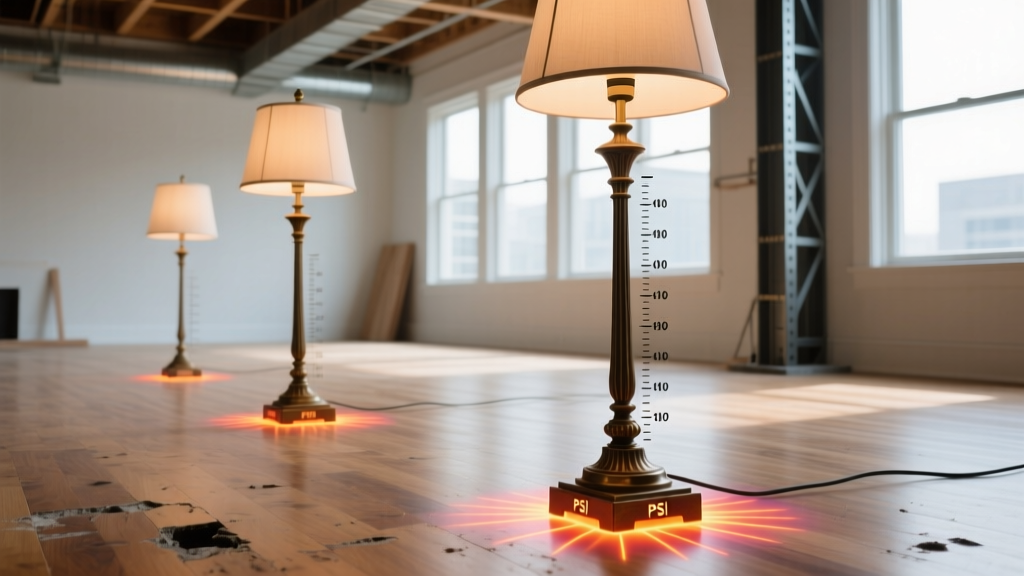
The Physics of Point Loading: Weight and Base Specifications
Integrating antique floor lamps into modern interior spaces requires a rigorous understanding of point load physics and thermal dynamics. Unlike contemporary lighting, which prioritizes lightweight alloys and low-heat LEDs, vintage and antique lamps—particularly those from the late 19th and early 20th centuries—were constructed from solid cast iron, heavy brass, and carved marble. A standard 1920s cast iron bridge lamp can weigh between 35 and 50 pounds, while a marble-base banker’s floor lamp frequently exceeds 75 pounds. When this mass is concentrated on a small footprint, it generates significant pounds per square inch (PSI), posing a direct threat to the structural integrity and surface finish of modern flooring materials.
- Cast Iron Tripod Base: 40-60 lbs | Contact Area: 3-5 sq in | High Dent Risk
- Solid Marble Disk Base: 50-85 lbs | Contact Area: 40-60 sq in | Moderate Scuff Risk
- Brass Ring Base: 25-40 lbs | Contact Area: 8-12 sq in | High Finish Abrasion Risk
Calculating PSI: Antique Lamp Bases vs. Floor Hardness
To determine the potential for permanent denting in hardwood floors, we must compare the lamp’s PSI output against the floor’s Janka hardness rating. The Janka hardness scale measures the force required to embed a steel ball into wood, serving as the industry standard for dent resistance. Red Oak, the most common North American hardwood, sits at 1,360 lbf. However, the polyurethane or hard wax oil finish applied over the wood is significantly softer and more susceptible to localized compression.
| Antique Lamp Base Type | Avg. Weight | Contact Area | Calculated PSI | Flooring Impact |
|---|---|---|---|---|
| Cast Iron Tripod (Small Feet) | 45 lbs | 3.0 sq in | 15.0 PSI | Dents Pine/Walnut; clouds polyurethane |
| Solid Marble Disk (10" dia) | 70 lbs | 78.5 sq in | 0.89 PSI | Safe for wood; risks grout cracking on tile |
| Brass Ring (Narrow Profile) | 30 lbs | 6.5 sq in | 4.6 PSI | Scratches LVP; scuffs site-finished hardwood |
As demonstrated above, a heavy marble base actually exerts less PSI than a lighter tripod base due to weight distribution. When placing antique floor lamps on engineered hardwood or luxury vinyl plank (LVP), the primary concern shifts from wood compression to the crushing of the wear layer or the locking mechanisms beneath the planks.
Thermal Performance: Vintage Bulbs and Floor Finish Degradation
Beyond mechanical weight, antique torchier lamps and reading lamps present a severe thermal hazard. Original vintage incandescent and halogen bulbs are notoriously inefficient. According to the U.S. Department of Energy, traditional incandescent bulbs convert up to 90% of their energy directly into heat. A 150-watt vintage bulb can reach surface temperatures exceeding 250°F (121°C). In a torchier configuration, heat rises; however, in antique reading lamps with low-hanging, directional shades, radiant heat is pushed directly onto the floor surface.
Heat Thresholds by Flooring Material
- Site-Finished Polyurethane Hardwood: Sustained temperatures above 180°F will cause the finish to soften, cloud, and permanently adhere to dust or protective pads. Prolonged 130°F exposure can cause micro-cracking in the finish over time.
- Luxury Vinyl Plank (LVP): The PVC core and urethane wear layers of LVP are highly sensitive to heat. Sustained localized heat above 150°F can cause the planks to warp, cup, or experience plasticizer migration, leading to permanent yellowing.
- Hard Wax Oil (e.g., Rubio Monocoat): While more breathable than polyurethane, hard wax oils can soften and become tacky under sustained directional heat, attracting debris and creating a localized dull spot.
- Ceramic and Porcelain Tile: Completely impervious to bulb heat. The thermal risk here is negligible, though the metal base of the lamp may scratch the glaze if moved while hot.
Chemical Incompatibility: The Rubber Pad Problem
A common mistake when installing antique floor lamps is the use of cheap, vulcanized rubber or latex non-slip pads to protect the floor. This creates a chemical reaction. The plasticizers in LVP and the solvents in polyurethane finishes react with the sulfur and synthetic rubbers in these pads. Within 3 to 6 months, this reaction causes a permanent yellow or brown stain that penetrates the floor finish and cannot be sanded out of LVP. For heavy antique lighting, chemical compatibility is just as critical as mechanical protection.
2026 Protective Solutions and Material Specifications
To safely integrate heavy, heat-generating antique floor lamps into modern flooring ecosystems, specific material interventions are required. As of 2026, advancements in LED filament technology and high-density protective polymers have solved both the thermal and mechanical challenges.
- Upgrade to Vintage-Style LED Filaments: Replace all 100W+ incandescent bulbs with 8W to 12W LED Edison-style bulbs (2700K color temperature). These replicate the amber glow of vintage glass but cap surface temperatures at a safe 110°F, entirely eliminating the thermal risk to polyurethane and LVP wear layers.
- Specify High-Density Felt Pads: Use 100% synthetic or wool-blend felt pads with a minimum thickness of 5mm and a density rating of at least 40 kg/m³. Avoid all rubber-backed or adhesive-heavy pads. For tripod bases, use custom-cut felt sleeves that wrap the metal foot to prevent edge-scuffing during micro-movements.
- Utilize Load-Spreading Coasters: For lamps exceeding 50 lbs with small footprints, place a 6-inch diameter, 1/4-inch thick tempered glass or polished acrylic coaster beneath the felt pad. This artificially increases the contact area, dropping the PSI to below 1.0, effectively neutralizing the dent risk on soft woods like American Walnut (Janka 1,010) or Pine (Janka 380).
"The preservation of antique lighting should never come at the expense of the flooring beneath it. By treating the lamp base as a structural point load and the bulb as a thermal emitter, you can protect both the historical artifact and the modern floor finish."
Ultimately, the successful placement of antique floor lamps requires treating them as heavy, heat-emitting architectural elements rather than simple decor. By calculating the PSI, respecting the thermal limits of modern floor finishes, and utilizing chemically inert, high-density felt barriers, you can preserve the character of vintage lighting without compromising the performance ratings of your flooring investment.