Choosing the Right Flooring for a Montessori Floor Bed
Discover the safest, warmest, and most hygienic flooring materials for a Montessori floor bed, including VOC ratings, impact absorption, and cost data.
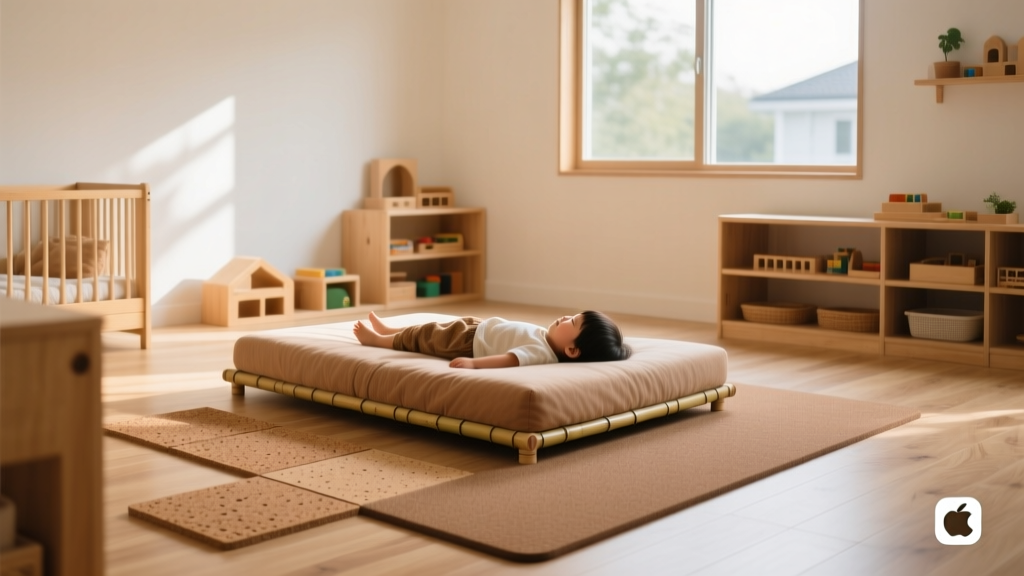
The Unique Flooring Demands of a Montessori Sleep Space
Placing a mattress directly on the floor fundamentally alters the sleep environment. Unlike elevated cribs, a Montessori floor bed exposes the child to the room's lowest thermal and air quality strata. Selecting the right flooring is not merely an aesthetic choice; it is a critical health, safety, and developmental specification. The flooring must support independent mobility, provide thermal insulation, and minimize exposure to settling particulates.
Material Taxonomy: Evaluating the Top Contenders
When evaluating materials for a nursery featuring a floor bed, we prioritize thermal resistance (R-value), impact absorption, and off-gassing profiles. Below is the taxonomy of the most suitable flooring options.
1. Cork Flooring: The Thermal & Impact Champion
Natural cork is harvested from the bark of the Quercus suber tree and remains the gold standard for Montessori floor bed environments. Its cellular structure contains suberin, a naturally occurring waxy substance that repels moisture, resists mold, and inhibits microbial growth.
- Thermal Performance: Cork boasts an R-value of approximately 1.25 per inch, making it exceptionally warm to the touch. This prevents the child from experiencing thermal shock when stepping out of bed.
- Impact Absorption: The compressible nature of cork provides a natural cushion. If a toddler rolls off the mattress, the flooring absorbs a significant portion of the kinetic energy.
- Cost & Installation: Expect to pay between $7 and $12 per square foot for high-density floating cork planks. Ensure you select a water-based polyurethane finish to maintain zero-VOC emissions.
2. Engineered Hardwood: The Hygienic Classic
Engineered hardwood features a cross-laminated plywood core topped with a real hardwood veneer. It offers the hygienic, easy-to-clean surface of solid wood but with superior dimensional stability, preventing the warping that can occur in nurseries with fluctuating humidity levels.
- Hygiene Factor: Hard surfaces do not trap dust mites or pet dander, which is critical since the child's breathing zone is inches from the floor.
- Drawback Mitigation: Because engineered hardwood is rigid and lacks impact absorption (Janka hardness ratings often exceed 1,200 lbf), you must pair it with a low-pile, washable organic cotton area rug adjacent to the bed to cushion inevitable falls.
- Cost & Installation: Ranges from $9 to $16 per square foot installed. Opt for a click-lock floating system rather than glue-down to eliminate adhesive-related VOCs.
3. Rigid Core LVP (WPC/SPC): The Waterproof Compromise
Luxury Vinyl Plank (LVP) has evolved significantly. For a floor bed setup, you must specify Rigid Core LVP—either Wood Plastic Composite (WPC) or Stone Plastic Composite (SPC). WPC is preferable for nurseries as its foamed core provides slightly more cushioning and acoustic dampening than the dense limestone core of SPC.
- Waterproofing: LVP is 100% impervious to water, making it highly resilient against spilled cups, diaper leaks, or cleaning accidents.
- The VOC Caveat: Vinyl manufacturing can involve plasticizers. You must strictly verify that the specific LVP product holds a Greenguard Gold certification to ensure phthalate and VOC emissions are safe for a floor-level breathing zone.
- Cost & Installation: Highly budget-friendly at $4 to $9 per square foot. Look for products with a pre-attached cork or IXPE foam underlayment to boost the R-value and underfoot comfort.
Materials to Strictly Avoid Under a Floor Bed
Not all flooring is suitable for a child sleeping at ground level. Eliminate the following from your consideration set:
- Wall-to-Wall Carpet: While soft, carpet acts as a massive sink for dust mites, pollen, and spilled liquids. It restricts the child's independent mobility (making it harder to crawl or walk to the bed) and complicates the rigorous cleaning required for a floor-level sleep space.
- Traditional Laminate: Laminate utilizes a High-Density Fiberboard (HDF) core that is highly susceptible to swelling and delamination when exposed to moisture. More critically, lower-tier laminates often rely on urea-formaldehyde resins. Because formaldehyde is heavier than air, it pools at the floor level where the child sleeps. The EPA notes that indoor VOC levels can be significantly higher than outdoor levels, making formaldehyde-emitting floors a severe risk in a nursery.
Subfloor Preparation: The Hidden Mold Risk
A frequently overlooked failure mode in Montessori floor bed setups is condensation-induced mold. Human bodies emit moisture and heat during sleep. When a mattress sits directly on a non-breathable floor (like concrete or sealed vinyl), the temperature differential causes condensation to pool beneath the mattress, leading to black mold growth within weeks.
Required Mitigation Protocols
- Concrete Slabs: If installing over a concrete subfloor, apply a penetrating epoxy vapor barrier (such as RadonSeal) before laying down a 6-mil polyethylene moisture membrane. Concrete wicks ground moisture continuously, which will ruin flooring and foster mold under the bed.
- Use a Slatted Base: Even with a "floor bed," the best practice is to use a low-profile (2 to 3 inches high) wooden slatted frame. This creates a vital air gap that allows the mattress to breathe, entirely neutralizing the condensation risk while maintaining the Montessori principle of floor-level access.
Comparative Decision Matrix
Use this matrix to align your flooring choice with your specific nursery constraints, budget, and subfloor conditions.
| Material | Installed Cost | Thermal R-Value | Impact Absorption | VOC Risk Profile |
|---|---|---|---|---|
| Natural Cork | $7 - $12 / sq ft | High (1.25/in) | Excellent | Very Low |
| Engineered Hardwood | $9 - $16 / sq ft | Low (0.7) | Poor | Low (if floating) |
| Rigid Core WPC | $4 - $9 / sq ft | Medium (with pad) | Fair | Moderate (needs cert) |
Critical Certifications and Sourcing
Because infants and toddlers spend up to 14 hours a day in the nursery, and their respiratory systems are highly susceptible to airborne irritants, you must demand third-party verification of indoor air quality claims. Do not rely on manufacturer marketing terms like "eco-friendly" or "natural."