Top Healthcare Flooring Options for Infection Control 2026
Compare the top healthcare flooring options for 2026. Explore costs, ASTM standards, and installation specs for hospitals and clinics.
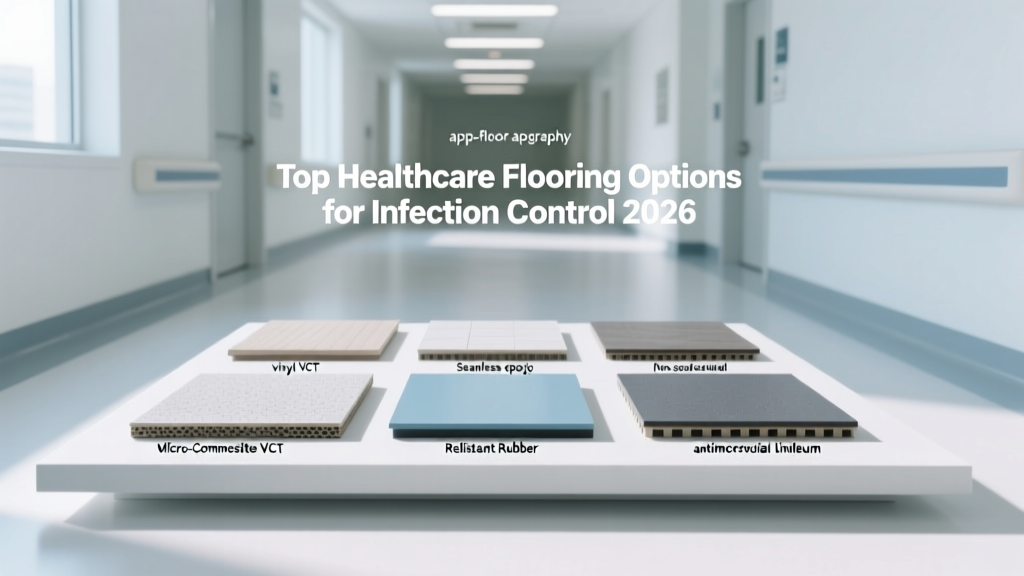
The Critical Role of Flooring in Clinical Infection Control
Flooring in healthcare environments is not merely an aesthetic choice; it is a primary defense mechanism against healthcare-associated infections (HAIs). According to the Centers for Disease Control and Prevention (CDC), environmental surfaces act as reservoirs for pathogens like MRSA and C. difficile. In 2026, facility managers must prioritize non-porous, seamlessly integrated surfaces that withstand aggressive chemical disinfectants, including quaternary ammonium compounds and 10% sodium hypochlorite (bleach) solutions.
The most common failure mode in clinical flooring is seam degradation. When heat-welded seams crack or adhesive fails at the joints, moisture and bacteria infiltrate the subfloor. This creates an anaerobic environment where pathogens multiply, rendering surface-level EPA-registered hospital disinfectants completely ineffective. Always mandate heat-welding over chemical welding for high-risk zones.
Top Healthcare Flooring Options Compared
Selecting the right material requires balancing initial installation costs, rolling load limits for heavy medical equipment (e.g., MRI machines, motorized hospital beds), and long-term maintenance cycles. Below is a 2026 market comparison for fully installed commercial healthcare systems.
| Material Type | Installed Cost (per sq. ft.) | Rolling Load Limit | Best Application Zone |
|---|---|---|---|
| Homogeneous Sheet Vinyl | $5.50 - $9.00 | 250 lbs (Static) | ORs, ICUs, Corridors, Labs |
| Vulcanized Rubber | $9.00 - $15.00 | 300+ lbs (Static) | High-Traffic Lobbies, Rehab Gyms |
| Healthcare-Grade LVT | $6.50 - $11.00 | 150 lbs (Static) | Patient Rooms, Outpatient Clinics |
| Linoleum (Sheet) | $7.00 - $10.50 | 200 lbs (Static) | Long-Term Care, Pediatrics |
1. Homogeneous Sheet Vinyl: The Clinical Standard
Homogeneous sheet vinyl remains the undisputed baseline for acute care environments. Unlike heterogeneous vinyl, which features a printed decorative layer beneath a clear wear layer, homogeneous vinyl maintains the exact same color and composition throughout its entire thickness (typically 2.0mm). If the surface is gouged by a dropped surgical instrument or scraped by a gurney, the underlying material is identical, preventing visual degradation and bacterial ingress.
Product Spotlight: Tarkett iQ Toro SC. This static-conductive sheet vinyl is engineered for operating rooms and electrophysiology labs where static electricity could interfere with sensitive monitoring equipment or ignite volatile anesthetic gases. It features a reinforced polyester backing for dimensional stability and requires no waxing due to its factory-applied polyurethane reinforcement.
2. Vulcanized Rubber: High-Traffic and Acoustic Performance
For areas subjected to extreme foot traffic and heavy rolling loads, vulcanized rubber offers superior durability. The vulcanization process subjects raw rubber to high heat and pressure, cross-linking the polymer chains to create a non-porous, highly dense surface that naturally resists scuffing without topical coatings.
Product Spotlight: nora norament 926 serra. This 3.5mm thick rubber tile features a hammered surface profile that hides scuff marks and reduces slip hazards. Crucially, rubber flooring provides exceptional acoustic dampening, reducing impact noise by up to 18 decibels compared to hard surface alternatives—a vital metric for patient recovery zones where sleep disruption delays healing.
3. Healthcare-Grade Luxury Vinyl Tile (LVT)
While traditional LVT is common in commercial retail, healthcare-grade LVT requires specific modifications. Standard LVT relies on tight butt joints, which are unacceptable in infection-control zones. In 2026, manufacturers like Armstrong Flooring offer healthcare-specific LVT lines designed with grooved edges specifically to accept a hot-weld rod, creating a monolithic, waterproof seal between tiles. This provides the aesthetic warmth of wood or stone in patient rooms and family lounges without sacrificing infection control protocols.
Navigating ASTM Standards and FGI Guidelines
Specifying healthcare flooring requires strict adherence to regulatory frameworks. The Facility Guidelines Institute (FGI) mandates that floors in invasive procedure rooms and sterile processing areas must be monolithic, seamless, and coved at the walls. When drafting specifications, architects and facility managers must reference the following standards:
- ASTM F1512: Standard Classification for Resilient Sheet Vinyl Floor Covering for Healthcare Facilities. Ensures the material meets strict requirements for chemical resistance, rolling load, and static electricity dissipation.
- ASTM F2170: Standard Test Method for Determining Relative Humidity in Concrete Floor Slabs Using in situ Probes. Critical for preventing adhesive failure.
- ISO 22196: Measurement of antibacterial activity on plastics and other non-porous surfaces. Required if specifying specialty antimicrobial-infused flooring.
- ASTM F1514: Standard Test Method for Measuring Color Stability of Resilient Flooring. Ensures the floor will not yellow or fade when exposed to UV light and harsh chemical disinfectants.
Installation Gotchas: Flash Coving and Moisture Mitigation
The highest quality sheet vinyl will fail catastrophically if the installation details are ignored. Two specific installation phases dictate the lifespan of a healthcare floor:
The Mechanics of Flash Coving
Flash coving involves extending the sheet vinyl up the wall (minimum 4 inches, 6 inches preferred in wet areas) to eliminate the 90-degree angle where the floor meets the wallbase. Installers must use a cove stick to create a smooth, radiused transition (typically 1/8-inch or 1/4-inch radius). A cap strip is then mechanically fastened and sealed with color-matched silicone at the top edge. This prevents liquid from migrating behind the flooring during aggressive mopping or flood-cleaning events.
When heat-welding homogeneous vinyl seams, the hot air welder must be calibrated precisely between 350°F and 400°F (175°C - 205°C). Under-heating results in a weak bond that will split under gurney traffic; over-heating scorches the PVC, creating a brittle weld rod that cracks within months. Always perform a test weld on scrap material at the start of every shift to account for ambient room temperature and humidity variations.
Moisture Vapor Emission and Adhesive Failure
Modern healthcare facilities are built with highly impermeable concrete slabs and low-VOC, water-based adhesives. This combination is highly susceptible to alkaline moisture vapor transmission. Before any adhesive is troweled, contractors must perform ASTM F2170 in-situ relative humidity testing. If the RH exceeds the manufacturer's limit (typically 75% to 80% for standard adhesives, though 2026 moisture-tolerant adhesives can handle up to 95%), a two-part epoxy moisture mitigation system must be applied to the concrete substrate first. Skipping this step will result in adhesive re-emulsification, leading to bubbling and total floor failure within 12 to 18 months.
Lifecycle Cost Analysis: Beyond the Initial Price Tag
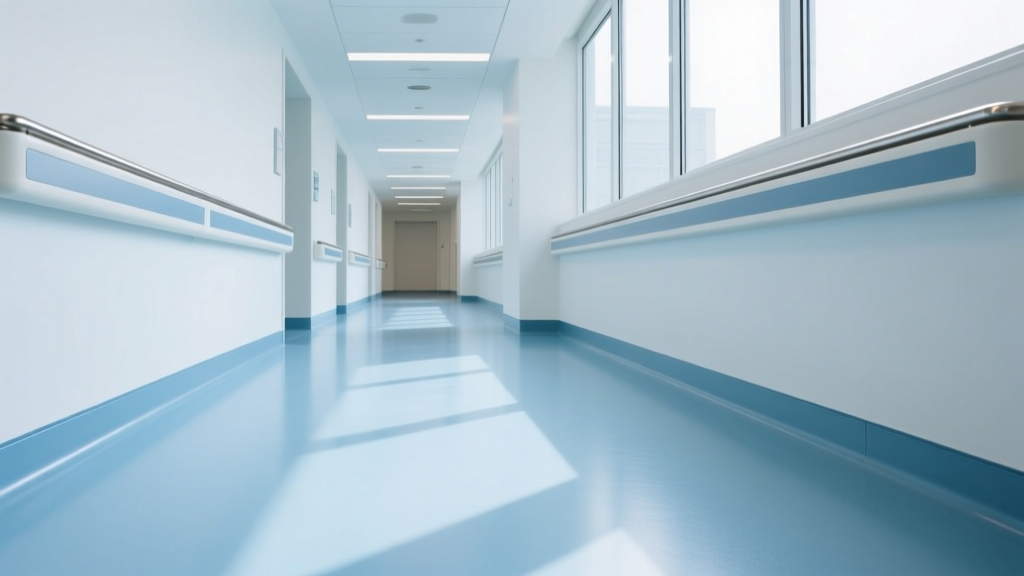
When evaluating the Resilient Floor Covering Institute (RFCI) guidelines for commercial maintenance, facility directors must look past the initial square-footage cost. Traditional VCT and older generation sheet vinyl require a rigorous maintenance cycle: daily damp mopping, weekly high-speed burnishing, and annual stripping and re-waxing. This maintenance protocol costs an average of $1.50 to $2.50 per square foot annually in labor and chemicals.
"Transitioning to factory-finished, UV-cured polyurethane surfaces like Tarkett's TopClean XP or Armstrong's Diamond 10 Technology eliminates the need for stripping and waxing entirely. Over a 15-year lifecycle, the maintenance savings on a 50,000 sq. ft. hospital wing can exceed $1.2 million, easily justifying a 20% premium on the initial material cost."
Furthermore, eliminating wax layers improves the floor's slip resistance. Wax builds up over time, creating a slick surface that increases the risk of slip-and-fall liability claims. A no-wax, micro-textured factory finish maintains a consistent Dynamic Coefficient of Friction (DCOF) above 0.42, meeting or exceeding ANSI A326.3 standards for wet slip resistance throughout the product's lifespan.
Frequently Asked Questions
Can luxury vinyl plank (LVP) be used in hospital corridors?
No. Standard LVP relies on click-lock floating installations or tight butt-joint glue-down methods. Neither provides the monolithic, waterproof seal required by FGI guidelines for acute care corridors. Only sheet goods or specifically grooved, heat-weldable LVT should be used in these zones.
How often should heat-welded seams be inspected?
Facility maintenance teams should conduct visual and tactile inspections of heat-welded seams quarterly. Look for discoloration, peeling edges, or depressions where the weld rod has worn below the surface of the floor. Any compromised seam must be routed out and re-welded immediately to prevent subfloor contamination.
Is static-dissipative flooring required in all hospital areas?
Static-dissipative (SD) or static-conductive (SC) flooring is strictly required in areas where volatile anesthetics are used, or where sensitive electronic life-support and diagnostic equipment (like MRI and CT scanners) could be damaged by electrostatic discharge (ESD). Standard patient rooms and administrative corridors do not require SD flooring and can utilize standard insulating homogeneous vinyl.
Written by
Priya KapoorPriya Kapoor is a real estate market analyst and construction economics researcher with expertise in housing affordability, development feasibility, and infrastructure investment. She holds a Master of Regional Planning from Cornell University and previously worked as a senior analyst at CBRE's Investment Properties group, where she modeled returns for $4B in mixed-use development pipelines. Priya now runs an independent research practice advising developers, municipalities, and REITs on construction cost forecasting and market timing. She publishes the quarterly "BuildMat Market Pulse" report tracking material price indices across 12 commodity categories. Based in Austin, TX, Priya serves on the board of Habitat for Humanity Austin and is a marathon runner.
More from Priya Kapoor
View all
Construction Cost
Cost to Build a 1600 Sq Ft Home in 2026: Full Breakdown
Accurate 2026 cost to build a 1600 sq ft home—material, labor, and regional pricing breakdowns included. Plan your budget with real-time estimates.
Aug 11, 2026

Wood & Lumber
Name the Types of Wood for Pressure Treatment and Preservation
Learn how to name the types of wood best suited for pressure treatment. Compare species treatability, chemical retention levels, and 2026 preservation costs.
Aug 4, 2026

Stone & Masonry
Stone Veneer Suppliers Lindenhurst: 2026 Cost Analysis
Analyze 2026 stone veneer costs in Lindenhurst, NY. Compare local supplier pricing, delivery fees, and Suffolk County installation labor rates.
Aug 4, 2026