Japanese Floor Mat Selection: Traditional Tatami vs Modern Resin
Compare traditional igusa tatami with modern washi and resin Japanese floor mats. Expert guide on sizing, costs, humidity resistance, and material taxonomy.
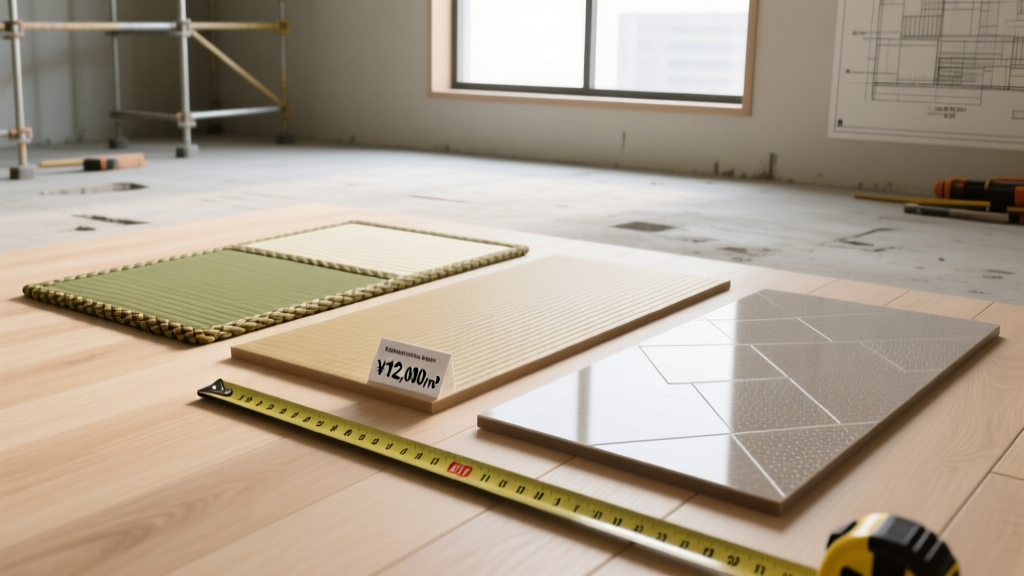
The Anatomy of a Japanese Floor Mat
Selecting the correct Japanese floor mat requires understanding its tripartite construction. While colloquially referred to as a single unit, a true tatami mat consists of three distinct components that dictate its performance, lifespan, and compatibility with modern HVAC systems:
- Doko (Core): The structural base. Historically made from compressed rice straw (waradoko), modern 2026 installations predominantly use extruded polystyrene foam or high-density MDF. This shift is driven by the need to prevent dust mite infestations and to allow thermal transfer from underfloor radiant heating systems, which traditional straw blocks.
- Omote (Cover): The woven surface layer that contacts foot traffic. This is the primary variable in material taxonomy, ranging from natural soft rush to synthetic resins.
- Heri (Border): The fabric edging that binds the long sides of rectangular mats. Borderless mats (Ryukyu style) omit this for a seamless, modular grid appearance.
According to historical and architectural archives documented by Encyclopedia Britannica, the standardization of these components evolved over centuries to align with the structural bay system (ken) of Japanese timber framing, making the mat both a flooring material and a unit of spatial measurement.
Material Matrix: Surface Cover Taxonomy
The omote layer defines the mat's tactile quality, maintenance requirements, and environmental resilience. Below is a comparative matrix of the four primary materials available in the current market.
| Material | Botanical / Chemical Origin | Hygroscopicity (Moisture) | Pet & Claw Resistance | UV Fade Resistance | Approx. Cost (Edoma Size) |
|---|---|---|---|---|---|
| Traditional Igusa | Juncus effusus (Soft Rush) | High (Absorbs/Releases) | Poor (Snags easily) | Poor (Yellows over time) | $120 – $350 |
| Washi Paper | Extruded Japanese Paper + Olefin Resin | Low (Waterproof) | Excellent | Excellent | $180 – $400 |
| Resin / PVC | Polyvinyl Chloride / Polypropylene | None (Impervious) | Excellent | Good | $100 – $250 |
| Shichitoi (Ryukyu) | Cyperus tegetiformis (Triangular Rush) | Moderate | Good (Dense weave) | Moderate | $200 – $450 |
Deep Dive: The Washi Paper Innovation
A common misconception is that Washi (Japanese paper) floor mats are fragile or water-soluble. Modern Washi mats, such as those engineered by Sekisui, undergo a proprietary extrusion process. The paper fibers are twisted into yarns, woven, and then heavily coated with a polypropylene or olefin resin. The result is a surface that perfectly mimics the texture and thermal conductivity of natural igusa but can be wiped clean with a damp cloth and will not harbor mold spores in high-humidity environments.
Environmental Selection Framework
Use this decision matrix to specify the correct Japanese floor mat based on the room's environmental constraints and usage profile.
Scenario A: High Humidity & Ground-Floor Installation
Recommendation: Washi Paper or Resin Omote with a Polystyrene Doko.
Rationale: Natural igusa and rice straw cores act as moisture sinks. In unconditioned spaces or humid climates, they will develop Aspergillus mold within a single summer season. Synthetic cores and resin-coated covers eliminate the organic food source for mold and mites.
Scenario B: Radiant Underfloor Heating Integration
Recommendation: Washi Paper Omote with a specialized thin-profile MDF or Honeycomb Doko.
Rationale: Traditional 55mm thick straw cores possess an R-value that severely impedes thermal transfer. Modern thin-profile cores (often 15mm to 30mm) are engineered specifically for hydronic or electric radiant heating, allowing heat to penetrate the room without degrading the adhesive binding the omote to the core.
Scenario C: High Traffic Commercial or Pet-Friendly Residential
Recommendation: Shichitoi (Ryukyu) or Heavy-Duty Resin.
Rationale: Shichitoi grass has a triangular cross-section, making it inherently more rigid and abrasion-resistant than the cylindrical igusa. When woven tightly in a borderless grid, it withstands the shearing forces of dog claws and heavy foot traffic without fraying.
Sizing Standards and Spatial Planning
Unlike Western flooring sold by the square foot, authentic Japanese floor mats are sold by regional dimensional standards. Specifying the wrong regional size will result in misaligned borders and gaps in the room layout. Modern architectural integration, frequently explored in ArchDaily's contemporary residential archives, often relies on the modular Ryukyu square to bypass these regional discrepancies.
- Kyoma (Kansai Region): 1910 x 955 mm (6.3 x 3.15 shaku). The largest standard; mats are sized based on the distance between structural pillars.
- Edoma (Kanto Region / Tokyo): 1760 x 878 mm (5.8 x 2.9 shaku). The most common national standard; mats are sized based on the distance between the centers of the pillars.
- Danchima (Modern Condominiums): 1700 x 850 mm. A compressed standard designed to maximize usable square footage in post-war and modern high-density housing.
- Ryukyu (Okinawa / Borderless): Typically 880 x 880 mm (half-mat squares). Laid in alternating 90-degree patterns to create a light-catching checkerboard texture.
Pricing, Installation, and Lifecycle Costs
Budgeting for a Japanese floor mat installation requires factoring in both the initial material cost and the lifecycle maintenance. While interlocking EVA foam "tatami" alternatives exist for $2 to $6 per square foot, they lack the hygroscopic and acoustic properties of genuine mats and are excluded from professional architectural specifications.
Expert Insight: When budgeting for authentic igusa or washi mats, allocate an additional 15% of the material cost for professional shikikomi (installation). Because natural materials expand and contract with seasonal humidity shifts, installers must use specialized wooden shims and perimeter tensioning to ensure the mats remain locked in place without buckling during the humid summer months.
Lifecycle Replacement: A high-quality igusa omote will require omote-gae (re-covering) every 7 to 10 years as the surface crushes and fades. The underlying doko (if synthetic) can last 20 to 30 years. Washi and resin covers do not require re-covering but must be entirely replaced once the synthetic weave physically wears through, typically after 15 years of heavy use.
Maintenance Protocols and Failure Modes
Improper maintenance is the primary cause of premature failure in Japanese floor mats. Adhere to these strict protocols to preserve the material integrity:
- Vacuuming Technique: Always vacuum parallel to the grain of the weave. Vacuuming across the grain will catch the fibers and fray the heri border. Use a brushless suction head; beater bars will instantly destroy natural igusa.
- Moisture Control: Never wet-mop natural igusa. Water strips the grass of its natural tannins and oils, leading to rapid brittleness and cracking. For spills, immediately blot with a dry, absorbent microfiber cloth, followed by a slightly damp (well-wrung) cloth for sticky residues.
- Mite Remediation: If utilizing a traditional straw core in a humid climate, the room must be maintained below 60% relative humidity. If an infestation occurs, do not use chemical pesticides, which will stain the omote. Instead, apply food-grade diatomaceous earth to the seams, leave for 4 hours, and extract with a high-suction vacuum.
- UV Mitigation: Natural igusa undergoes a phototropic color shift, changing from vibrant green to a warm golden-yellow within 6 to 12 months of direct sunlight exposure. This is a natural curing process, not a defect. However, to prevent uneven fading, utilize UV-blocking window films (minimum 99% UV rejection) on all adjacent glazing.