LVP Flooring Cost Breakdown: 2026 Pricing & Calculator
Calculate your exact LVP flooring cost for 2026. Break down material tiers, hidden subfloor prep expenses, labor rates, and waste factors.
The Real LVP Flooring Cost: Beyond the Price Tag
Estimating the true cost of luxury vinyl plank (LVP) flooring requires looking past the per-square-foot sticker price on the showroom tag. While budget LVP might advertise at $1.50 per square foot, the final installed cost encompasses material tiers, mandatory subfloor preparation, underlayment, transition moldings, and precise waste calculations. According to 2026 industry data from Angi, the national average for professionally installed LVP ranges from $4.50 to $12.00 per square foot, depending heavily on regional labor rates and the rigidity of the plank core.
To build an accurate budget, you must segment your estimate into four distinct buckets: material, prep work, installation labor, and finishing trim. Failing to account for subfloor leveling alone can derail a project budget by 20% or more, as rigid core SPC (Stone Plastic Composite) planks will snap their click-lock mechanisms if installed over an uneven substrate.
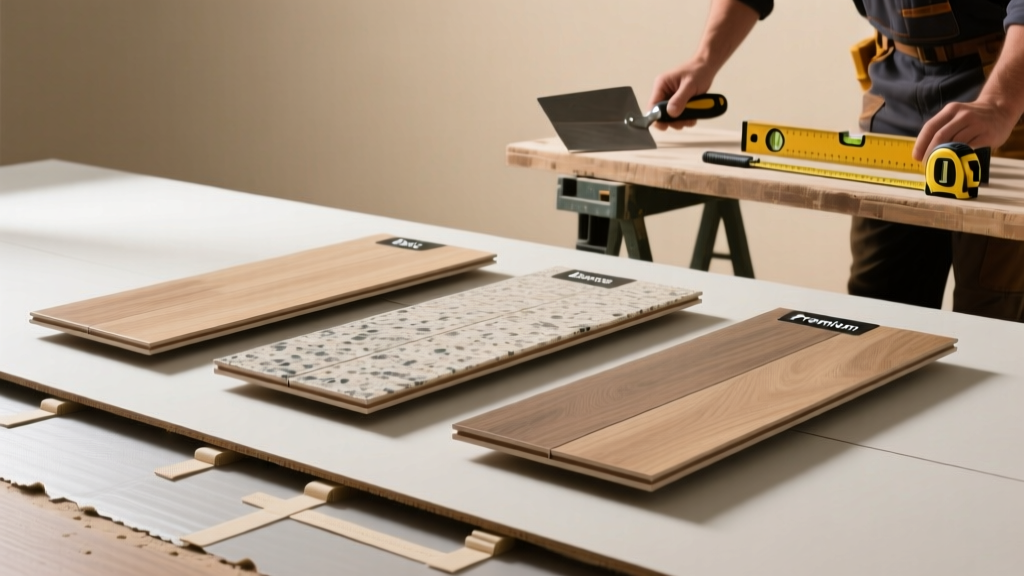
2026 Material Tiers: What You Actually Get
Not all LVP is manufactured equally. The market is segmented by core type (WPC vs. SPC), wear layer thickness, and attached underlayment quality. Here is a breakdown of the current material landscape.
| Tier | Price Range (per sq ft) | Core Type & Wear Layer | Notable Brand Examples | Best Application |
|---|---|---|---|---|
| Budget | $1.50 - $2.80 | Flexible LVP / 6-12 mil wear | TrafficMaster, basic Armstrong | Low-traffic rentals, flips |
| Mid-Range | $3.00 - $5.00 | Rigid SPC / 20-22 mil wear | LifeProof, Pergo Outlast+ | Primary residences, family homes |
| Premium | $5.50 - $9.50+ | Rigid SPC/WPC / 22+ mil wear, cork pad | COREtec Pro Plus, Karndean Korlok | High-end custom builds, commercial |
The Wear Layer Rule
The most critical metric for LVP longevity is the wear layer, measured in mils (thousandths of an inch). A 12-mil wear layer will show micro-scratches from pet claws and grit within three years. For any primary residence, specify a minimum 20-mil wear layer with a UV-cured urethane finish. Premium lines like COREtec Pro Plus utilize a 30-mil commercial-grade wear layer, which justifies the higher upfront material cost by extending the floor's functional lifespan well past 15 years.
The Quantity Calculator: Factoring in Waste and Cuts
Purchasing exactly the square footage of your room guarantees you will run short. Every room requires cuts for door jambs, vents, and perimeter edges. Furthermore, LVP is sold in fixed-size cartons, meaning you must round up to the next full box.
The 10-15% Waste Rule:
Standard rectangular rooms laid in a straight pattern require a 10% waste factor. Rooms with multiple closets, bay windows, or diagonal/herringbone layouts require a 15% to 20% waste factor. Always buy an extra full box beyond your calculated waste to keep on hand for future repairs, as dye lots change annually and exact matches become impossible to source later.
Step-by-Step Calculation Formula
- Measure Gross Area: Multiply length by width (e.g., 20 ft x 20 ft = 400 sq ft).
- Apply Waste Factor: Multiply by 1.10 for standard layouts (400 x 1.10 = 440 sq ft).
- Divide by Carton Coverage: Check the specific product's carton coverage. If a box covers 23.64 sq ft, divide 440 by 23.64 (Result: 18.61).
- Round Up: Always round up to the next whole carton. You must purchase 19 cartons.
- Calculate Total Material Cost: Multiply total cartons by carton coverage, then by the per-square-foot price. (19 boxes x 23.64 sq ft = 449.16 sq ft. At $4.00/sq ft, material cost is $1,796.64).
Hidden Costs: Subfloor Prep, Underlayment, and Trim
The most common budget overruns in LVP installation occur below the floorboards. According to subfloor preparation guidelines referenced by HomeGuide, hard surface flooring requires a flat substrate. For LVP, the industry standard tolerance is no more than 3/16-inch deviation over a 10-foot radius. If your subfloor fails this test, the planks will flex, causing the fiberglass or click-lock joints to sheer and separate.
- Self-Leveling Underlayment (SLU): Products like Ardex K 15 or Henry 565 cost approximately $40 to $55 per 50 lb bag. One bag covers roughly 40 square feet at a 1/2-inch depth. Leveling a severely uneven 400 sq ft subfloor can easily add $400 to $800 in materials and specialized labor.
- Moisture Barriers: If installing over a concrete slab, a 6-mil polyethylene moisture barrier is mandatory to prevent alkaline moisture from degrading the plank adhesives or causing mold. Budget $0.15 to $0.25 per square foot for this layer.
- Transition Moldings & Trim: You will need T-moldings for doorways, stair noses for steps, and quarter-round or shoe molding for the perimeter. Premium color-matched moldings from manufacturers like COREtec cost $35 to $60 per 72-inch piece. A standard 400 sq ft room typically requires 3 to 5 transition pieces and 15 to 20 pieces of shoe molding, adding $300 to $600 to the final bill.
- Tear-Out and Disposal: Removing existing carpet or tile costs $1.00 to $2.50 per square foot. Haul-away and dump fees will add another $150 to $300 per truckload.
Labor vs. DIY: Cost-Benefit Matrix
LVP is heavily marketed as a DIY-friendly 'floating' floor. While the click-lock mechanism is intuitive, the prep work and precision cutting require specific tools and expertise. Use this matrix to decide whether to hire a professional.
| Factor | DIY Installation | Professional Installation |
|---|---|---|
| Labor Cost | $0 (Sweat equity) | $2.00 - $4.50 per sq ft |
| Tool Investment | $150 - $300 (Miter saw, jigsaw, tapping block, pull bar, spacers) | Included in contractor's overhead |
| Subfloor Prep | High risk of improper leveling leading to joint failure | Contractor assumes liability for flatness tolerance |
| Warranty Status | Manufacturer warranty often voided if installation guidelines aren't strictly documented | Fully covered under manufacturer and installer warranties |
| Timeframe (400 sq ft) | 2 to 4 weekends for a novice | 1 to 2 days for a two-person crew |
Real-World Scenario: Calculating a 400 Sq Ft Living Room
To synthesize these variables, let us calculate the exact estimated cost for a 400-square-foot open-concept living room in 2026, assuming a mid-range SPC product installed over a wooden subfloor that requires minor patching but no major leveling.
Material Specs: Mid-range SPC, 22-mil wear layer, $4.20 per sq ft. Carton covers 23.64 sq ft.
Waste Factor: 10% (Standard straight lay).
Total Sq Ft Needed: 440 sq ft. (Requires 19 cartons = 449.16 sq ft).
- Flooring Material: 449.16 sq ft x $4.20 = $1,886.47
- Underlayment: (Attached pad included in this specific product) = $0.00
- Subfloor Patching: 2 bags of floor patch at $45/ea = $90.00
- Trim & Transitions: 1 T-molding ($45) + 12 pieces shoe molding ($25/ea) = $345.00
- Professional Labor: 400 sq ft x $2.75/sq ft = $1,100.00
- Old Carpet Tear-Out: 400 sq ft x $1.25/sq ft = $500.00
Total Project Cost: $3,921.47
True Cost Per Square Foot: $9.80 (based on the original 400 sq ft room size).
By calculating the true LVP flooring cost through this granular lens, you avoid the sticker shock of the final invoice. Always demand a line-item quote from your installer that separates the plank material, the prep work, and the finishing trim, ensuring you know exactly where your budget is being allocated.