2026 Kitchen Flooring Ideas: Material Taxonomy & Selection
Explore 2026 kitchen flooring ideas through a material taxonomy framework. Compare SPC, porcelain, and engineered wood for moisture and impact resistance.
The Core Taxonomy: Categorizing Kitchen Flooring Materials
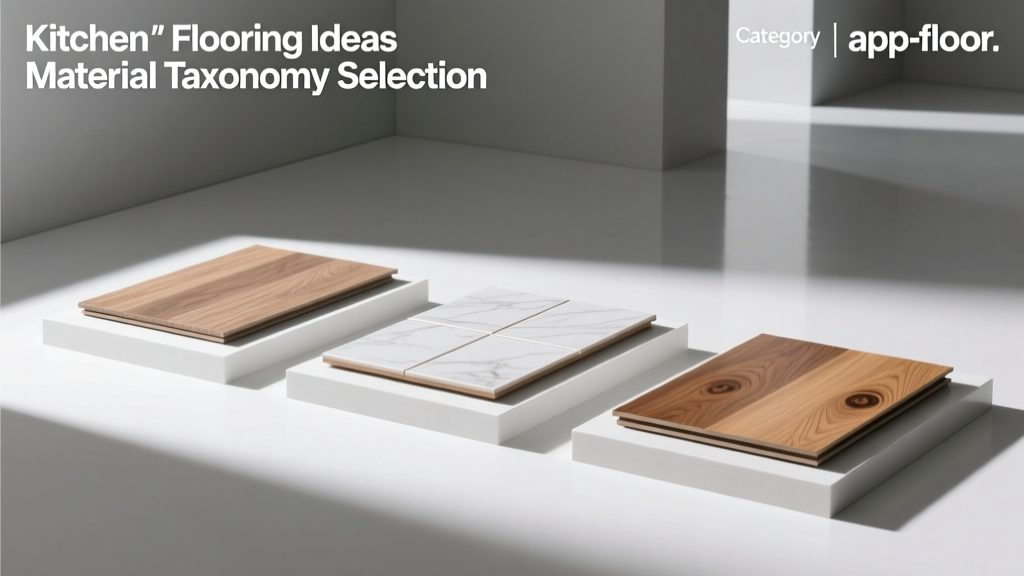
Selecting the right surface for a kitchen requires moving beyond aesthetic preferences to evaluate material science. The kitchen is a high-stress environment characterized by extreme temperature fluctuations, high humidity, point-load deflection from heavy appliances, and frequent impact from dropped cookware. To systematically evaluate kitchen flooring ideas, we categorize materials into four primary taxonomic classes based on their core composition and structural behavior.
Class 1: Rigid Core Polymers (SPC and WPC)
Rigid core luxury vinyl has dominated the residential market due to its dimensional stability and 100% waterproof core. However, not all rigid core products perform equally under kitchen-specific stresses.
Stone Polymer Composite (SPC)
SPC flooring utilizes a dense limestone powder and PVC resin core, yielding a density typically exceeding 2,000 kg/m³. This extreme rigidity makes SPC highly resistant to indentation from heavy kitchen islands and refrigerators. For kitchen applications, specify an SPC product with a minimum 20-mil (0.5mm) urethane wear layer to resist micro-scratches from dragged barstools and pet claws. Installed costs for premium SPC range from $5.50 to $8.50 per square foot.
Wood Polymer Composite (WPC)
WPC incorporates a foaming agent into the plastic composite, creating a lighter, more expansive core. While WPC offers superior acoustic dampening (often achieving an IIC sound rating above 50) and underfoot comfort for prolonged standing, its lower density makes it more susceptible to permanent denting from concentrated point loads, such as the leveling feet of a 400-pound French door refrigerator.
Class 2: Vitrified Ceramics and Porcelain
When evaluating fired clay products for kitchen flooring ideas, the distinction between ceramic and porcelain is dictated by water absorption rates defined in the ASTM C373 standard. True porcelain exhibits a water absorption rate of 0.5% or less, rendering it virtually impervious to the standing water and spills inherent to kitchen environments. Standard ceramic tile, with absorption rates up to 3.0%, is prone to staining and freeze-thaw degradation, making it unsuitable for ground-level kitchens or areas near exterior doors.
For safety, prioritize porcelain tiles with a Dynamic Coefficient of Friction (DCOF) of 0.42 or higher when wet. The Tile Council of North America (TCNA) recommends this threshold to mitigate slip hazards in areas prone to water and grease spills. Large-format porcelain (e.g., 24x48 inches) with rectified edges allows for narrow 1/16-inch grout joints, significantly reducing the porous surface area where food particles and bacteria accumulate. Expect installed costs between $9.00 and $18.00 per square foot, heavily dependent on subfloor leveling requirements.
Class 3: Engineered Hardwoods and Bamboo
Solid hardwood is fundamentally incompatible with modern kitchens due to its hygroscopic nature; minor leaks from dishwasher supply lines will cause irreversible cupping and crowning. Engineered hardwood, featuring a cross-laminated plywood or HDF core topped with a real wood veneer, provides the necessary dimensional stability. According to the National Wood Flooring Association (NWFA), engineered planks mitigate lateral expansion, making them viable for kitchens provided the environment's relative humidity is maintained between 30% and 50%.
When selecting engineered wood, prioritize species with a Janka hardness rating above 1,300 lbf, such as White Oak, Hard Maple, or Hickory. Softer species like Walnut (1,010 lbf) or American Cherry (950 lbf) will easily dent from dropped cast-iron pans or heavy canned goods. Strand-woven bamboo offers an alternative with a Janka rating exceeding 3,000 lbf, though its high resin content can complicate refinishing. Installed costs for high-quality engineered hardwood range from $11.00 to $22.00 per square foot.
Selection Matrix: Kitchen Flooring Ideas by Use Case
| Kitchen Scenario | Recommended Material Class | Critical Specification | Primary Advantage |
|---|---|---|---|
| High-Traffic Family Kitchen | SPC (Rigid Core Polymer) | 20-mil wear layer, attached cork underlayment | Maximum impact and scratch resistance; easy cleanup |
| Wet Scullery / Prep Kitchen | Porcelain Tile | DCOF > 0.42, rectified edges, epoxy grout | Total water impermeability; withstands chemical cleaners |
| Open-Concept Continuity | Engineered Hardwood | White Oak veneer, 4mm wear layer, UV-cured aluminum oxide finish | Seamless visual flow from living areas; high resale value |
| Accessible / Aging-in-Place | WPC (Rigid Core Polymer) | Low-gloss textured finish, beveled edges | Superior slip resistance and underfoot ergonomic comfort |
Hidden Failure Modes and Edge Cases
Most flooring failures in kitchens are not caused by surface wear, but by catastrophic moisture events and structural oversights. Understanding these edge cases is critical for long-term performance.
Warning: The Dishwasher Supply Line Hazard
Industry data indicates that failed braided stainless-steel supply lines and plastic drain hoses on dishwashers account for a significant percentage of kitchen water damage claims. Always install a water leak detection sensor under the dishwasher and ensure your flooring choice can withstand 48 hours of standing water without delamination. SPC and Porcelain will survive this; engineered wood and WPC will likely suffer core swelling or edge-lifting.
- Point-Load Deflection: Modern kitchen islands often feature quartz or granite countertops, pushing total island weight over 800 pounds. If installing floating floors (SPC/WPC), ensure the subfloor deflection rating is L/360 or better. Excessive joist bounce will cause the click-lock mechanisms on floating planks to separate over time.
- Thermal Expansion Near Ovens: Radiant heat from built-in wall ovens and commercial-style gas ranges can cause localized thermal expansion in polymer floors. Maintain a strict 3/8-inch expansion gap around all fixed cabinetry and appliances, concealed by quarter-round or toe-kick trim.
- Refrigerator Ice-Maker Lines: The 1/4-inch polyethylene or copper lines running to refrigerator ice makers are notorious for slow, undetected leaks. Never run continuous hardwood or WPC under a refrigerator without first applying a localized liquid moisture barrier to the subfloor.
Subfloor and Moisture Mitigation Protocols
The longevity of any kitchen floor is dictated by the substrate beneath it. Before installing any material, conduct a calcium chloride test (per ASTM F1869) to measure the Moisture Vapor Emission Rate (MVER). For polymer and wood floors, the MVER must not exceed 3 pounds per 1,000 square feet per 24 hours. If testing reveals higher emissions, apply a two-part epoxy moisture mitigation system (such as Bostik GreenForce or Mapei Primer E) to encapsulate the concrete slab before proceeding.
For porcelain tile installations, the subfloor must meet a minimum deflection criteria of L/360 under the specific load. Wood-framed subfloors require a minimum of 1-1/8-inch tongue-and-groove plywood or an uncoupling membrane (like Schluter-DITRA) to prevent cracked grout lines caused by seasonal joist movement. Proper subfloor preparation ensures that your selected kitchen flooring material performs exactly as engineered, safeguarding your investment against the unique rigors of the culinary environment. For further guidance on maintaining healthy indoor environments during material installation, consult the EPA's Indoor Air Quality guidelines regarding VOC off-gassing from adhesives and sealants.