Non Toxic Flooring Options: A Safe Material Comparison Guide
Compare the best non toxic flooring options. Discover low-VOC hardwood, natural linoleum, and tile, plus safe adhesives and certification guides.
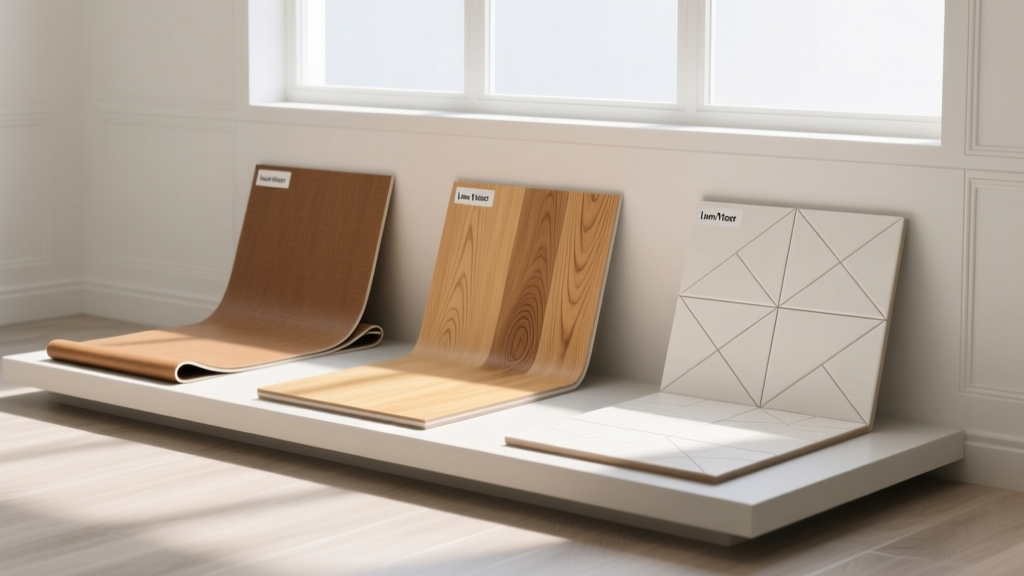
The Chemistry of Safe Floors: What "Non-Toxic" Actually Means
Indoor air quality (IAQ) is frequently two to five times worse than outdoor air, according to the U.S. Environmental Protection Agency. Because flooring covers the largest continuous surface area in a home, it acts as the primary vector for volatile organic compound (VOC) off-gassing. When evaluating non toxic flooring options, you must look beyond the surface material and scrutinize the core, the backing, the factory finishes, and the installation adhesives.
The primary chemical hazards in modern flooring include:
- Formaldehyde: A known carcinogen used heavily in the urea-formaldehyde (UF) resins that bind engineered wood cores and strand-woven bamboo.
- Phthalates: Endocrine-disrupting plasticizers historically used to make polyvinyl chloride (PVC) in vinyl flooring flexible.
- PFAS (Forever Chemicals): Frequently applied as stain-resistant topcoats. As of 2026, states like California and New York have enacted strict bans on PFAS in floor coverings, forcing major manufacturers to reformulate their wear layers.
- Ortho-Phthalates & Iso-Phthalates: Solvents found in cheap acrylic floor finishes and solvent-based installation adhesives.
Certification Cheat Sheet: Decoding the Labels
Do not trust generic "eco-friendly" marketing claims. Demand third-party testing. According to UL Solutions and SCS Global Services, these are the benchmarks:
- GREENGUARD Gold: The strictest standard. Limits formaldehyde emissions to ≤ 0.22 mg/m³ and tests for over 360 individual VOCs. Required for schools and healthcare facilities.
- FloorScore: Administered by SCS Global, it tests 35 specific VOCs and ensures compliance with California Section 01350. Excellent for residential hardwood and LVP.
- Cradle to Cradle (C2C): Evaluates material health against a "Red List" of banned chemicals, alongside circularity and social fairness. The gold standard for natural linoleum.
Material Comparison Matrix: Toxicity vs. Performance
The following matrix compares the leading non toxic flooring options based on 2026 market pricing, inherent chemical risks, and the specific certifications you should demand from the manufacturer.
| Material | Avg. Cost (per sq ft) | Inherent Toxicity Risk | Demand This Certification | Top Safe Brand Example |
|---|---|---|---|---|
| Solid Hardwood | $8.00 - $16.00 | Low (if unfinished or UV-cured) | FloorScore | Carlisle Wide Plank |
| Natural Linoleum | $5.00 - $9.00 | None (Linseed, jute, wood flour) | C2C Platinum | Forbo Marmoleum |
| Ceramic Tile | $3.00 - $12.00 | None (Inert baked clay) | N/A (Focus on mortar) | Daltile |
| Engineered Wood | $6.00 - $14.00 | Medium (Core adhesives) | GREENGUARD Gold | Kahrs (NAF Core) |
| Rigid Core SPC | $4.00 - $8.00 | Medium (PVC wear layers) | FloorScore + Phthalate-Free | Proximity Mills |
| Strand Bamboo | $5.00 - $10.00 | High (if cheap UF resins used) | FloorScore | Cali Bamboo |
Deep Dive: Top 3 Safest Flooring Categories
1. Natural Linoleum (The PVC Imposter)
Consumers frequently confuse vinyl (PVC) with linoleum. True linoleum contains zero plastic. It is manufactured from oxidized linseed oil, pine rosin, ground limestone, and wood flour, calendared onto a jute backing. Forbo Marmoleum remains the industry benchmark, holding Cradle to Cradle Platinum certification. It is naturally bacteriostatic, meaning it inhibits the growth of microbes (including MRSA) without the need for toxic chemical antimicrobial additives. The only downside is that it requires a perfectly level subfloor and professional heat-welded seams to prevent moisture intrusion.
2. Solid & Engineered Hardwood (Navigating the Finish Trap)
Solid hardwood is inherently non-toxic, but the factory finish can ruin its IAQ profile. Avoid acid-cured "Swedish" finishes, which emit massive amounts of VOCs and formaldehyde during the 30-day curing process. Instead, specify UV-cured aluminum oxide finishes, which are fully cured at the factory and emit virtually zero VOCs upon installation. If you prefer site-finished floors, use a hardwax oil like Rubio Monocoat. It bonds molecularly with the top microns of the cellulose in the wood, requiring zero solvents, and testing at exactly 0 g/L VOCs.
If you must use engineered wood for dimensional stability over radiant heat, demand a "No Added Formaldehyde" (NAF) core. Brands like Kahrs use proprietary wood-fiber cores bonded with polyvinyl acetate (PVA) or soy-based resins rather than urea-formaldehyde.
3. Ceramic & Porcelain Tile (The Hidden Grout Hazard)
Fired at over 2,000°F, ceramic and porcelain tiles are completely inert and off-gas nothing. The toxicity risk lies entirely in the installation materials. Standard modified thin-set mortars contain acrylic or latex polymers that off-gas as they dry. To maintain a non-toxic envelope, use an unmodified thin-set mortar (like Custom Building Products MegaLite LHT) which cures via cementitious hydration rather than solvent evaporation. Furthermore, avoid epoxy grouts containing Bisphenol-A (BPA) or acrylic grouts laced with toxic mildewcides. Stick to high-performance cementitious grouts sealed with a penetrating, water-based silane/siloxane sealer.
The Hidden Toxins: Adhesives and Underlayments
A FloorScore-certified floor becomes a toxic hazard if glued down with a solvent-based adhesive. If your installation requires a full-spread glue-down (common with engineered wood and linoleum), you must specify zero-VOC, moisture-curing polyurethane adhesives. Bostik GreenForce and Taylor 2091 are industry-standard, high-tack adhesives that contain no solvents and act as their own moisture vapor barriers.
Similarly, the underlayment is a frequent blind spot. Cheap EVA foam pads often contain brominated flame retardants and off-gas plasticizers. Upgrade to 1/4-inch natural cork or recycled cotton/denim pads (like QuietWalk), which provide superior acoustic dampening and thermal resistance without chemical additives.
Actionable Buying Framework
Use this decision matrix to select the right non toxic flooring option based on your specific project constraints:
- If your budget is under $5.00/sq ft and you want maximum durability: Choose large-format porcelain tile. Install with unmodified thin-set and cementitious grout. Total installed cost remains low, and IAQ impact is effectively zero.
- If you need waterproof performance but hate PVC: Look into rigid mineral-core flooring (like magnesium oxide or ceramic composite cores) which offer the click-lock installation of LVP but use stone-based, plasticizer-free cores.
- If a household member has Multiple Chemical Sensitivity (MCS): Avoid all composite woods and glues. Install solid hardwood using a blind-nail technique over a natural cork underlayment, finished with pure tung oil or Rubio Monocoat.
- If installing over concrete in a basement: Do not use glue-down solid wood. Use a floating FloorScore-certified SPC (Stone Plastic Composite) LVP with an attached cork backing, ensuring the product explicitly states "Ortho-Phthalate Free" on the spec sheet.
Written by
Priya KapoorPriya Kapoor is a real estate market analyst and construction economics researcher with expertise in housing affordability, development feasibility, and infrastructure investment. She holds a Master of Regional Planning from Cornell University and previously worked as a senior analyst at CBRE's Investment Properties group, where she modeled returns for $4B in mixed-use development pipelines. Priya now runs an independent research practice advising developers, municipalities, and REITs on construction cost forecasting and market timing. She publishes the quarterly "BuildMat Market Pulse" report tracking material price indices across 12 commodity categories. Based in Austin, TX, Priya serves on the board of Habitat for Humanity Austin and is a marathon runner.
More from Priya Kapoor
View all
Construction Cost
Cost to Build a 1600 Sq Ft Home in 2026: Full Breakdown
Accurate 2026 cost to build a 1600 sq ft home—material, labor, and regional pricing breakdowns included. Plan your budget with real-time estimates.
Aug 11, 2026

Wood & Lumber
Name the Types of Wood for Pressure Treatment and Preservation
Learn how to name the types of wood best suited for pressure treatment. Compare species treatability, chemical retention levels, and 2026 preservation costs.
Aug 4, 2026

Stone & Masonry
Stone Veneer Suppliers Lindenhurst: 2026 Cost Analysis
Analyze 2026 stone veneer costs in Lindenhurst, NY. Compare local supplier pricing, delivery fees, and Suffolk County installation labor rates.
Aug 4, 2026