Peel and Stick Backsplash for Kitchen: Real-World Durability and Lifespan Analysis
Discover the true lifespan of a peel and stick backsplash for kitchen. We analyze heat resistance, moisture failure modes, and top brand durability.
The Material Science of Adhesive Backsplashes
When evaluating a peel and stick backsplash for kitchen applications, understanding the underlying material science is critical to predicting its lifespan. Unlike traditional ceramic or porcelain tile set with cementitious thinset, adhesive backsplashes rely entirely on pressure-sensitive adhesives (PSA) to maintain a bond against vertical drywall or plaster. The longevity of this bond is dictated by the chemical composition of both the face material and the adhesive layer.
Most budget-friendly options (typically priced between $1.50 and $3.00 per square foot) utilize a flexible PVC vinyl face layer backed by a rubber-based hot-melt adhesive. Over time, PVC naturally undergoes plasticizer migration, where the chemicals keeping the vinyl flexible slowly leach into the adhesive layer. This process causes the adhesive to become brittle, leading to edge lifting within 3 to 5 years. Premium options, such as polyurethane gel tiles (e.g., SmartTiles) or real metal/glass sheets backed by 3M VHB (Very High Bond) acrylic tape (e.g., Aspect), resist this chemical degradation and can maintain adhesion for 10 to 15 years under optimal conditions.
Expected Lifespan by Material Type
The following matrix breaks down the realistic lifespan of the most common peel and stick materials when subjected to standard kitchen environments, including fluctuating temperatures and high ambient humidity.
| Material Type | Representative Brands | Avg Cost (per sq ft) | Heat Tolerance | Expected Lifespan |
|---|---|---|---|---|
| PVC Vinyl (Thin) | Art3d, Tic Tac Tiles | $1.50 - $2.50 | Up to 120°F (49°C) | 2 - 4 Years |
| Polyurethane Gel | SmartTiles, Ambiant | $6.00 - $9.00 | Up to 150°F (65°C) | 7 - 12 Years |
| Metal/Glass on VHB | Aspect, Fasade | $8.00 - $14.00 | Up to 180°F (82°C) | 10 - 15+ Years |
| Traditional Ceramic | N/A (Thinset Mortar) | $4.00 - $12.00 | Up to 400°F+ (204°C+) | 25 - 50+ Years |
The 3 Primary Failure Modes in Kitchens
To accurately assess durability, we must look beyond manufacturer warranties and examine how these products fail in real-world culinary environments. Based on field observations and material stress testing, adhesive backsplashes typically fail via three distinct mechanisms.
1. Thermal Degradation and Warping
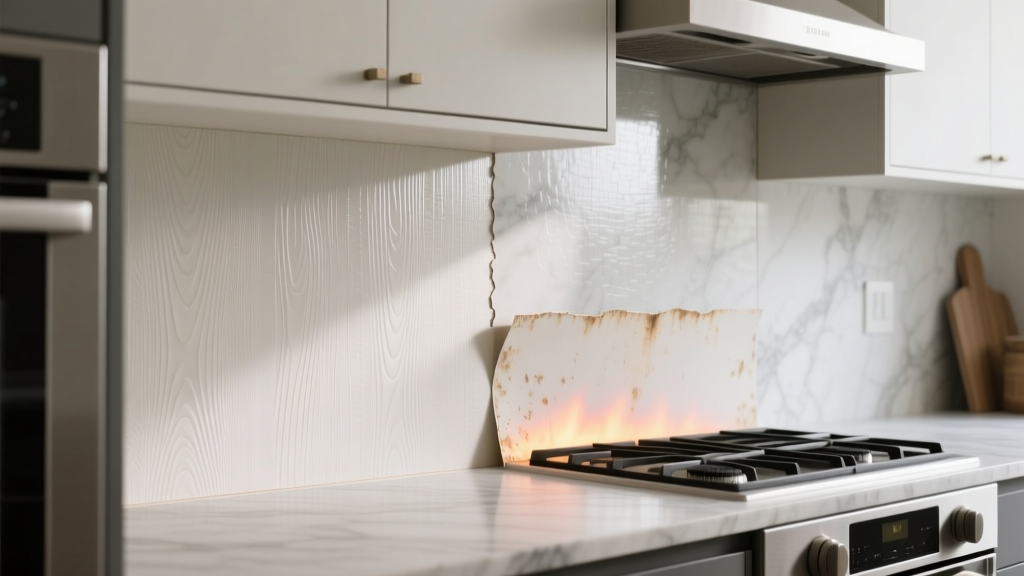
Kitchens are high-heat zones, particularly behind gas ranges. A gas burner can radiate localized heat exceeding 160°F (71°C) on the adjacent wall surface. Standard PVC vinyl tiles soften and warp at approximately 140°F. When the vinyl expands under heat and contracts as it cools, the mechanical stress breaks the microscopic adhesive bonds. Over repeated cooking cycles, this thermal cycling causes the center of the tile to bubble or the edges to permanently curl away from the wall.
If you are installing a peel and stick backsplash behind a gas stove, you must maintain a minimum 6-inch horizontal clearance from the outer edge of the burner grates to the tile. For induction or electric cooktops, a 2-inch clearance is generally sufficient to prevent thermal adhesive failure.
2. Chemical Adhesive Breakdown
Kitchen cleaning routines are the silent killers of adhesive backsplashes. Homeowners frequently use heavy-duty citrus degreasers, ammonia-based glass cleaners, or bleach solutions to wipe down cooking splatter. When these liquid chemicals seep into the micro-seams between the tiles, they interact with the adhesive. Rubber-based hot-melt adhesives are highly susceptible to solvent-based degreasers, which literally dissolve the bond from the edges inward. Acrylic-based adhesives (found in premium VHB tapes) offer superior chemical resistance but will still degrade if subjected to undiluted bleach.
3. Edge Lift and Moisture Intrusion
Unlike grouted tile, peel and stick backsplashes lack a waterproof seal at the joints. When water from the kitchen sink splashes against the backsplash, it can wick behind the tiles via capillary action if the edges are not perfectly sealed. Once moisture compromises the drywall paper facing beneath the tile, the adhesive bonds to a wet, disintegrating surface rather than a solid substrate, resulting in catastrophic sheet failure. This is particularly common in the 4-inch zone immediately above the countertop backsplash lip.
Installation Variables That Dictate Longevity
The durability of a peel and stick backsplash for kitchen walls is only 20% dependent on the product quality; the remaining 80% is dictated by surface preparation and installation technique. According to installation best practices outlined by experts at Family Handyman, skipping critical prep steps will halve the product's lifespan.
- Substrate Degreasing: Walls behind existing stoves are coated in an invisible layer of aerosolized cooking oils. Wiping with a standard damp cloth is insufficient. You must wash the wall with a Trisodium Phosphate (TSP) solution or a heavy-duty degreaser, followed by a clean water rinse and complete drying.
- Mechanical Tooth Creation: PSA adhesives struggle to bond to semi-gloss or high-gloss paint. Lightly scuff-sanding the wall with 120-grit sandpaper creates a mechanical 'tooth' that increases the surface area for the adhesive to grip, improving peel adhesion strength by up to 40%.
- Pressure Activation: Pressure-sensitive adhesives require, by definition, pressure to activate the chemical bond. Simply rubbing the tile with your hand is inadequate. You must use a hard rubber J-roller, applying approximately 100 lbs of localized pressure across the entire face of the tile to force the adhesive into the microscopic pores of the drywall.
- The 72-Hour Cure: The adhesive requires time to achieve maximum tack. Avoid exposing the newly installed backsplash to steam, heavy cooking heat, or moisture for a minimum of 72 hours post-installation.
Cost vs. Lifespan ROI Matrix
When budgeting a kitchen remodel, evaluating the cost per year of usable life provides a clearer picture of value than the initial square-foot price. While traditional tile requires professional installation (adding $10 to $25 per square foot in labor), peel and stick options are strictly DIY. However, the replacement cycle must be factored into the total cost of ownership.
For a standard 30-square-foot kitchen backsplash:
- Budget PVC Vinyl ($2/sq ft): $60 material cost. Replaced every 3 years. 10-year cost = $200.
- Premium Gel/Metal ($10/sq ft): $300 material cost. Lasts 12+ years. 10-year cost = $300.
- Traditional Ceramic ($8/sq ft + $15/sq ft labor): $690 total cost. Lasts 30+ years. 10-year cost = $690 (but adds permanent home equity).
As noted in comprehensive remodeling guides by Bob Vila, peel and stick options are financially superior for temporary renovations, rental property turnovers, or homeowners planning to sell within a 5-year window. For a 'forever home' kitchen, the labor savings of peel and stick do not offset the inevitable degradation and replacement costs over a 15-year mortgage cycle.
Expert Verdict: When to Use and When to Avoid
A peel and stick backsplash for kitchen environments is not a monolithic category; its durability is entirely contingent on material selection and environmental placement.
Use premium gel or VHB-backed metal/glass tiles if: You are executing a DIY remodel in a dry zone (e.g., behind a coffee bar, baking station, or electric induction cooktop) and are willing to invest the time in rigorous TSP surface preparation and J-roller application. Under these conditions, a high-quality product will reliably last 10 to 12 years.
Avoid peel and stick entirely if: You are installing behind a high-BTU commercial-style gas range, in a kitchen lacking proper ventilation where ambient humidity regularly exceeds 60%, or directly behind a deep undermount sink where standing water and heavy splashing are daily occurrences. In these high-stress zones, the chemical and thermal limitations of pressure-sensitive adhesives make traditional thinset ceramic, porcelain, or solid surface slab backsplashes the only durable choice.