Pet Friendly Flooring Options: 2026 Cost & Durability Analysis
Compare the true costs of pet friendly flooring options in 2026. Analyze LVP, tile, and sheet vinyl pricing, wear layers, and subfloor prep.
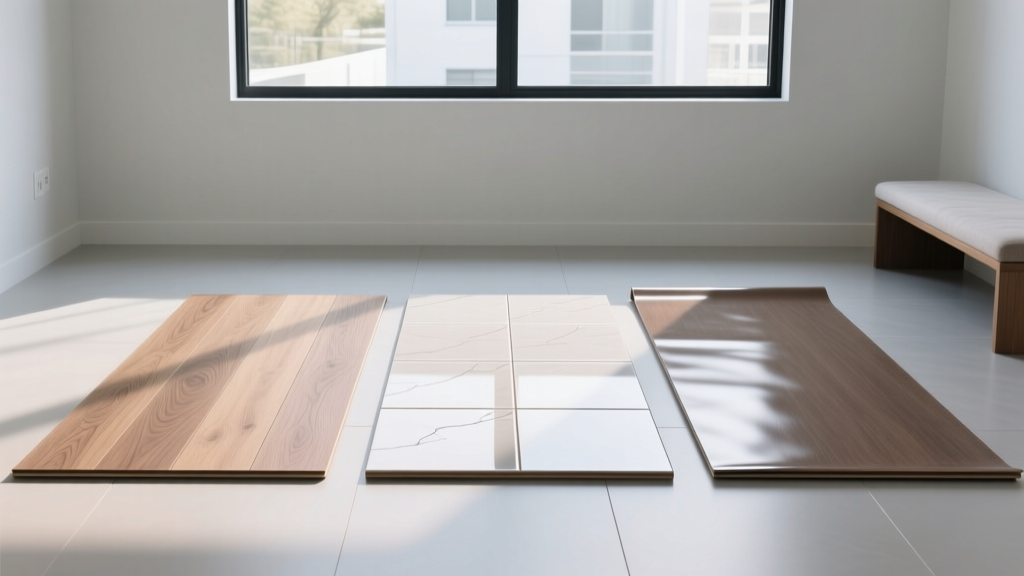
The True Financial Impact of Pet Ownership on Floors
When evaluating pet friendly flooring options, most homeowners focus solely on the upfront material cost per square foot. This is a critical miscalculation. The true cost of flooring in a home with dogs or cats must account for scratch resistance, moisture impermeability, subfloor protection, and acoustic mitigation. As of 2026, repairing urine-damaged subfloors or replacing scratched surface layers can easily exceed $3,500 to $5,000 in a standard 1,200-square-foot main living area.
Pet urine undergoes a chemical transformation as it dries. Initially slightly acidic (pH 6.0), it breaks down into ammonia and alkaline salts, spiking to a pH of 10 or higher. This highly alkaline compound degrades standard polyurethane finishes, delaminates cheap engineered wood, and permanently stains porous grout. Therefore, selecting the right material is not just an aesthetic choice; it is a long-term asset protection strategy.
2026 Cost & Performance Matrix: Top Materials
The following matrix breaks down the current market rates for installation and the specific technical specifications required to withstand heavy pet traffic. Prices reflect national averages for professional installation, including basic subfloor prep.
| Material Type | Avg Installed Cost (Sq Ft) | Minimum Spec for Pets | Scratch Resistance | Moisture / Urine Resistance |
|---|---|---|---|---|
| Rigid Core LVP (SPC) | $6.50 - $9.50 | 20-mil+ wear layer | High | 100% Waterproof (Surface) |
| Porcelain Tile | $11.00 - $18.00 | Rectified edges, <0.5% absorption | Maximum | 100% Waterproof |
| Sheet Vinyl (Fiberglass) | $4.00 - $7.00 | Urethane topcoat, seamless | Medium-High | 100% Waterproof (Seamless) |
| Engineered Hardwood | $12.00 - $19.00 | Wire-brushed, aluminum oxide finish | Low-Medium | Poor (Seam vulnerable) |
| Standard Laminate | $5.00 - $8.00 | AC4 Rating or higher | Medium | Poor (Swells at seams) |
Material Deep-Dive: Where the Budget Actually Goes
Rigid Core Luxury Vinyl Plank (LVP): The SPC Advantage
For most pet owners, Stone Plastic Composite (SPC) LVP offers the highest return on investment. Unlike older Wood Plastic Composite (WPC) cores, SPC utilizes a limestone-dust core that is highly resistant to indentation. If you have a 70-pound dog that jumps off furniture, or if you use heavy wire crates, WPC cores will permanently dent over time. SPC cores will not.
Hidden Cost Factor: LVP is a floating floor. While the planks themselves are 100% waterproof, the seams are not entirely impervious to standing liquid. If a pet has an accident and the urine sits for hours, it can seep through the micro-bevel seams and pool on the subfloor. To mitigate this, budget an additional $0.45 to $0.65 per square foot for a waterproof seam sealer or a specialized moisture-blocking underlayment during installation.
Porcelain Tile: The Indestructible (But Pricey) Choice
Porcelain tile is virtually immune to pet damage, provided you select the right format. According to the Tile Council of North America (TCNA) standards, true porcelain must have a water absorption rate of 0.5% or less (tested via ASTM C373). This makes it entirely impervious to urine penetration.
However, the cost of tile is heavily weighted toward labor. While the tile itself might cost $3.00 to $6.00 per square foot, professional installation, mortar, and grout will push the total to $11.00 to $18.00 per square foot.
- Grout Selection: Standard cementitious grout is porous and will absorb pet odors. You must budget for high-performance urethane or epoxy grout (like SpectraLOCK), which adds roughly $1.50 per square foot to the project but guarantees stain resistance.
- Format and Edges: Choose rectified tiles with 1/16-inch grout lines. Less grout means fewer areas for accidents to penetrate and fewer surfaces to scrub.
Acoustic Mitigation: The Multi-Story Home Premium
Hard surfaces are mandatory for pet owners, but they create significant impact noise (the "click-click" of dog claws). If you live in a multi-story home or a condo with an HOA, you must address the Impact Insulation Class (IIC) rating.
Most HOAs require an IIC rating of 50 or higher. To achieve this over a wood-framed subfloor, you cannot use the thin, pre-attached foam pads found on budget LVP. You will need to install a standalone acoustic underlayment, such as a 3mm cork or high-density rubber mat (e.g., QuietWalk Luxury Vinyl).
Cost Impact: Expect to add $1.25 to $2.50 per square foot for premium acoustic underlayment, plus an additional $0.75 per square foot in labor to roll it out and tape the seams before laying the floating floor.
Subfloor Prep: The Critical Hidden Expense
If you are replacing existing carpet or damaged laminate in a home that previously housed pets, the subfloor is likely compromised. Pet urine soaks through padding and into OSB or plywood subfloors, crystallizing into uric acid salts that standard cleaners cannot remove. If you install a new floating floor over this, the ambient humidity will reactivate the salts, causing a permanent odor to permeate your new home.
Before installing any new flooring in a former pet area, the subfloor must be treated with an enzymatic cleaner and then sealed with a pigmented shellac primer like Zinsser B-I-N or an oil-based sealer like Kilz Restoration. Budget approximately $50 to $65 per gallon of primer (covering roughly 300-400 sq ft) and $1.00 per square foot in labor for application. Skipping this step is the most common cause of post-installation odor complaints.
The "False Economy" Trap: Materials to Avoid
When analyzing costs, it is equally important to know which materials will result in a total loss of investment within 3 to 5 years.
- Solid Hardwood: While it can be sanded and refinished, the cost of refinishing ($4.00 - $6.00/sq ft) every few years due to deep claw gouges negates any upfront savings. Furthermore, the National Wood Flooring Association (NWFA) notes that solid hardwood is highly reactive to the moisture and alkaline salts in pet urine, leading to irreversible black staining and cupping.
- Standard Laminate: The high-density fiberboard (HDF) core of standard laminate acts like a sponge. Even "water-resistant" laminates typically only protect the surface wear layer for 24 to 72 hours. Once urine breaches the click-lock seams, the HDF core swells, peaking the edges and requiring full plank replacement.
- Carpet: The American Kennel Club (AKC) frequently highlights the hygiene risks of carpet in pet homes. Beyond the obvious staining, carpet traps dander, flea eggs, and bacteria, requiring professional hot-water extraction ($0.30 - $0.50/sq ft) bi-annually, drastically inflating the 10-year cost of ownership.
Final Cost Projections: 1,000 Square Foot Main Level
To provide a realistic budgeting framework for a standard 1,000-square-foot main living area in 2026, here are the total projected costs including material, professional labor, subfloor sealing, and necessary underlayments:
- Budget Route (Sheet Vinyl, Fiberglass-backed): $4,500 - $6,500
- Optimal Value Route (20-mil SPC LVP + Acoustic Pad): $8,500 - $11,500
- Premium Route (Porcelain Tile + Urethane Grout + DITRA Membrane): $16,000 - $22,000
By prioritizing surface wear layers, core density, and subfloor protection over superficial aesthetics, homeowners can select pet friendly flooring options that maintain their structural integrity and visual appeal for decades, ultimately delivering the lowest total cost of ownership.
Written by
Priya KapoorPriya Kapoor is a real estate market analyst and construction economics researcher with expertise in housing affordability, development feasibility, and infrastructure investment. She holds a Master of Regional Planning from Cornell University and previously worked as a senior analyst at CBRE's Investment Properties group, where she modeled returns for $4B in mixed-use development pipelines. Priya now runs an independent research practice advising developers, municipalities, and REITs on construction cost forecasting and market timing. She publishes the quarterly "BuildMat Market Pulse" report tracking material price indices across 12 commodity categories. Based in Austin, TX, Priya serves on the board of Habitat for Humanity Austin and is a marathon runner.
More from Priya Kapoor
View all
Construction Cost
Cost to Build a 1600 Sq Ft Home in 2026: Full Breakdown
Accurate 2026 cost to build a 1600 sq ft home—material, labor, and regional pricing breakdowns included. Plan your budget with real-time estimates.
Aug 11, 2026

Wood & Lumber
Name the Types of Wood for Pressure Treatment and Preservation
Learn how to name the types of wood best suited for pressure treatment. Compare species treatability, chemical retention levels, and 2026 preservation costs.
Aug 4, 2026

Stone & Masonry
Stone Veneer Suppliers Lindenhurst: 2026 Cost Analysis
Analyze 2026 stone veneer costs in Lindenhurst, NY. Compare local supplier pricing, delivery fees, and Suffolk County installation labor rates.
Aug 4, 2026