Premium Hardwood Wooden Flooring Brands and Lines for 2026
Compare top premium hardwood wooden flooring brands for 2026. Deep dive into Mirage, Kahrs, and Shaw product lines, finishes, and pricing.
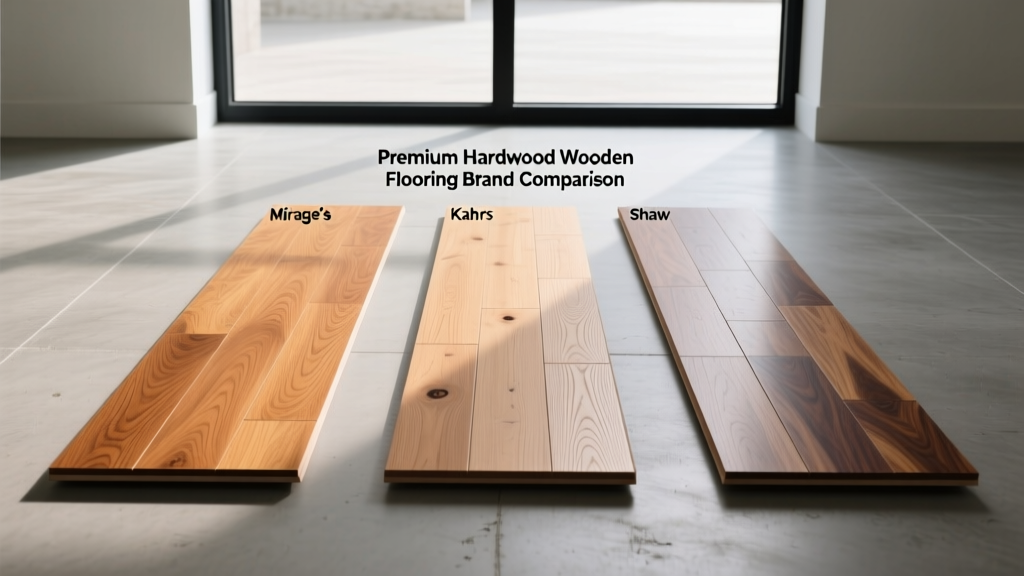
Navigating the Premium Hardwood Wooden Flooring Market
The specification and procurement of premium hardwood wooden flooring requires moving beyond basic aesthetic selections into the technical realities of wear layers, substrate engineering, and finish chemistry. In 2026, the market has bifurcated into ultra-durable factory-finished solid woods and highly stable, thick-veneer engineered platforms designed for fluctuating interior climates and radiant heat compatibility. For architects, contractors, and discerning homeowners, selecting the right product line hinges on understanding the exact manufacturing tolerances and finish technologies that dictate a floor's 30-year lifecycle.
Product Line Comparison Matrix: Solid vs. Engineered
The following matrix breaks down the flagship product lines from three dominant manufacturers, contrasting their structural makeup, finish technologies, and current market pricing. Note that pricing reflects material-only costs for premium grades (Select or Character) in White Oak or Maple.
| Brand / Product Line | Type & Dimensions | Wear Layer / Thickness | Finish Technology | Avg. Cost (per sq. ft.) |
|---|---|---|---|---|
| Mirage Classic | Solid / 3/4" x 5" | Full 3/4" Solid Sawn | NanoGuard (Titanium-infused Poly) | $9.50 - $13.00 |
| Kahrs Original | Engineered / 5/8" x 7.5" | 3.5mm Sawn Veneer | NaturOil (UV-Cured Hardwax) | $11.00 - $16.50 |
| Shaw Epic Plus | Engineered / 1/2" x 7" | 2.0mm Sliced Veneer | ScufResist Platinum (AlOx Blend) | $7.50 - $11.50 |
| Mannington Charter | Engineered / 5/8" x 7.5" | 3.0mm Sawn Veneer | UltraWear (Aluminum Oxide) | $8.00 - $12.00 |
Deep Dive: Standout Hardwood Wooden Flooring Collections
Mirage Classic (Solid Hardwood)
Mirage remains the benchmark for North American solid hardwood manufacturing. The Classic line utilizes a proprietary NanoGuard finish, which infuses titanium dioxide particles into the top polyurethane coats. This creates a hydrophobic, highly cross-linked surface that resists micro-scratching and liquid penetration far better than standard UV-cured urethanes. The milling tolerance on Mirage Classic is held to +/- 0.005 inches, meaning the tongue-and-groove joints require minimal tapping during blind-nail installation. However, because it is solid lumber, it is strictly limited to above-grade, nail-down installations over wooden subfloors and requires a strict 14-day acclimation period in the installation environment.
Kahrs Original (Engineered Hardwood)
The Kahrs Original line represents the pinnacle of European engineered hardwood. Unlike budget engineered floors that use 1.0mm rotary-peeled veneers (which often exhibit lathe-checking and cannot be refinished), Kahrs Original utilizes a 3.5mm sawn veneer. This thickness allows for up to three full sand-and-refinish cycles over the floor's lifespan, effectively matching the lifecycle of solid wood. The core is constructed from cross-grained pine, providing exceptional dimensional stability. Furthermore, the Woodloc 5S locking mechanism allows for a glue-free floating installation, making it one of the few premium hardwood options viable for below-grade basements or over concrete slabs with proper vapor retarders.
Shaw Epic Plus (Engineered Hardwood)
Shaw’s Epic Plus line targets the high-traffic residential and light-commercial market. The standout feature is the ArmorCore substrate, a high-density fiberboard core that resists denting from dropped objects or pet claws better than traditional softwood plywood cores. The ScufResist Platinum finish incorporates aluminum oxide for extreme abrasion resistance. While the 2.0mm sliced veneer limits refinishing to a single light screen-and-recoat rather than a full drum sanding, the structural stability and lower price point make it a highly pragmatic choice for expansive open-concept builds.
Finish Technologies: The Hidden Cost and Maintenance Driver
The factory finish applied to hardwood wooden flooring dictates both its initial cost and its long-term maintenance profile. Specifiers must align the finish type with the end-user's willingness to perform maintenance.
- Aluminum Oxide / Polyurethane Blends (e.g., Shaw ScufResist, Mannington UltraWear): These sit on top of the wood, creating a hard, impermeable shell. They offer maximum scratch resistance and require zero specialized maintenance beyond damp mopping. However, when they eventually wear through, the floor must be professionally screened and recoated, or fully sanded.
- UV-Cured Hardwax Oils (e.g., Kahrs NaturOil, Rubio Monocoat factory lines): These finishes penetrate the wood fibers rather than sitting on top. They leave a matte, natural-feeling surface that highlights the wood grain. While more susceptible to initial water spotting and scuffing, hardwax oils allow for spot-repairs. A homeowner can buff out a localized scratch and reapply maintenance oil without having to refinish the entire room.
Never bypass moisture testing. Per the National Wood Flooring Association (NWFA) guidelines, the moisture content (MC) of solid hardwood must be within 2% of the wooden subfloor's MC prior to installation. For engineered hardwood, the delta can be up to 4%. Always use a pin-type moisture meter (ASTM D4442) for wood subfloors and an in-situ relative humidity probe (ASTM F2170) for concrete slabs. Installing over a slab with >75% RH without a Class I vapor retarder will result in catastrophic cupping and delamination.
Sustainability, VOCs, and Certification Verification
With tighter building envelopes, indoor air quality is a primary concern for 2026 construction projects. All premium hardwood wooden flooring imported or manufactured for the North American market must comply with CARB Phase 2 or EPA TSCA Title VI formaldehyde emission standards. However, specifiers should look beyond baseline legal compliance.
For projects targeting LEED or WELL certification, verify that the product line holds a FloorScore or GREENGUARD Gold certification, which tests for a broader spectrum of volatile organic compounds (VOCs). The EPA guidelines on indoor air quality and VOCs emphasize that finishes and adhesives used during installation often off-gas more heavily than the flooring itself. Therefore, pairing a low-VOC engineered floor with a zero-VOC silane-modified polymer (SMP) adhesive is critical for maintaining indoor air integrity.
Additionally, verify chain-of-custody sourcing. Brands like Kahrs and Mirage offer specific SKUs certified by the Forest Stewardship Council (FSC), ensuring the timber was harvested from responsibly managed, renewable forests rather than old-growth or illegally logged tracts.
Final Procurement and Specification Checklist
Before finalizing a purchase order for any premium hardwood wooden flooring, run through this technical checklist to prevent jobsite failures:
- Subfloor Flatness: Verify the subfloor is flat to within 3/16" over a 10-foot radius. Engineered locking floors (like Kahrs) will separate at the seams if installed over an uneven substrate.
- Wear Layer Verification: If specifying engineered wood with the intent to refinish in 15 years, reject any product with a rotary-peeled veneer or a wear layer thinner than 3.0mm.
- Radiant Heat Compatibility: If installing over hydronic or electric radiant heat, confirm the manufacturer's maximum surface temperature limit (usually 80°F to 85°F) and ensure the wood species is stable (White Oak or Walnut; avoid Hickory or Maple over heat).
- Adhesive Selection: For glue-down engineered installations, use only the manufacturer-approved urethane or SMP adhesive to maintain the warranty and moisture vapor transmission ratings.
- Lot Matching: Order 7-10% overage for standard layouts and 12-15% for diagonal or herringbone patterns. Ensure all boxes are from the same production run to avoid severe dye-lot color variations.